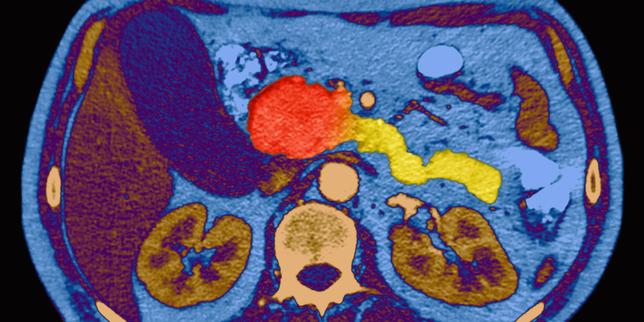
Pancreatic cancer has long remained one of oncology's most formidable challenges. Often asymptomatic until it reaches an advanced stage, the disease typically carries a grim prognosis, with tumors notoriously resistant to conventional treatments. For decades, standard chemotherapy regimens have offered only marginal extensions of life, making any meaningful clinical gain a matter of intense interest across the oncology community.
Results from a recent clinical trial involving an innovative drug candidate now suggest a potential shift in that trajectory. The study focused on patients with metastatic pancreatic cancer — those whose disease has already spread to other organs and for whom treatment options are most constrained. In this group, the new molecule demonstrated the ability to double life expectancy compared to a control group receiving standard chemotherapy. In a field where progress is typically measured in weeks rather than months, the finding has drawn considerable attention.
A disease that has resisted decades of research
Pancreatic cancer occupies a singular position in modern oncology. Unlike breast, lung, or colorectal cancers, where survival rates have improved substantially over the past several decades thanks to earlier detection, refined surgical techniques, and successive generations of targeted therapies, pancreatic cancer has seen comparatively little movement. The five-year survival rate for the disease has historically remained in the single digits, a figure that has budged only slightly despite sustained research investment.
Several factors account for this resistance. The pancreas sits deep within the abdomen, making early detection through routine screening difficult. By the time symptoms — weight loss, jaundice, abdominal pain — become apparent, the cancer has often already metastasized. The tumor microenvironment itself presents additional obstacles: pancreatic tumors are surrounded by dense stromal tissue that limits drug penetration and creates conditions that suppress immune response. This biological architecture has frustrated both traditional chemotherapy and the newer immunotherapy approaches that have transformed outcomes in other cancers.
The standard-of-care chemotherapy regimens, while extending survival modestly, have remained largely unchanged in their fundamental efficacy profile. Incremental improvements have come, but the overall therapeutic landscape has been defined more by its constraints than by breakthroughs.
What a doubling of survival time signals
In this context, a trial result showing doubled survival times represents a departure from the historical pattern. The magnitude of the effect matters not only for the patients enrolled in the study but for what it implies about the underlying science. A molecule capable of producing such an outcome in metastatic pancreatic cancer likely operates through a mechanism that circumvents at least some of the biological defenses that have made this tumor type so resistant.
The trial's focus on metastatic patients is particularly notable. This is the population with the fewest remaining options and the poorest baseline prognosis. Demonstrating efficacy in this group, rather than in earlier-stage disease where outcomes are somewhat more favorable, sets a high bar. It also raises questions about whether the molecule might show even greater benefit if administered earlier in the disease course — a hypothesis that would require additional trials to explore.
Still, caution is warranted. A single trial, however promising, does not constitute a validated therapy. The drug candidate remains in the clinical pipeline, and the path from trial results to regulatory approval and widespread clinical use is long and uncertain. Safety profiles must be fully characterized over longer follow-up periods. Reproducibility in broader, more diverse patient populations must be established. And the practical questions of manufacturing, cost, and access — factors that increasingly determine whether a scientific advance translates into real-world impact — remain unanswered.
The history of oncology is not without examples of early-stage excitement that later tempered upon further investigation. Yet it also contains cases where a single pivotal result marked the beginning of a genuine paradigm shift. Which pattern this trial will follow depends on data that does not yet exist. What is clear is that the result has altered the terms of the conversation around pancreatic cancer — a disease where even modest optimism has historically been in short supply.
With reporting from Le Monde Sciences.
Source · Le Monde Sciences