The Museum of Architecture has launched an open ideas contest inviting conceptual proposals to reimagine the Crystal Palace, one of the most symbolically charged sites in British architectural history. Entries are due by May 1, 2026, and the brief is deliberately broad, encouraging participants to engage freely with the legacy and future potential of the landmark.
The competition does not appear tied to a specific construction mandate. Instead, it functions as a platform for speculative design thinking — a format that architecture institutions have increasingly used to generate public discourse around historically significant but dormant sites.
A site defined by absence
The original Crystal Palace was designed by Joseph Paxton for the Great Exhibition of 1851 in Hyde Park, London. Built primarily of cast iron and plate glass, the structure was remarkable for its scale and for the industrial logic of its prefabricated construction. After the exhibition closed, the building was disassembled and relocated to Sydenham Hill in south London, where it served as a cultural venue for decades before being destroyed by fire in 1936.
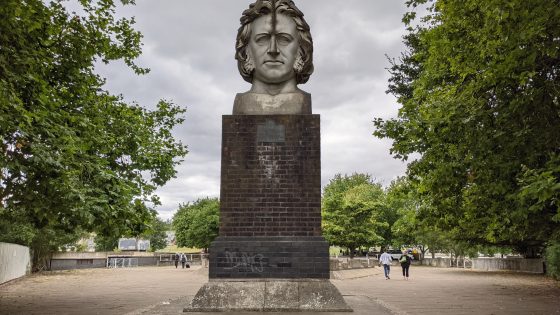
What remains today is Crystal Palace Park — a public green space in the London Borough of Bromley that retains the terraces, foundations, and landscaped grounds of the former structure, along with the famous Victorian dinosaur sculptures. The park is a Grade II* listed landscape, a designation that reflects both its heritage value and the regulatory complexity of any intervention on the site.
The question of what to do with Crystal Palace Park has recurred periodically since the fire. Various proposals over the decades — ranging from reconstruction of the original building to entirely new cultural facilities — have surfaced and stalled, often caught between competing interests: heritage preservation, commercial viability, local community priorities, and the sheer ambiguity of what the site should become. The Museum of Architecture's contest enters this long-running conversation not as a development proposal but as an intellectual exercise, inviting architects, designers, and thinkers to engage with the site's layered significance.
The ideas competition as a genre
Open ideas competitions occupy a particular niche in architectural culture. Unlike design competitions tied to a specific commission, they prioritize conceptual ambition over buildability. Their value lies less in producing a winning scheme that will be realized and more in expanding the range of possibilities that stakeholders, policymakers, and the public can consider.
This format has precedent. Competitions such as the Land Art Generator Initiative and various entries in the Venice Architecture Biennale have used speculative briefs to provoke thinking about energy infrastructure, public space, and urban futures. The Crystal Palace contest sits in a similar tradition: the site's historical weight — as a symbol of industrial modernity, imperial ambition, and public spectacle — makes it fertile ground for proposals that interrogate what a 21st-century landmark ought to represent.
The deliberately open brief is notable. By declining to prescribe a program or function, the Museum of Architecture signals that the contest is less about solving a design problem and more about reframing the question itself. What does it mean to "reimagine" a building that no longer exists but whose cultural afterimage remains vivid?
The tension at the heart of the exercise is familiar to anyone who has followed debates over heritage sites: between the impulse to reconstruct and the impulse to reinvent, between honoring what was and proposing what could be. Crystal Palace Park already functions as a public amenity and a historical artifact. Whether any conceptual proposal — however compelling — could navigate the planning, funding, and political landscape required to alter the site materially remains an open question. But that may not be the point. The contest's value may lie precisely in keeping the conversation alive, ensuring that a site defined by absence continues to generate architectural imagination rather than settling into comfortable neglect.
With reporting from Architects Journal.
Source · Architects Journal