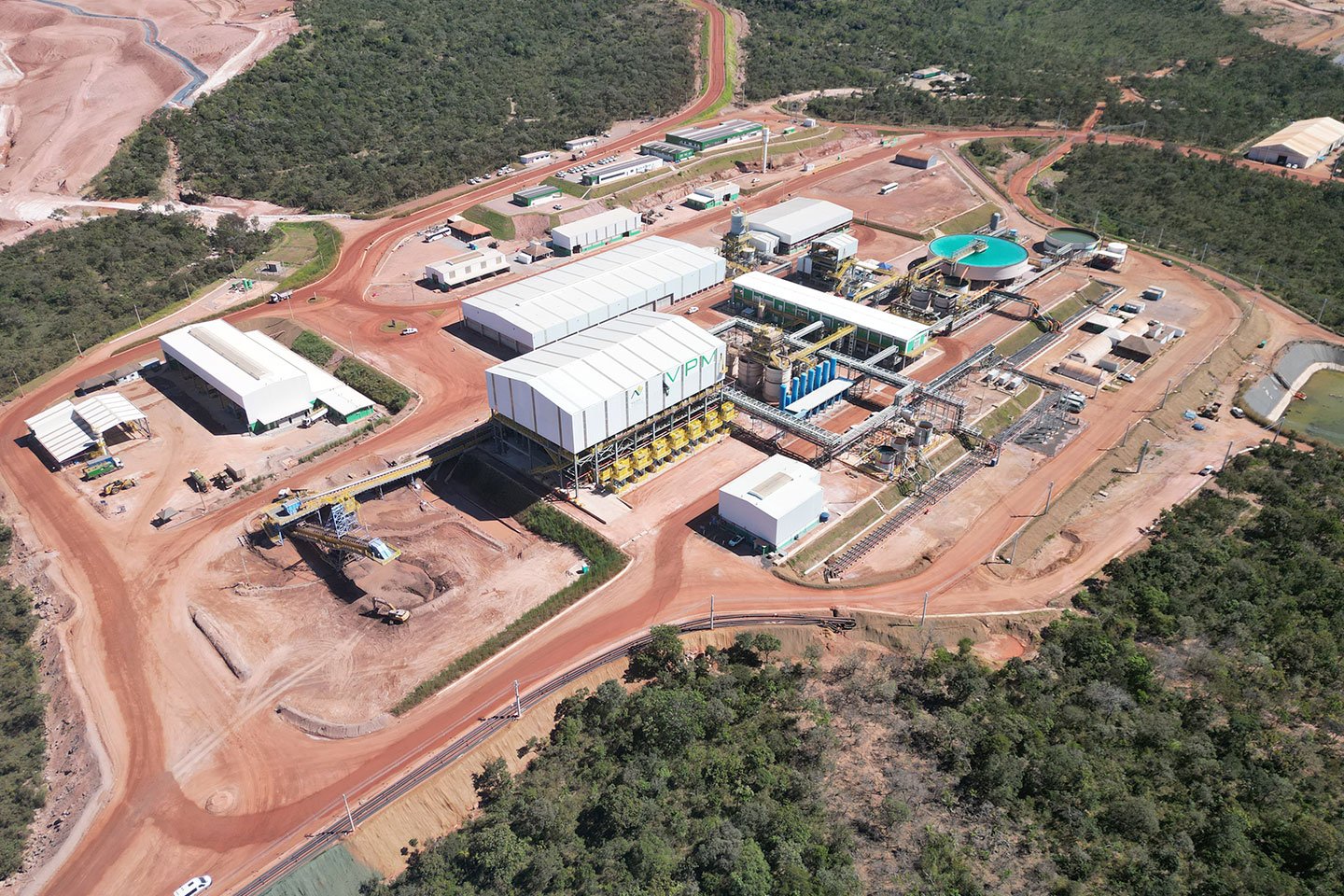
The global race to secure critical minerals reached a significant milestone this week as USA Rare Earth (USAR) announced a definitive agreement to acquire 100% of Grupo Serra Verde. Located in Brazil, Serra Verde represents a rare logistical prize: it is currently the only large-scale operation outside of Asia capable of producing all four essential magnetic rare earth elements — neodymium, praseodymium, terbium, and dysprosium. Market reaction was swift, with USAR shares climbing on the news of the deal.
The acquisition is less about simple resource extraction and more about the architecture of the modern energy economy. These four elements are the invisible backbone of high-performance permanent magnets, components indispensable for electric vehicle motors, wind turbines, and advanced defense systems. For decades, the supply chain for these materials has been heavily concentrated in China, which has controlled the vast majority of global rare earth mining, refining, and magnet production. That concentration has created a strategic bottleneck that Western firms and governments are now moving aggressively to bypass.
Why vertical integration matters
By integrating Serra Verde's upstream production with its own downstream processing capabilities, USA Rare Earth aims to create a vertically integrated supply chain that functions independently of Asian dominance. The distinction matters. Many Western rare earth projects focus on either mining or processing, but rarely both. The gap between pulling ore from the ground and turning it into separated oxides — and eventually into finished magnets — is where China's advantage has been most durable. Beijing invested heavily in refining capacity over several decades, building an ecosystem of technical expertise and scale that competitors have found difficult to replicate.
Vertical integration, in this context, is not merely a corporate strategy but a geopolitical statement. It signals an intent to close the entire value chain within allied jurisdictions, reducing exposure to export restrictions or trade disruptions. The approach mirrors similar efforts in semiconductor manufacturing, where governments have sought to repatriate or "friend-shore" production capacity for components deemed essential to national security.
Brazil's role in this equation is worth noting. The country holds significant rare earth reserves but has historically played a marginal role in global production. Serra Verde's operational status — as a functioning mine rather than an exploration-stage project — makes it a comparatively de-risked asset. Many rare earth ventures outside China have struggled to move from feasibility studies to commercial output, a transition that requires not only capital but also metallurgical know-how and regulatory patience. Serra Verde had already cleared that threshold, which likely contributed to its attractiveness as an acquisition target.
From globalized efficiency to regionalized resilience
The deal underscores a broader shift in industrial policy across Western economies. For much of the post-Cold War era, supply chain design prioritized cost efficiency above all else. Raw materials flowed to wherever processing was cheapest, and finished goods moved to wherever demand was highest. That logic concentrated rare earth processing in China not because of geological necessity — rare earth deposits exist on every continent — but because of sustained investment and lower operating costs.
Recent years have disrupted that calculus. Trade tensions, pandemic-era supply shocks, and explicit export controls on critical minerals have forced a reassessment. The emerging framework favors what policymakers describe as resilience: shorter supply chains, diversified sourcing, and strategic stockpiling. The USAR-Serra Verde transaction fits squarely within this paradigm.
The question that remains open is whether transactions like this one can collectively reach the scale necessary to alter the structural balance of the rare earth market. A single vertically integrated operation, however strategically positioned, does not displace an entrenched ecosystem built over decades. China's advantages extend beyond mining into processing chemistry, magnet manufacturing, and the workforce trained to operate at each stage. Western efforts to build parallel capacity will need to contend not only with capital requirements but with the slower, less visible challenge of developing comparable technical depth.
What the Serra Verde acquisition does accomplish is the establishment of a proof point — a functioning node in an alternative supply chain. Whether that node becomes part of a broader network or remains an isolated case will depend on sustained policy support, continued private investment, and the willingness of downstream manufacturers to pay the premium that supply chain diversification inevitably entails. The tension between economic efficiency and strategic security remains unresolved, and the rare earth market sits precisely at its center.
With reporting from Exame Inovação.
Source · Exame Inovação