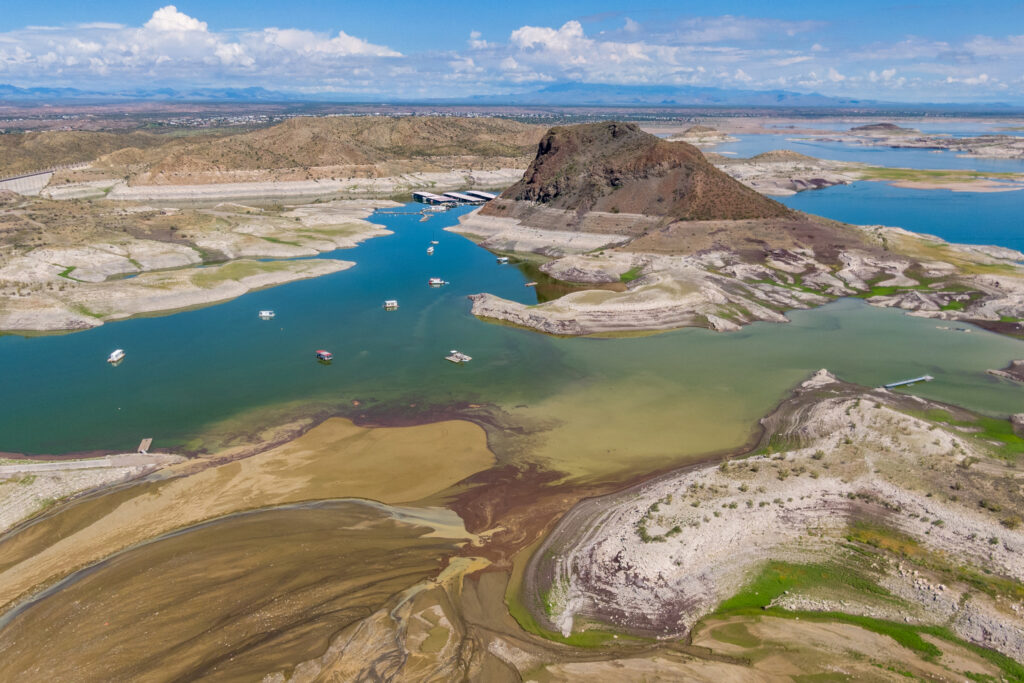
The Rio Grande, one of North America's longest rivers and a critical water source for the American Southwest, is facing what may be a defining hydrological moment. At the recent annual meeting of the Rio Grande Compact Commission, officials delivered a stark forecast: river flows for the coming year are projected to be among the lowest in recorded history. The shortfall is not a sudden anomaly but the culmination of a compounding crisis — persistent drought layered atop an increasingly unreliable winter snowpack.
The health of the Rio Grande depends heavily on the spring melt from the mountains of southern Colorado and northern New Mexico. Rising temperatures and shifting precipitation patterns have left these high-altitude snow reserves severely depleted. For the states of Colorado, New Mexico, and Texas, which share the river's water under the Rio Grande Compact — an interstate agreement signed in 1938 to apportion flows among the three states — the scarcity threatens to strain both legal frameworks and agricultural livelihoods.
A compact under pressure
The Rio Grande Compact was designed for a different hydrological era. Its allocation formulas were built on flow data from the early twentieth century, a period now understood to have been relatively wet by long-term standards. Tree-ring studies of the broader Colorado Plateau and upper Rio Grande basin have shown that the instrumental record, which begins in the late 1800s, captured conditions more generous than the multi-century norm. The compact's architects, in other words, divided a river that was larger than its long-run average.
That mismatch has grown more consequential as the Southwest enters what many researchers describe as aridification rather than cyclical drought — a structural reduction in available moisture driven by higher temperatures. Warmer air increases evapotranspiration, meaning that even when precipitation does arrive, less of it reaches streams and reservoirs. Snowpack, which functions as a natural storage system by releasing water gradually through spring and early summer, has declined across the region over recent decades. When snow is replaced by rain at higher elevations, runoff arrives earlier and in less usable pulses, complicating the careful choreography of reservoir management.
The compact commission's annual meetings have historically been procedural affairs, focused on accounting for deliveries between states. That the latest gathering produced warnings of record-low flows signals the degree to which baseline conditions have shifted. Disputes over compact obligations are not new — New Mexico and Texas have litigated their respective claims before the U.S. Supreme Court — but diminishing total supply raises the stakes of every allocation decision.
Agriculture and the arithmetic of scarcity
The Rio Grande irrigates farmland from Colorado's San Luis Valley through New Mexico's Middle Valley to the agricultural districts of far west Texas and northern Mexico. In years of adequate flow, the system supports a patchwork of crops including pecans, alfalfa, chile, and cotton. In years of shortage, junior water-rights holders face curtailment first, but prolonged deficits push the pain upstream toward senior rights as well.
The region has experimented with demand-reduction strategies — fallowing programs, efficiency upgrades, and voluntary transfers from agriculture to municipal use — yet these measures operate at the margins of a structural deficit. Urban growth in cities such as Albuquerque, Las Cruces, and El Paso adds a competing claim on the same shrinking pool. Each sector can point to its own essentiality, and no reallocation is politically painless.
What makes the current moment distinct is the erosion of the planning assumptions that underpin every contract, every reservoir rule curve, and every compact delivery schedule along the river. Water managers now operate in a landscape where historical data offers diminishing guidance. The anticipated lows for this year are not an outlier to be endured and forgotten; they sit on a trendline that bends toward less water, not more.
The question facing the three compact states is whether existing legal and institutional architecture can absorb that reality or whether it will need to be renegotiated under conditions far less forgiving than those in which it was originally drafted. The answer depends on hydrology, politics, and time — three variables that, at present, appear to be working against one another.
With reporting from Inside Climate News.
Source · Inside Climate News