In a testimony before Congress on Tuesday, Health and Human Services Secretary Robert F. Kennedy Jr. delivered a pointed warning about the state of American biotechnology. China, Kennedy told lawmakers, is "eating our lunch" — outpacing the United States in drug approvals, launching more clinical trials, and attracting scientific talent that once gravitated toward American institutions. The remarks, delivered during a hearing focused on the country's competitive posture in life sciences, carried a tone of institutional alarm rarely heard from the head of HHS.
Kennedy's testimony centered on two interrelated claims: that the United States is losing researchers to international rivals, and that China's regulatory apparatus has become faster and more efficient at moving drugs from laboratory to market. While he offered praise for the Food and Drug Administration's recent actions, the broader message was unmistakable — the bureaucratic infrastructure that once made the U.S. the undisputed center of pharmaceutical innovation may now be a liability.
The Shifting Geography of Drug Development
For most of the past half-century, the American pharmaceutical ecosystem operated as the world's default platform for drug development. The combination of deep capital markets, elite research universities, the National Institutes of Health funding pipeline, and the FDA's status as a global gold-standard regulator created a gravitational pull that kept talent and investment concentrated in the United States. Clinical trials conducted under FDA oversight carried a credibility premium that no other jurisdiction could match.
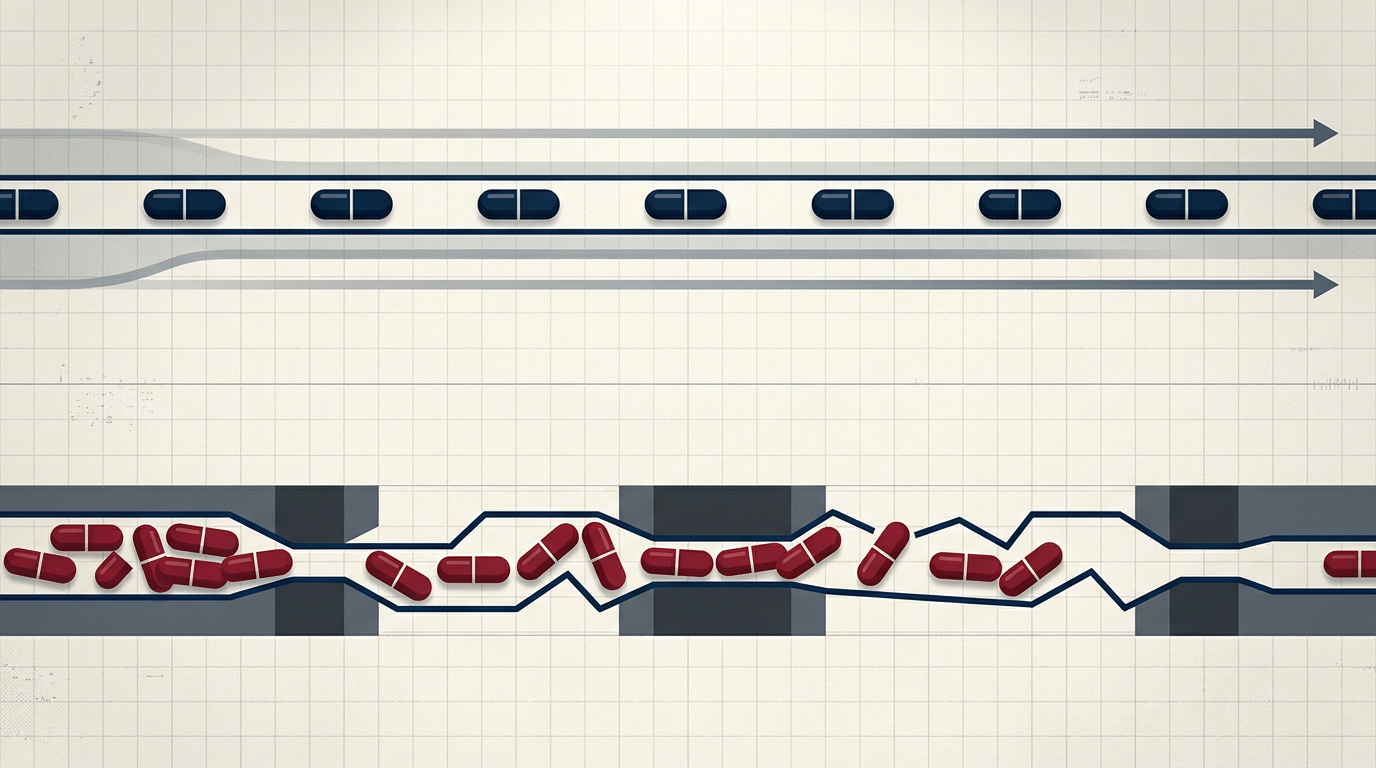
That architecture has been under pressure for some time. China's National Medical Products Administration underwent a sweeping reform beginning in the mid-2010s, accelerating review timelines and creating incentive structures designed to attract both domestic and foreign sponsors to run trials on Chinese soil. The country's sheer population scale offers a practical advantage in patient recruitment, a bottleneck that frequently delays trials in Western markets. Meanwhile, Chinese universities and research institutes have expanded their output in biomedical sciences, producing a growing share of the world's published research in oncology, immunology, and gene therapy.
The result is a landscape in which the geography of innovation is no longer fixed. Multinational pharmaceutical companies increasingly design global trial programs with significant Chinese enrollment, and a new generation of Chinese biotech firms has begun filing for approvals not only domestically but in the U.S. and Europe. The flow of scientific talent, once overwhelmingly toward American labs, has become bidirectional.
Modernization Without Compromise
Kennedy's framing of the problem — that the U.S. is "losing scientists" — touches a nerve that extends beyond any single policy debate. Talent migration in the life sciences is shaped by a complex set of factors: visa and immigration policy, research funding levels, regulatory predictability, and the broader political climate surrounding science. Each of these variables has been subject to significant turbulence in recent years.
The challenge for U.S. policymakers is structural. Speeding up drug approvals is a perennial aspiration, but the FDA's deliberate pace exists for reasons that carry real weight — patient safety, data integrity, and the prevention of premature market access for therapies that have not been adequately tested. Any effort to match China's velocity must contend with the risk that shortcuts in review could erode the very credibility that made the American system dominant in the first place.
There is also a question of framing. Competitive rhetoric about China "winning" the biotech race can serve as a catalyst for investment and reform, but it can also distort priorities. Drug development is not a zero-sum contest; breakthroughs in one country often benefit patients globally. The more precise concern is whether the United States retains the institutional capacity to originate, develop, and manufacture the next generation of therapies — or whether it gradually becomes a secondary market for innovations conceived elsewhere.
Kennedy's testimony places these tensions squarely before Congress. Whether the response takes the form of regulatory modernization, increased research funding, immigration reform for scientific talent, or some combination remains an open question. What is clear is that the assumptions underpinning American dominance in biotechnology are no longer self-evident — and the policy choices made in the near term will determine whether that dominance is renewed or quietly ceded.
With reporting from Endpoints News.
Source · Endpoints News