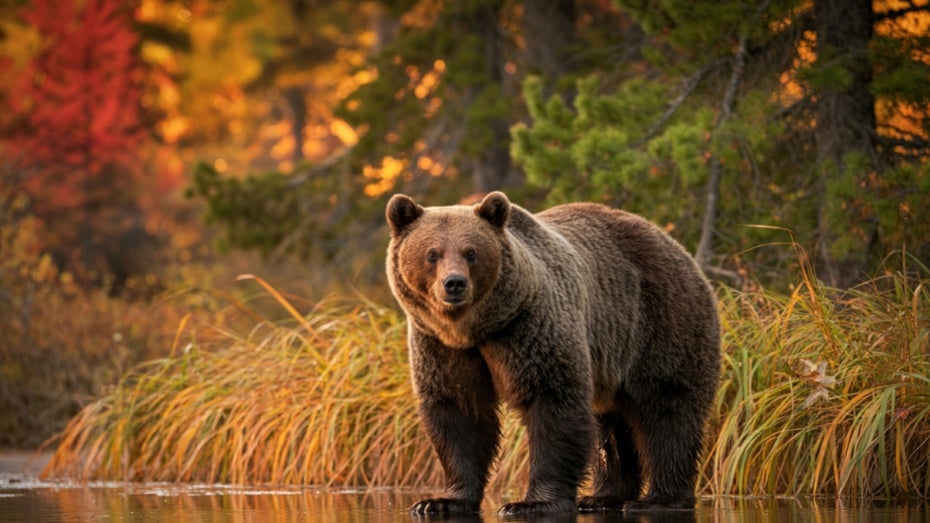
In 2017, Wesley Sarmento stepped into a role that epitomizes the friction between expanding human infrastructure and wild ecosystems. As Montana's first dedicated grizzly bear management specialist, Sarmento's mandate is a delicate paradox: protect a recovering population of apex predators while simultaneously shielding the ranchers and residents who live in their shadow. It is a job defined by distance — maintaining enough of it to keep both species safe.
The position emerged against a specific backdrop. Grizzly bear populations in the Greater Yellowstone Ecosystem and the Northern Continental Divide Ecosystem have been climbing for decades, a conservation success story rooted in federal protections under the Endangered Species Act. But recovery brings its own complications. As bear numbers grow and their range expands, encounters with livestock operations, rural communities, and recreational areas have become more frequent. The role of a dedicated manager reflects an institutional acknowledgment that coexistence requires more than policy — it requires someone in the field, mediating in real time.
From Boots on the Ground to Eyes in the Sky
Historically, wildlife management has been a reactive, boots-on-the-ground endeavor. When a bear encroaches on a farm or a hiking trail, managers respond with physical deterrents — rubber bullets, bear-proof containers, electric fencing, or, in worst cases, relocation and lethal removal. These tools remain part of the toolkit, but they share a common limitation: they activate only after a conflict has already begun.
The introduction of drones has shifted the geography of this work. From the air, a manager can monitor bear movements across vast, rugged terrain, identifying potential conflicts before they escalate. This aerial perspective allows for a form of non-invasive oversight that traditional tracking methods — GPS collars, camera traps, physical scouting — often lack in both scale and timeliness. A drone can survey a valley in minutes that would take hours on foot or horseback. It can check on a carcass site that might attract bears near a ranch without requiring a human presence that could itself provoke an encounter.
The shift mirrors a broader pattern across wildlife management globally. Conservation programs for elephants in sub-Saharan Africa, orangutans in Borneo, and wolves in the European Alps have all incorporated unmanned aerial vehicles in recent years. The underlying logic is consistent: reduce physical proximity between managers and animals, increase the frequency and resolution of observation, and intervene earlier in the conflict cycle.
The AI Layer: From Observation to Anticipation
The more consequential development lies not in the drones themselves but in what processes the data they collect. The integration of artificial intelligence with remote sensing platforms promises to move wildlife management from observation to anticipation. Machine learning models trained on aerial imagery can identify individual animals, classify behavior patterns, and — when fed sufficient historical data — predict likely movement corridors and timing.
For grizzly management, this means the possibility of alerting a rancher before a bear reaches a calving pasture, or rerouting hikers before they walk into an active feeding area. The management model shifts from incident response to spatial forecasting. It is a meaningful distinction. Reactive management tends to escalate: a bear that has already killed livestock is far more likely to be lethally removed than one that was diverted before contact.
The approach is not without tension. Drone surveillance raises questions about disturbance to wildlife — rotary-wing aircraft can alter animal behavior, particularly during sensitive periods such as denning or nursing. The accuracy of predictive models depends on data quality and volume, and grizzly behavior in a changing climate may not conform neatly to historical patterns. There is also the question of institutional capacity: sophisticated technology requires funding, training, and maintenance that many state wildlife agencies struggle to sustain.
What Sarmento's role illustrates is less a technological breakthrough than an evolving philosophy of wildlife stewardship. The tools are new, but the underlying challenge is old — how to share a landscape with a large, intelligent predator whose habitat needs increasingly overlap with human economic activity. Whether the data-driven model can scale beyond a single specialist in a single state, and whether it can hold up under the political pressures that surround predator management in the American West, remains an open question. The grizzly's recovery was a test of political will. Its continued coexistence with human communities may become a test of institutional design.
With reporting from t3n.
Source · t3n