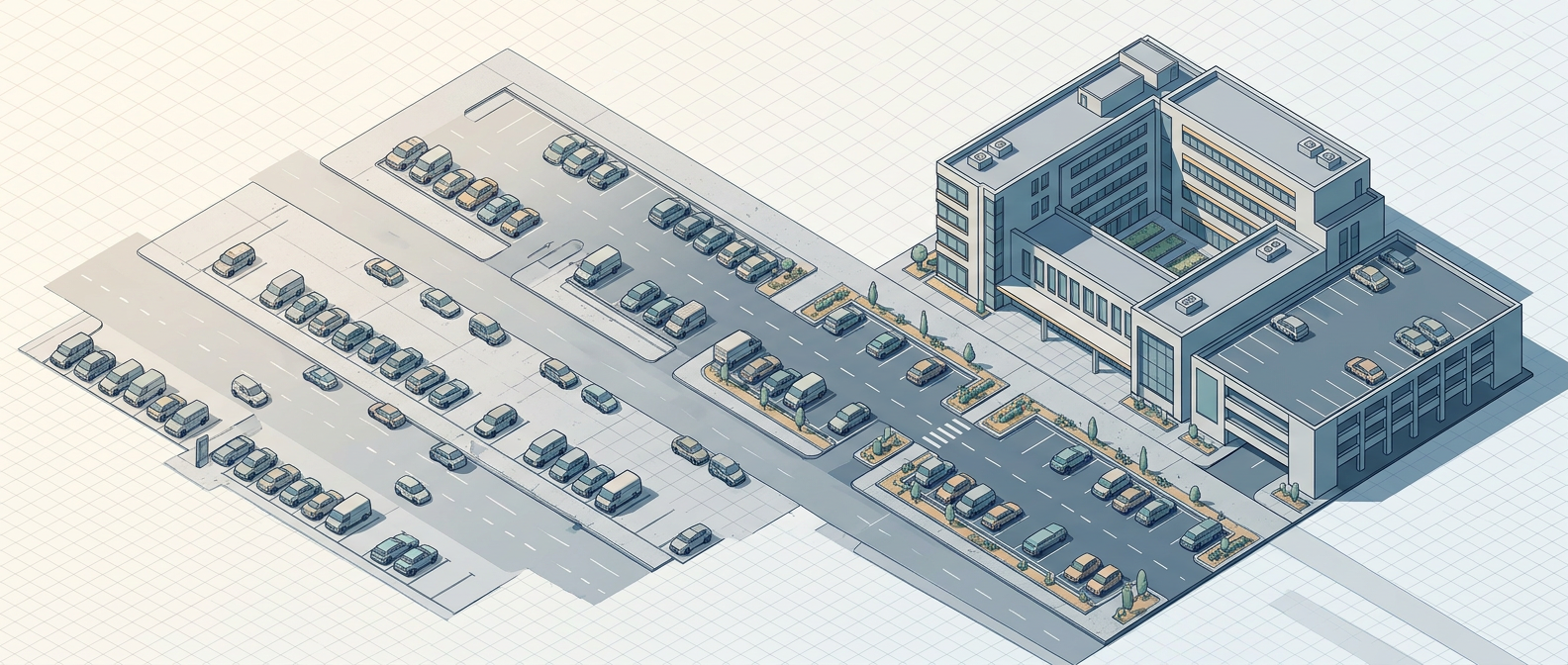
Allies and Morrison has released updated visualizations for its masterplan covering a 10.5-hectare site in the heart of Croydon town centre, the latest revision in what has become one of South London's most closely watched regeneration efforts. The architectural practice, known for large-scale urban design work across the United Kingdom, is proposing a comprehensive transformation of a substantial portion of the district's urban core.
The revised images offer a renewed look at the planned redevelopment, though specific details on building heights, housing numbers, and phasing remain limited in the public release. What is clear is that the project continues to evolve — a pattern consistent with the long and often difficult trajectory of major planning initiatives in Croydon.
A borough in search of renewal
Croydon has occupied an unusual position in London's urban geography for decades. Once a thriving commercial centre anchored by retail and office activity, the borough experienced a visible decline as consumer habits shifted and several high-profile development schemes stalled or collapsed. The town centre's fortunes became a recurring subject in planning and architecture circles, particularly after the Westfield-Hammerson joint venture to build a major shopping centre on the site was abandoned. That project's failure left a large void — both physical and symbolic — in the heart of the district.
Subsequent attempts to reimagine the area have had to contend with a changed economic landscape. The retail-led model that once underpinned Croydon's ambitions gave way to mixed-use thinking, with residential, commercial, civic, and public realm components now forming the basis of most regeneration proposals. Allies and Morrison's masterplan sits within this broader shift, attempting to knit together a fragmented town centre through a more diversified urban strategy.
The borough has also faced institutional turbulence. Croydon Council declared effective bankruptcy in late 2020, issuing a Section 114 notice — a formal declaration that it could not balance its budget. The financial crisis constrained the local authority's capacity to drive regeneration directly, placing greater emphasis on private-sector-led development and partnerships. Any masterplan of this scale necessarily operates within those fiscal constraints.
Scale, complexity, and the question of delivery
At 10.5 hectares, the site under consideration is large by inner-London standards, comparable in footprint to several other major regeneration zones that have taken years — sometimes decades — to move from vision to completion. Projects of this magnitude typically require alignment between landowners, planning authorities, transport bodies, and funding sources, a coordination challenge that has historically proved difficult in Croydon.
Allies and Morrison brings considerable experience in urban masterplanning to the task. The practice has been involved in significant projects across London and beyond, including work on the Royal Docks and Kings Cross areas. Its approach tends toward contextual urbanism — designs that respond to existing street patterns, building scales, and civic functions rather than imposing a single architectural gesture. Whether that sensibility can translate into a deliverable framework for Croydon will depend on factors well beyond architectural intent.
The release of updated visualizations signals continued momentum, but visualizations are not planning applications. The distance between a revised masterplan image and construction activity on the ground remains considerable, particularly in a borough where previous grand plans have faltered. Funding structures, political will at both local and metropolitan levels, and market appetite for development in outer London all remain variables.
Croydon's regeneration story is ultimately a test case for a question facing many secondary urban centres across the UK: whether large-scale masterplanning can succeed in areas where earlier models failed, under tighter fiscal conditions and with less certainty about what mix of uses the market will support. The tension between ambition and deliverability — between the vision a masterplan represents and the economic and institutional machinery required to realize it — remains unresolved.
With reporting from Architects Journal.
Source · Architects Journal