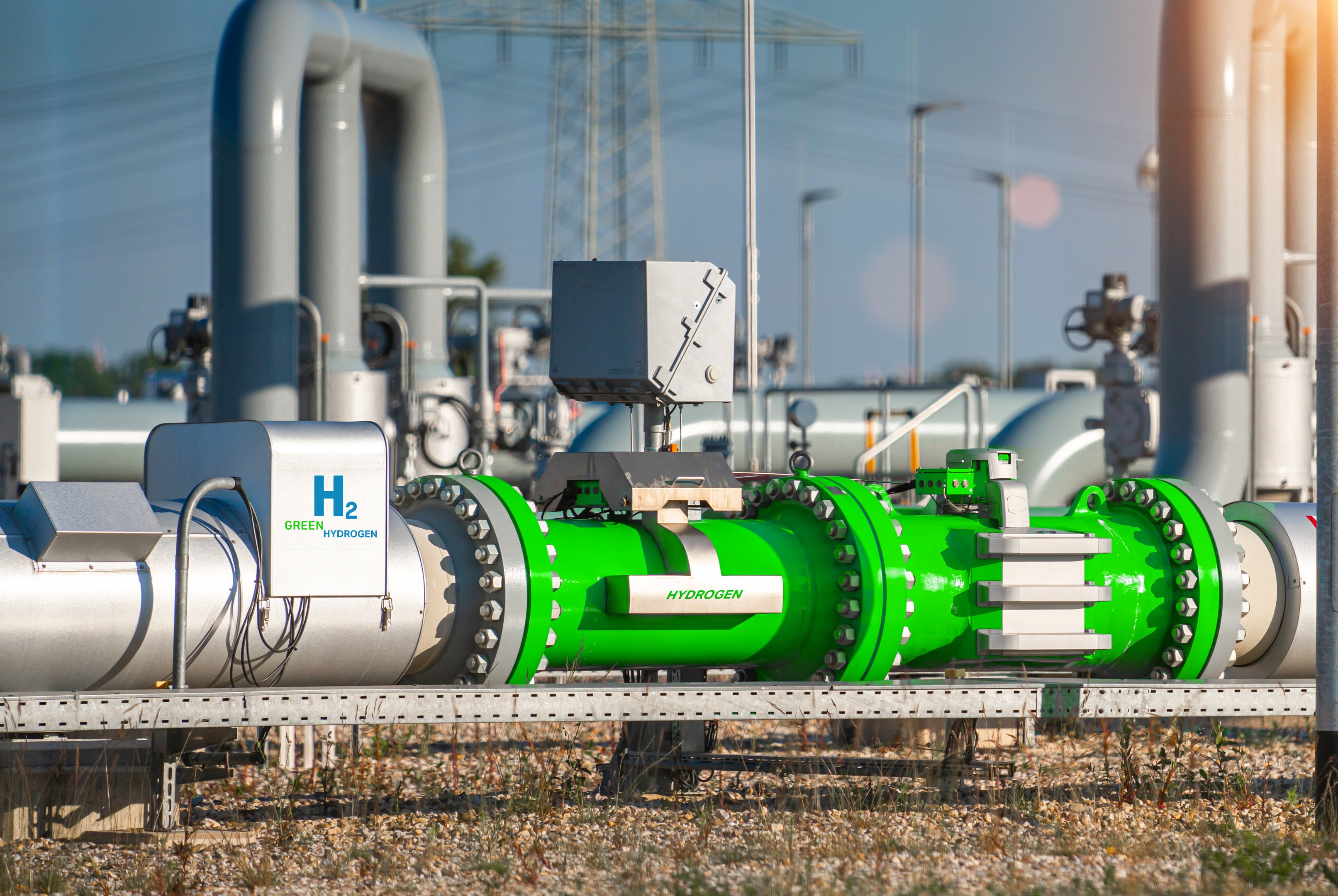
The global energy transition is increasingly finding a foothold in Brazil's Northeast. A R$ 12 billion (approximately $2.3 billion) investment was announced for a green hydrogen project in Areia Branca, a coastal municipality in the state of Rio Grande do Norte. The initiative represents a significant commitment to the production of carbon-free fuel, leveraging the region's abundant renewable resources to meet growing international demand for low-emission energy carriers.
Brazil's Northeast is uniquely positioned for this industrial shift. With high-velocity winds and consistent solar irradiation, the region provides the necessary low-cost, renewable electricity required for electrolysis — the process used to split water into hydrogen and oxygen without emitting carbon dioxide. The project in Areia Branca is part of a broader movement to transform Brazil into a major exporter of green molecules to European and Asian markets looking to decarbonize their heavy industries.
A region assembling its hydrogen corridor
The choice of Rio Grande do Norte is not incidental. The state has spent more than a decade building out wind generation capacity along its coastline and semi-arid interior, and it consistently ranks among Brazil's top states in installed wind power. That existing infrastructure lowers the marginal cost of producing green hydrogen, since the fuel's economic viability depends almost entirely on access to cheap renewable electricity. Areia Branca, situated on the northern coast with proximity to port infrastructure, offers logistical advantages for eventual export operations.
Rio Grande do Norte is not operating in isolation. Across the Brazilian Northeast, several states — notably Ceará, Bahia, and Piauí — have attracted memoranda of understanding and early-stage commitments from international consortia seeking to develop hydrogen hubs. The Port of Pecém in Ceará has emerged as a focal point for export-oriented projects, and the broader region's pipeline of announced investments runs into the tens of billions of reais. The Areia Branca project adds density to a corridor that, if even partially realized, would make the Brazilian Northeast one of the most concentrated zones of green hydrogen development outside of the Middle East and Australia.
The pattern mirrors what has occurred in other resource-rich regions that leveraged natural endowments to anchor new industrial ecosystems. The Gulf states built petrochemical complexes around cheap hydrocarbons; Chile is pursuing green hydrogen in the Atacama Desert, where solar irradiation is among the highest on Earth. Brazil's Northeast follows a similar logic, substituting wind and sun for oil and gas as the foundational input.
From commodity exporter to energy-value chain participant
While green hydrogen remains in the early stages of global adoption, the scale of this R$ 12 billion injection suggests a move toward industrial maturity. For Brazil, the stakes involve more than climate goals. The country has historically occupied the role of raw commodity exporter — iron ore, soybeans, crude oil — capturing limited value from downstream processing. Green hydrogen offers a different trajectory: the fuel itself is a manufactured product, requiring electrolyzers, desalination units, storage systems, and specialized logistics. Each layer of the value chain represents potential domestic industrial activity.
The regulatory environment is evolving in parallel. Brazil's legal framework for hydrogen is still taking shape, with ongoing discussions around certification standards, carbon accounting methodologies, and incentive structures. How those rules are written will determine whether projects like Areia Branca attract the long-term offtake contracts necessary to move from announcement to construction. European import regulations — particularly the EU's developing framework for certifying green hydrogen — will also shape demand signals and pricing benchmarks.
There is a structural tension embedded in the opportunity. Announced investments in green hydrogen globally far exceed what has reached final investment decision. The gap between memoranda of understanding and operational plants remains wide across every geography pursuing this technology. Brazil's Northeast has the natural resources and, increasingly, the infrastructure. Whether it also develops the regulatory clarity, grid capacity, and water management frameworks to convert ambition into production at scale is the question that separates aspiration from industrial reality.
With reporting from Exame Inovação.
Source · Exame Inovação