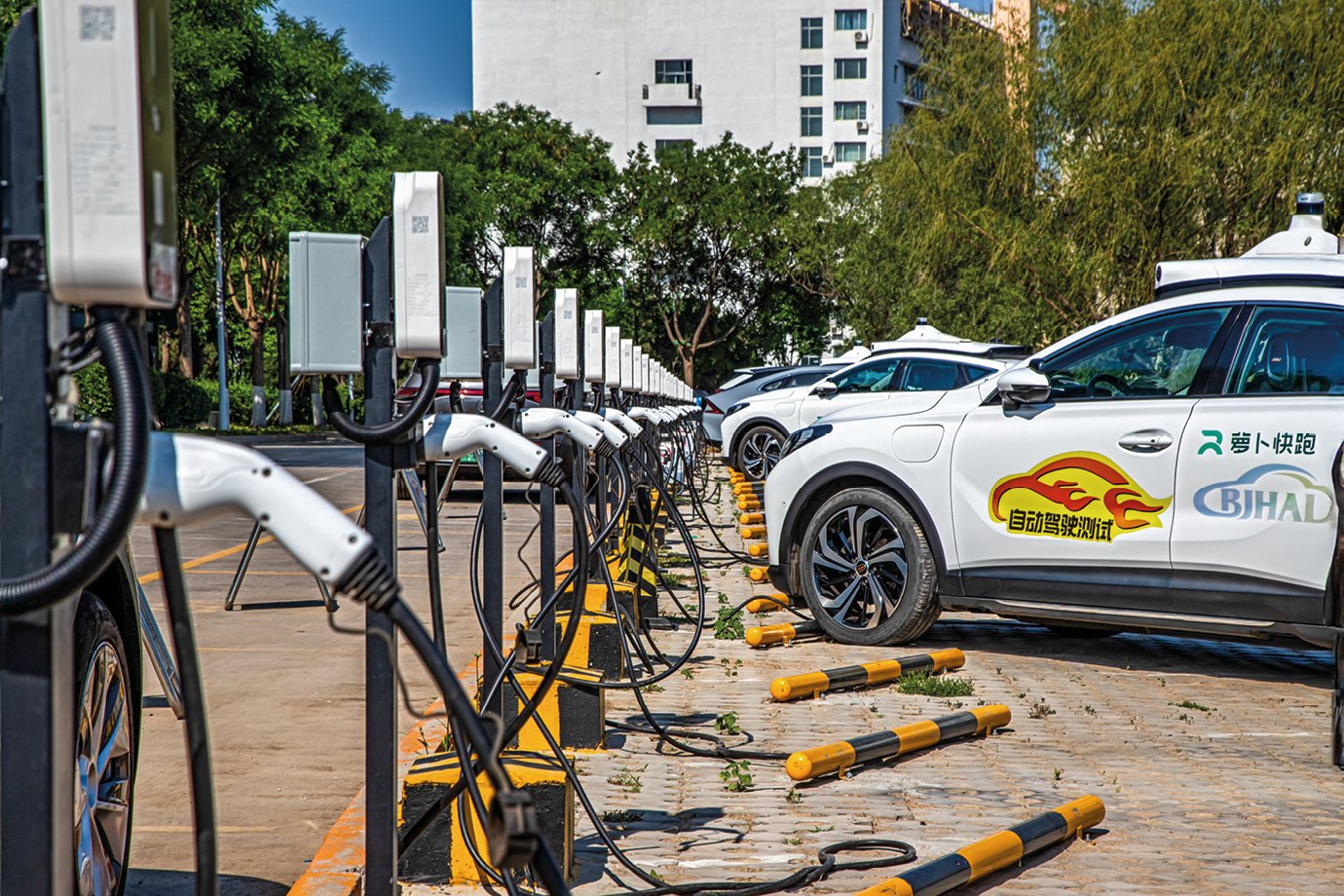
The global transition to electric mobility is hitting a wall of consumer skepticism in Brazil. According to a recent study by the market research firm Ipsos, just 36% of Brazilians express a genuine interest in driving or purchasing an electric vehicle. The figure places Brazil well below the levels of enthusiasm recorded in several Asian and European markets, where government subsidies, dense charging networks, and cultural momentum have combined to accelerate adoption. In Latin America's largest economy, the calculus is different.
The finding arrives at a moment of apparent contradiction. Chinese automakers — led by BYD — have been expanding aggressively into the Brazilian market, opening dealerships and, in BYD's case, building a factory in the state of Bahia. European and American manufacturers have also signaled interest in the region. Yet the supply-side push has not translated into equivalent demand-side pull. For most Brazilian consumers, the internal combustion engine remains the default, evaluated through the lens of reliability and affordability rather than obsolescence.
The structural barriers behind the number
Several factors help explain the gap between global ambitions and local sentiment. The most immediate is price. Electric vehicles in Brazil carry a significant cost premium over their combustion counterparts, and the country's consumer financing landscape — marked by high interest rates — makes that premium harder to absorb. Unlike markets such as Norway or China, Brazil has not deployed the kind of sustained purchase subsidies or tax exemptions that compress the upfront cost gap for buyers.
Infrastructure compounds the problem. Brazil is a continental-sized country where long-distance driving between cities is common, and the public charging network remains thin outside major urban centers. Range anxiety — the concern that a battery will not last between charging points — is not an abstract worry in a geography where the next station may be hundreds of kilometers away. For consumers in rural areas or smaller cities, the proposition is even less compelling.
There is also the ethanol factor. Brazil operates one of the world's most developed biofuel ecosystems, built over decades of policy support following the oil shocks of the 1970s. Flex-fuel vehicles, capable of running on gasoline or sugarcane ethanol, dominate the national fleet. Ethanol is widely available, relatively affordable, and carries its own environmental narrative — lower net carbon emissions than conventional gasoline. This gives Brazilian consumers an intermediate option that does not exist in most other markets, reducing the perceived urgency of switching to a fully electric powertrain.
What the 36% figure signals for the industry
The Ipsos data does not necessarily spell failure for the EV sector in Brazil, but it does reframe the timeline. Adoption curves in emerging markets tend to follow a pattern shaped less by environmental conviction than by economic inflection points — the moment when total cost of ownership for an EV falls below that of a combustion vehicle. In Brazil, that crossover has not yet arrived for the mass market.
Automakers entering the country appear to be betting on a longer game: establishing brand presence and manufacturing capacity now in anticipation of a shift that may take years to materialize. The Brazilian government, for its part, has begun introducing graduated import tariffs on EVs, a move designed to encourage local production but one that also raises short-term consumer prices.
The tension, then, is between two forces moving at different speeds. On one side, an industrial and policy apparatus that is slowly orienting toward electrification. On the other, a consumer base that has rational reasons — economic, infrastructural, and cultural — to wait. Whether the 36% figure represents a floor that will rise as conditions change or a ceiling imposed by Brazil's unique energy matrix is the question that will define the next chapter of electric mobility in the country.
With reporting from Exame Inovação.
Source · Exame Inovação