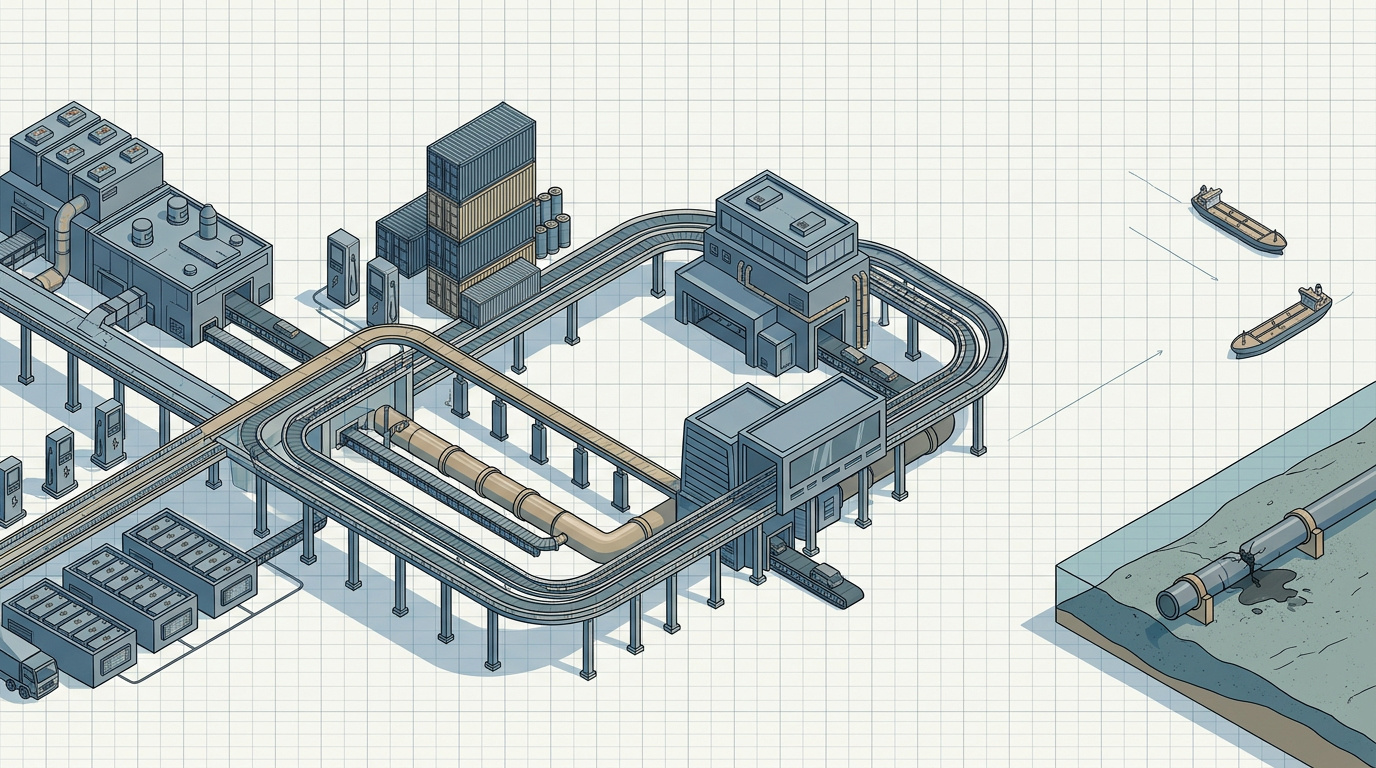
The intersection of energy volatility and industrial policy has rarely been as pronounced as it is in the current global climate. As regional instability involving Iran threatens to disrupt traditional petroleum supply chains, international markets are experiencing renewed pressure to reconsider their reliance on fossil fuels. According to reporting from BBC, this disruption is not merely a challenge for energy security but a structural catalyst that highlights the strategic maturity of China’s electric vehicle (EV) industry, which has spent the last decade building a robust, self-contained ecosystem capable of scaling under duress.
For global policymakers, the crisis serves as a reminder of the inherent fragility of global oil dependencies. While traditional energy markets react to geopolitical friction with price spikes and supply uncertainty, the Chinese EV sector has moved beyond the experimental phase into a period of aggressive, systematic integration. By prioritizing domestic autonomy in battery chemistry and charging infrastructure, China has effectively insulated its automotive transition from the immediate shocks that now rattle Western markets, positioning its manufacturers to offer a viable, long-term alternative to the volatility of oil-dependent transport systems.
The Strategic Architecture of China’s EV Dominance
China’s current standing in the electric vehicle market is not the result of recent opportunism but rather the culmination of a decade-long industrial strategy. By viewing the EV transition through the lens of national security rather than merely consumer preference, Beijing has successfully cultivated a vertically integrated supply chain that spans from raw mineral extraction to advanced battery assembly. This structural advantage allows Chinese manufacturers to maintain consistent production timelines even when global trade routes are compromised by regional conflicts, a stark contrast to Western automakers who remain tethered to more fragmented and vulnerable logistics networks.
Central to this architecture is the rapid development of standardized, high-performance charging infrastructure. The focus on five-minute charging capabilities represents a shift toward addressing the primary friction point for mass adoption: convenience. By standardizing these technologies, China has created a network effect that lowers the barrier to entry for consumers while simultaneously creating a technological moat that competitors struggle to bridge. This is not just about selling vehicles; it is about exporting a standardized, proprietary ecosystem that makes the transition to electric mobility seamless, thereby ensuring that the infrastructure of the future is built upon Chinese technical specifications.
Mechanisms of Market Capture and Resilience
The mechanism by which China capitalizes on global instability is rooted in its ability to decouple its domestic industrial growth from external price shocks. When oil prices rise due to conflict, the operational costs for internal combustion engine (ICE) vehicles increase, creating an organic surge in demand for electric alternatives. China, having already achieved significant economies of scale, can absorb these fluctuations more effectively than its international peers. Its manufacturers are currently utilizing this price delta to penetrate emerging markets that are particularly sensitive to fuel inflation, effectively framing the EV transition as a necessary economic survival strategy for developing nations.
Furthermore, the focus on technological innovation—specifically in solid-state batteries and high-voltage charging systems—serves as a defensive posture. By relentlessly driving down the cost per kilowatt-hour, China has ensured that its vehicles remain competitive even without heavy subsidies. This efficiency is the engine of its export strategy. As other nations scramble to secure energy supplies, China is essentially offering a technological escape route. The ability to pivot toward high-tech, energy-efficient solutions during a period of geopolitical volatility allows Chinese firms to frame their expansion as a stabilizing force in a chaotic global landscape, effectively turning a geopolitical crisis into a commercial expansion opportunity.
Implications for Global Stakeholders
For Western regulators and legacy automotive manufacturers, the implications of this shift are profound. The traditional reliance on market-based gradualism is being overtaken by a reality where energy security and industrial speed are paramount. Regulators in Europe and North America now face the difficult task of balancing domestic protectionism with the urgent need to accelerate their own EV transitions. The risk is not merely losing market share to Chinese competitors, but becoming technologically dependent on a foreign supply chain that is increasingly sophisticated and resilient to the very geopolitical pressures that Western states are struggling to manage.
For consumers, the choice between traditional fuel and electric alternatives is shifting from a lifestyle preference to a pragmatic financial calculation. As the cost of oil becomes increasingly tied to the unpredictability of Middle Eastern stability, the predictability of electricity costs—often supported by domestic renewable generation—becomes a compelling value proposition. This shift creates a feedback loop: as more consumers adopt electric vehicles to hedge against fuel price volatility, the demand for infrastructure increases, further incentivizing the rapid expansion of charging networks and reinforcing the dominance of the early movers who have already established the necessary technical standards.
The Uncertain Horizon of Energy Transition
What remains uncertain is the durability of this transition in the face of potential trade barriers and protectionist policies. As China’s influence in the global automotive sector grows, the likelihood of retaliatory measures from trade blocs seeking to protect their domestic industries increases. The tension between the need for rapid decarbonization and the desire to maintain sovereign industrial control will likely define the next decade of geopolitical discourse. Whether this competition leads to a fragmented global market with incompatible charging standards or a new era of collaborative technical integration remains an open question.
Furthermore, the long-term impact of relying on specific battery chemistries currently dominated by Chinese firms remains a point of concern for supply chain diversification. As the world watches the intersection of Middle Eastern conflict and global energy markets, the focus will likely shift from the vehicles themselves to the underlying materials and intellectual property that power them. The resilience of this transition will depend not only on the speed of adoption but on the ability of international markets to foster a competitive environment that encourages innovation without sacrificing the stability of the global energy grid.
As geopolitical tensions continue to reshape the global energy map, the question of whether the electric vehicle transition can remain a truly international project or if it will solidify into regional silos remains the central challenge for policymakers and industry leaders alike. The speed with which China has leveraged these structural shifts suggests that the transition is no longer a matter of policy preference, but a fundamental realignment of global industrial power.
With reporting from BBC
Source · BBC business