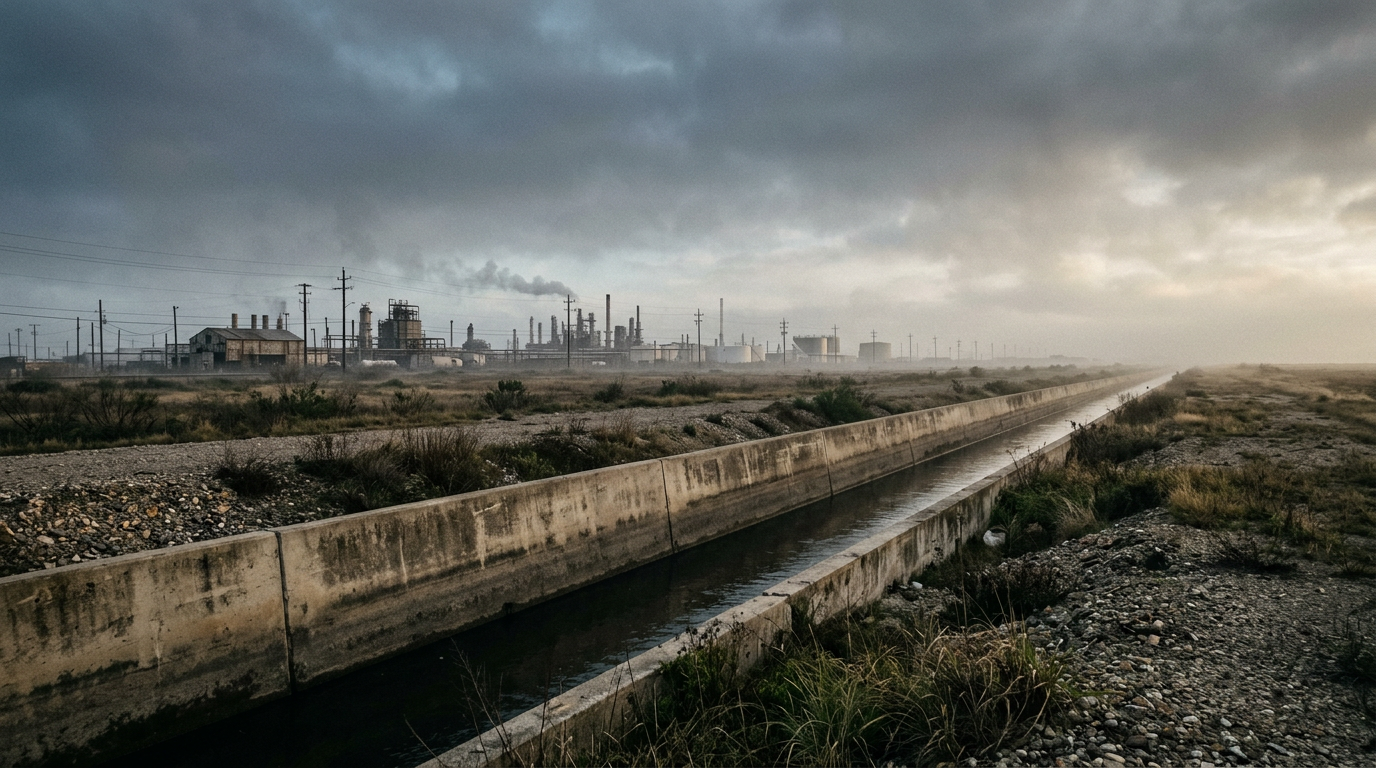
Tesla's effort to vertically integrate its battery supply chain has encountered a regulatory and environmental obstacle in South Texas. At the company's lithium refinery near Corpus Christi — a facility central to its strategy of processing raw materials domestically — local officials described "black wastewater" flowing into a public drainage ditch. While state regulators initially found no breach of existing permits, the local drainage district took a more skeptical view, commissioning independent testing of the runoff.
The results, conducted this month, identified two toxic metals and various other contaminants in the discharge. The discrepancy between the state's initial assessment and the independent findings has complicated Tesla's narrative of clean industrial expansion and triggered a cease-and-desist letter from the local drainage district.
A familiar tension between state oversight and local scrutiny
The gap between state-level permitting conclusions and locally commissioned testing is not unusual in American environmental regulation. State agencies typically evaluate industrial facilities against the terms of their discharge permits — documents that may not account for every contaminant or every pathway through which pollutants reach surrounding ecosystems. Local authorities, by contrast, often respond to visible, immediate evidence: discolored water, odor complaints, changes in drainage patterns.
This dynamic has played out repeatedly across the United States in sectors ranging from petrochemicals to agriculture. In Texas, where the state's regulatory posture has historically favored industrial development, local entities such as drainage districts and water authorities have at times served as a de facto second layer of environmental oversight. The Corpus Christi incident fits squarely within that pattern. The drainage district's decision to commission its own analysis — rather than defer to the state's finding of no permit violation — reflects a growing willingness among local bodies to assert independent judgment on environmental risk.
The cease-and-desist letter carries legal weight within the district's jurisdiction over public drainage infrastructure, though its practical enforcement power relative to state permits remains an open question. Tesla has not publicly detailed its response to the letter, and the situation may ultimately require resolution through negotiation between local, state, and corporate parties.
The industrial chemistry behind the clean energy transition
Lithium refining is a chemically intensive process. Converting raw lithium — whether extracted from brine, spodumene ore, or other sources — into battery-grade lithium hydroxide or lithium carbonate involves acids, solvents, and significant volumes of water. The resulting waste streams can contain heavy metals, sulfates, and other byproducts that require careful management. Facilities in China, Chile, and Australia have faced similar scrutiny over wastewater handling, and the challenge does not diminish simply because the end product serves the electric vehicle market.
Tesla's decision to build domestic refining capacity was driven in part by supply chain resilience — reducing dependence on Chinese processing, which dominates the global lithium refining market — and in part by the incentive structures embedded in U.S. industrial policy that reward domestic mineral processing. The strategic logic is sound, but the Corpus Christi episode illustrates a tension that will recur as more refining and processing facilities are built on American soil: the energy transition requires industrial infrastructure, and industrial infrastructure generates environmental risk.
The question is not whether such facilities should exist, but whether the regulatory frameworks governing them are calibrated finely enough to catch site-specific hazards before they become entrenched problems. State permits set floors, not ceilings, for environmental protection. When independent testing reveals contaminants that permitted monitoring did not flag, it raises legitimate questions about the adequacy of permit conditions and the frequency of compliance checks.
The Corpus Christi case is small in scale but instructive in structure. It places two forces in direct tension: the urgency of building domestic clean energy supply chains and the obligation to manage the industrial externalities that come with them. How Tesla, local officials, and Texas regulators navigate this specific dispute may set informal precedents for the dozens of similar facilities now in planning or construction across the country. Whether the resolution favors speed of deployment or rigor of oversight — or finds a workable balance between the two — remains to be determined.
With reporting from Inside Climate News.
Source · Inside Climate News