David Lindsay-Abaire, the Pulitzer Prize and Tony Award-winning playwright behind works such as Rabbit Hole and Good People, has turned his attention to a deceptively modest subject: the porch. His latest work, The Balusters, stages a conversation among ten characters whose discussion of domestic architecture becomes a vehicle for the social anxieties, class tensions, and unspoken hierarchies that define neighborhood life in America.
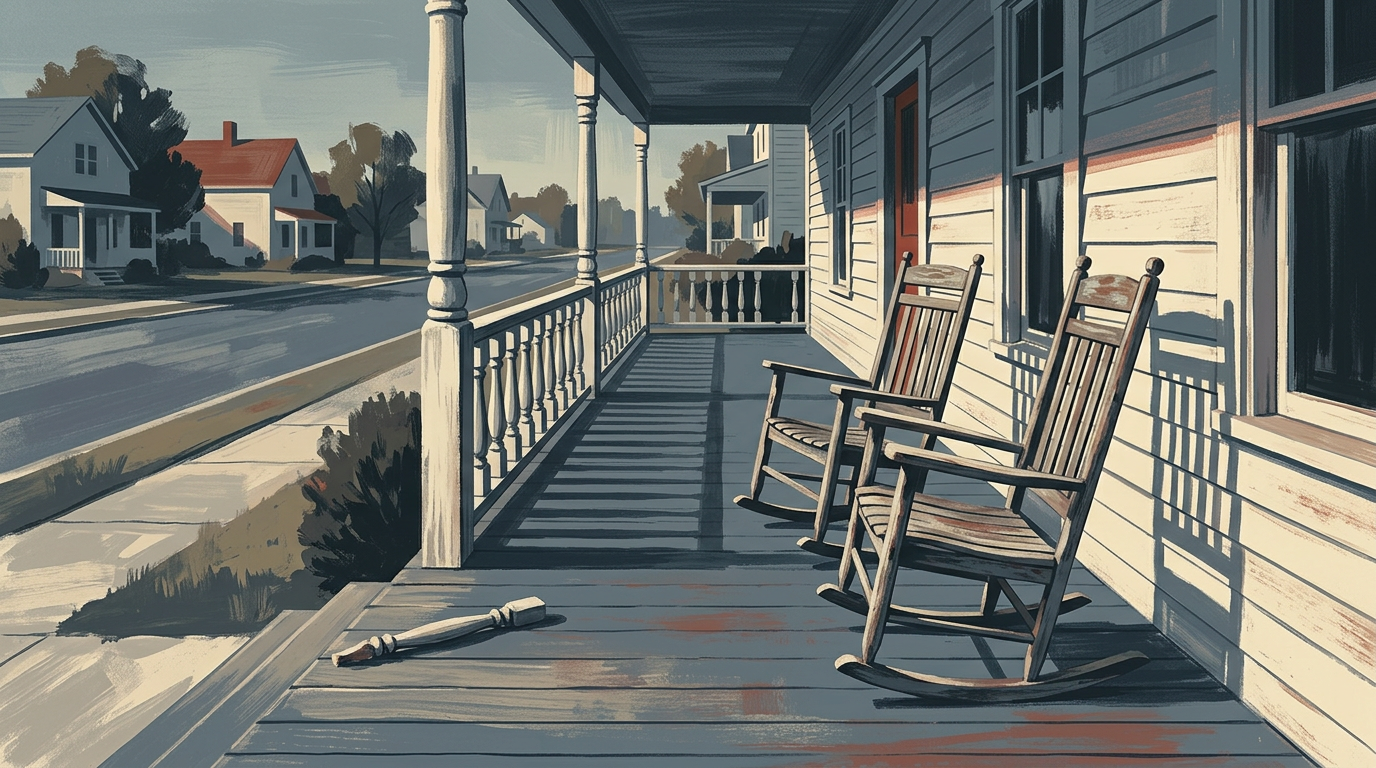
The title itself signals the play's method. Balusters — the vertical posts that support a porch railing — are structural elements most people never think to name. They hold things up, define boundaries between public and private space, and go largely unnoticed until something goes wrong. For Lindsay-Abaire, they appear to serve as a metaphor for the invisible scaffolding of social order in residential communities.
The Porch as Dramatic Territory
The American porch occupies a peculiar place in the country's cultural imagination. It is simultaneously a private extension of the home and a public stage visible to every passerby. Sociologists and urban historians have long noted its role as a liminal space — a threshold where neighborly performance meets genuine domestic life. Front-porch culture was central to community interaction for much of the nineteenth and twentieth centuries before retreating, in many suburbs, to the backyard deck and the privacy fence.
Lindsay-Abaire's decision to build a play around porch discourse is consistent with a career spent excavating tension from the ordinary. Rabbit Hole, which earned him the Pulitzer Prize for Drama in 2007, drew its power from the quiet devastation of a suburban couple grieving the loss of a child. Good People examined class friction through the lens of old neighborhood loyalties in South Boston. In each case, the drama emerged not from extraordinary events but from the pressure that accumulates in everyday settings — kitchens, living rooms, and now porches.
By his own account, the playwright has felt a particular trepidation about The Balusters. Writing toward fear is a principle Lindsay-Abaire has articulated before: the idea that the subjects that make a writer most uncomfortable are often the ones most worth pursuing. Here, the discomfort appears to be personal as well as artistic. Dramatizing the specific social dynamics of neighborhood life carries the risk of recognition — neighbors seeing themselves, or believing they do, in characters on stage.
Domestic Discourse and Its Dramatic Stakes
A play about ten people discussing porches might, on its surface, sound like a premise designed for comedy. But Lindsay-Abaire's track record suggests something more layered. The domestic and the mundane have long served serious dramatists as containers for larger forces. Edward Albee set marital warfare in a faculty living room. August Wilson built an entire American century around the kitchens and backyards of Pittsburgh's Hill District. The narrower the setting, the higher the pressure — and the more revealing the cracks.
The choice of ten characters is notable. Ensemble plays of that scale demand careful orchestration; each voice must carry distinct weight without collapsing into noise. It suggests a community portrait rather than a character study — a work interested in how groups negotiate taste, status, and belonging through the seemingly trivial language of home improvement and curb appeal.
What makes The Balusters worth watching, even at this early stage, is the question it appears to pose: what do people really talk about when they talk about their houses? Conversations about property — setbacks, paint colors, fence heights, porch railings — are rarely just about property. They encode judgments about class, about who belongs, about what a neighborhood is and who gets to define it. Whether Lindsay-Abaire intends the play as satire, tragedy, or something that refuses to settle into either category remains to be seen.
The tension between the intimate and the communal, between what a home says to its owner and what it signals to the street, is not a new theme in American letters. But it is one that gains fresh relevance in an era of housing anxiety, neighborhood-level culture wars over zoning and aesthetics, and the persistent American habit of reading moral character into real estate choices. Lindsay-Abaire has found, in the baluster, a small structural element that bears more weight than it appears to.
With reporting from Vogue.
Source · Vogue