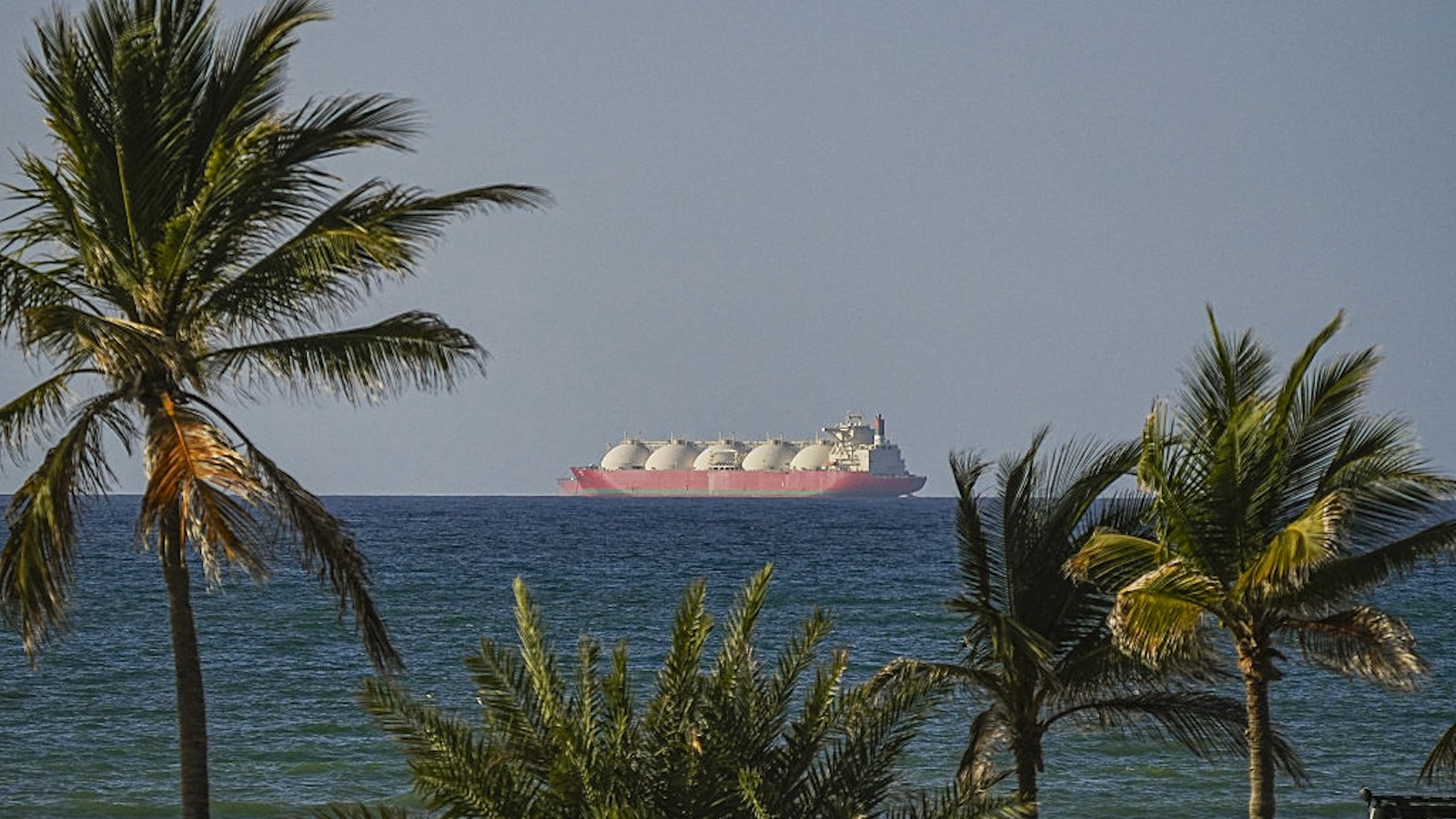
Global shipping is navigating a dual crisis of security and sustainability. For weeks, the industry has contended with the effective closure of the Strait of Hormuz and the Red Sea — arteries that carry a fifth of the world's oil supply. Iranian seizures and Houthi rebel threats have forced hundreds of vessels into costly detours around the Cape of Good Hope, adding weeks to transit times and driving crude oil prices to levels that have upended traditional maritime economics.
This volatility has created an unexpected opening for green energy. As traditional maritime fuel costs spike, certain biofuels have, for the first time, become more cost-effective than their fossil-fuel counterparts. It is against this backdrop that the International Maritime Organization (IMO) — the United Nations agency responsible for regulating global shipping across 176 member states — is meeting this week to finalize a net-zero framework that would impose a mandatory fee on every ton of greenhouse gas emissions produced by the sector.
A sector resistant to reform
Shipping remains one of the most structurally difficult industries to decarbonize. The sector accounts for roughly 3 percent of global emissions, a figure comparable to the output of major industrialized nations. Unlike aviation, which has a concentrated set of manufacturers and fuel suppliers, maritime transport relies on a fragmented ecosystem of flag states, port authorities, shipowners, and fuel bunker operators spread across every jurisdiction on Earth. That fragmentation has historically made coordinated regulation slow and contentious.
The IMO's own track record reflects this difficulty. The agency adopted its initial greenhouse gas strategy in 2018, setting an ambition to halve emissions by 2050 compared to 2008 levels. It revised that target upward in 2023, aligning with a net-zero-by-2050 goal. But ambition statements and binding mechanisms are different things. The proposed carbon levy — a fee applied per ton of CO₂ equivalent emitted — would be the first enforceable economic instrument the IMO has attempted at this scale. If adopted, it would represent a shift from voluntary targets to a price signal embedded in the cost of moving goods across oceans.
The potential revenue from such a levy is significant. Proponents argue that the funds could be channeled into research, port infrastructure, and subsidies for alternative fuels such as green methanol, ammonia, and hydrogen — none of which are yet available at the scale or price point needed to replace heavy fuel oil across the global fleet. Opponents, particularly among developing nations that depend on affordable shipping for trade access, worry that the costs will be passed downstream, raising the price of imports for economies least equipped to absorb them.
Geopolitics as accelerant and obstacle
The current disruptions in the Middle East have sharpened both sides of the debate. On one hand, the spike in conventional fuel prices has narrowed the cost gap between fossil bunker fuels and emerging alternatives, lending practical urgency to the transition argument. When the economics of the status quo deteriorate, the case for structural change becomes easier to make.
On the other hand, geopolitical instability tends to push governments toward short-term crisis management rather than long-term regulatory commitments. Nations facing immediate supply chain disruptions may be reluctant to layer additional costs onto an already strained system. The rerouting of vessels around southern Africa has already increased fuel consumption per voyage — an ironic outcome in which security-driven detours generate higher emissions at the precise moment the industry is debating how to reduce them.
There is also the question of enforcement architecture. The IMO operates on consensus, and its decisions require broad buy-in from flag states — the nations under whose registries ships operate. A handful of open registries, including Panama, Liberia, and the Marshall Islands, account for a disproportionate share of global tonnage. Their positions on the levy will carry outsized weight, and their interests do not always align with those of the major trading economies pushing for climate action.
The shipping industry now sits at a junction where energy economics, climate policy, and geopolitical fracture converge. Whether the current disruption accelerates consensus or fragments it further depends on calculations being made this week in London — calculations that balance the cost of decarbonization against the cost of doing nothing, in a world where the price of both is rising.
With reporting from Grist.
Source · Grist