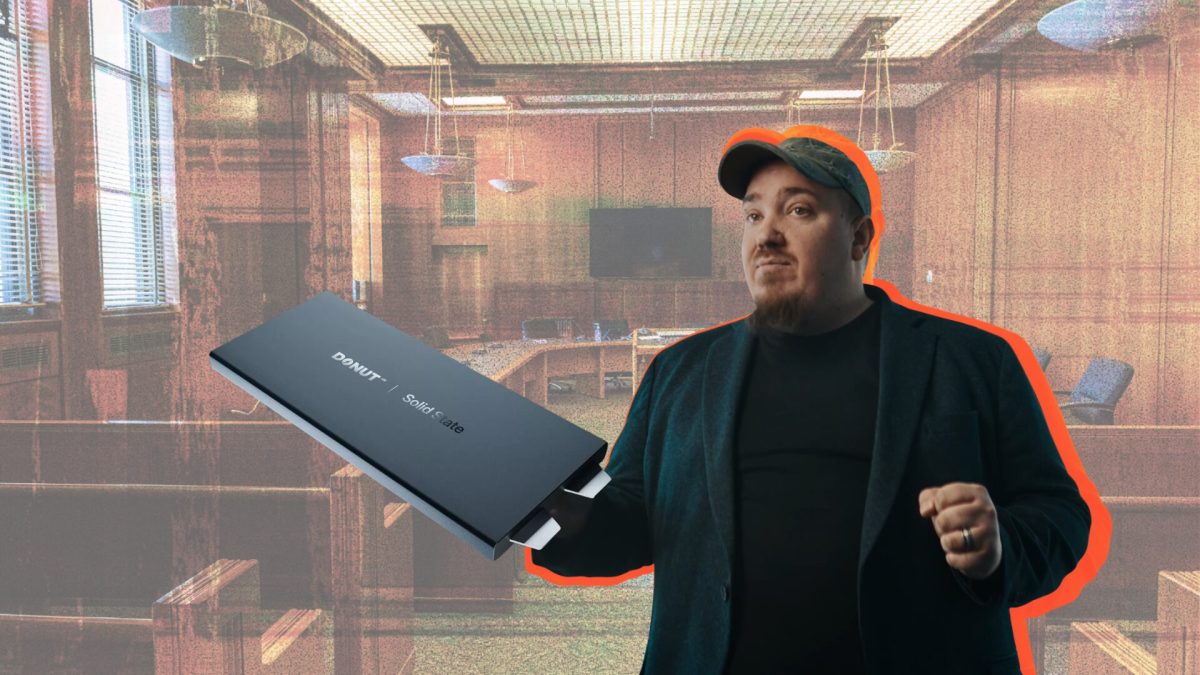
The promise of the solid-state battery — safer, denser, and faster-charging than its liquid-electrolyte counterparts — has long been described as the energy storage industry's holy grail. For Donut Lab, a startup that built its profile around claims of a breakthrough in this domain, that narrative is now under formal legal challenge. A whistleblower, identified as a former high-ranking executive at one of the company's primary partners, has filed a complaint in Finland alleging that Donut Lab has significantly misrepresented the capabilities of its proprietary technology.
The legal filing marks a sharp escalation in the scrutiny surrounding the firm. According to the whistleblower, the performance metrics touted by the startup do not reflect the reality of its current hardware. The complaint follows a series of public demonstrations that industry observers had already characterized as underwhelming, raising questions about whether the company's engineering can match its marketing.
The persistent gap between lab and factory floor
Solid-state batteries replace the liquid or gel electrolyte found in conventional lithium-ion cells with a solid material — typically a ceramic, glass, or sulfide compound. In theory, this architecture enables higher energy density, faster charging, and reduced fire risk. In practice, the technology has proven extraordinarily difficult to manufacture at scale. Dendrite formation, interface resistance between solid layers, and the brittleness of many candidate electrolytes have kept solid-state cells largely confined to laboratory settings or small-format prototypes.
The history of the sector is littered with ambitious timelines that slipped quietly into the future. Major automotive manufacturers have poured billions into solid-state research programs over the past decade, and several have repeatedly pushed back commercialization targets. Against that backdrop, any startup claiming to have leapfrogged incumbents with decades of materials science expertise invites a particular kind of scrutiny. Donut Lab's situation is not the first instance of a deep-tech venture facing allegations that its public claims outpaced its technical reality, and the pattern is familiar enough to constitute a recognized risk category for investors in hardware-intensive sectors.
What distinguishes the Donut Lab case is the source of the challenge. Whistleblower complaints from within a company's own partnership network carry a different weight than skepticism from outside analysts. A former executive at a key partner firm would, in principle, have had direct visibility into the technology's actual performance — access that external observers typically lack. The Finnish legal system will now be tasked with evaluating those claims on their merits.
Deep tech and the valuation gap
The controversy also illuminates a structural tension in how deep-tech ventures are funded and evaluated. In software, a product can be tested, iterated, and scaled with relatively modest capital. In hardware — and particularly in advanced materials — the distance between a promising laboratory result and a manufacturable product can span years and hundreds of millions in investment. That gap creates strong incentives to maintain optimistic narratives, because funding often depends on sustained confidence from partners and investors who may not have the technical expertise to independently assess progress.
This dynamic is not unique to batteries. Similar patterns have surfaced in sectors ranging from theranos-era diagnostics to fusion energy, where the complexity of the underlying science makes independent verification difficult and the appetite for breakthrough stories is high. The result is an information asymmetry that can persist until a demonstration fails publicly or, as in this case, someone with inside knowledge decides to challenge the narrative formally.
For the broader solid-state battery field, the Donut Lab episode is unlikely to derail investment or research momentum — the fundamental physics remains compelling, and the potential applications in electric vehicles, grid storage, and consumer electronics are too significant to abandon. But it may sharpen the questions that investors and partners ask before committing capital. The tension between the genuine difficulty of the science and the commercial pressure to project confidence is not going away. Whether the Finnish courts find substance behind the whistleblower's allegations or not, the case has already surfaced a question that the industry will continue to confront: at what point does optimism about a technology cross the line into misrepresentation of it.
With reporting from Numerama.
Source · Numerama