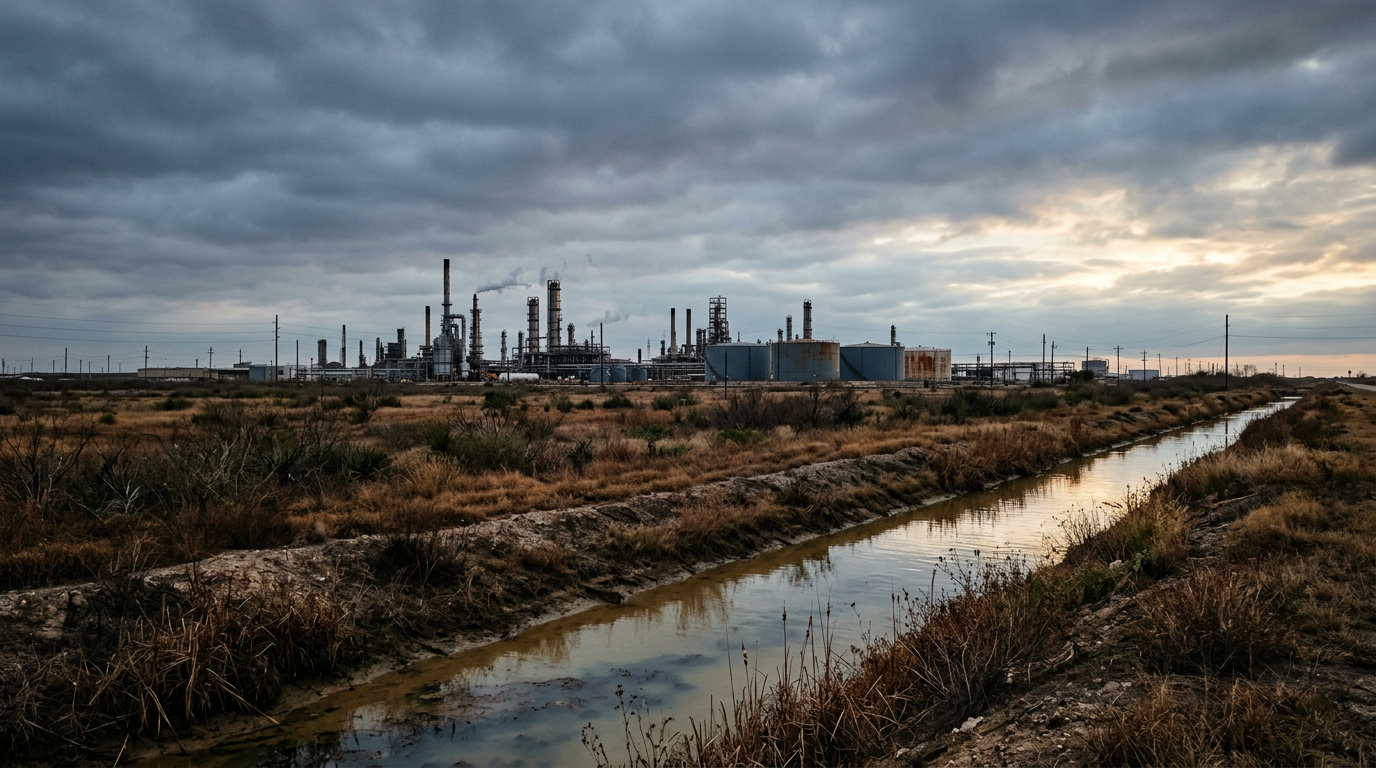
Tesla's ambitious push to vertically integrate its battery supply chain has hit a regulatory wall in Robstown, Texas. The Nueces County Drainage District No. 2 has issued a cease-and-desist letter to the company's nearly $1 billion lithium refinery, demanding an immediate halt to wastewater discharge following the discovery of toxic heavy metals in local runoff.
Independent laboratory testing commissioned by the district revealed traces of hexavalent chromium — a potent carcinogen — alongside arsenic and significantly elevated levels of lithium. The facility currently discharges approximately 231,000 gallons of wastewater daily into a local ditch managed by the drainage district. The findings have raised immediate alarms regarding the environmental footprint of a project originally framed as a cornerstone of the American clean energy transition.
The industrial cost of clean technology
The tension in Robstown highlights a recurring friction in the green economy: the industrial reality of producing "clean" technology. Lithium refining — the process of converting raw lithium ore or brine into battery-grade lithium hydroxide or lithium carbonate — is chemically intensive. It typically involves acid leaching, solvent extraction, and high-temperature processing, all of which generate wastewater streams laden with dissolved metals and residual chemicals. Hexavalent chromium, the substance flagged in the independent tests, is the same compound that became a household name through the Erin Brockovich case in the 1990s, when it was linked to groundwater contamination in Hinkley, California. Arsenic, the other metal identified, is a well-documented toxin with established links to cancer, cardiovascular disease, and neurological damage at chronic low-level exposure.
For Tesla, the Robstown refinery represents a strategic bet on domestic lithium processing. The United States refines only a small fraction of the lithium it consumes; the vast majority of global refining capacity sits in China. Building onshore refining was meant to reduce that dependency, a goal that aligns with broader federal policy encouraging domestic critical mineral supply chains. The facility's location in South Texas was chosen in part for proximity to port infrastructure and lower land costs. But the episode underscores a pattern visible across the extractive and refining industries: speed of deployment often collides with the slower, more granular demands of environmental compliance and community trust.
The cease-and-desist order from a local drainage district, rather than a state or federal agency, is itself notable. Drainage districts in Texas hold authority over water flow and discharge within their jurisdictions, and their enforcement powers, while narrower than those of the Texas Commission on Environmental Quality or the Environmental Protection Agency, can still compel operational changes. Whether state or federal regulators open their own investigations in response to the independent lab results remains an open question — one that could significantly escalate the matter.
Reputational stakes and strategic calculus
The reputational dimension is difficult to separate from the operational one. Tesla has built its brand around the promise of sustainability, and its entry into lithium refining was presented as an extension of that mission — closing the loop between raw material and finished vehicle. A finding that the refinery is discharging carcinogens into local waterways complicates that narrative in a direct and visible way. It also provides ammunition to critics who argue that the environmental costs of the EV supply chain are systematically underweighted in public discourse.
There is a broader pattern worth noting. As Western governments push to repatriate critical mineral processing from Asia, communities near proposed or active facilities have increasingly raised environmental and health objections. Lithium projects in Nevada, rare earth processing proposals in Texas, and battery recycling plants in several states have all encountered local resistance rooted in concerns about water quality, air emissions, or soil contamination. The common thread is not opposition to clean energy per se, but a demand that the industrial processes enabling it meet the same environmental standards that the end product claims to represent.
How Tesla responds to the Robstown order — whether it negotiates upgraded treatment systems, contests the findings, or faces further regulatory scrutiny — will signal something about the company's capacity to operate as a heavy industrial player, not just a technology brand. The drainage district has requested a meeting. The 231,000 gallons per day, meanwhile, have stopped flowing. What fills the gap between ambition and compliance is the space where the credibility of domestic lithium strategy will be tested.
With reporting from Electrek.
Source · Electrek