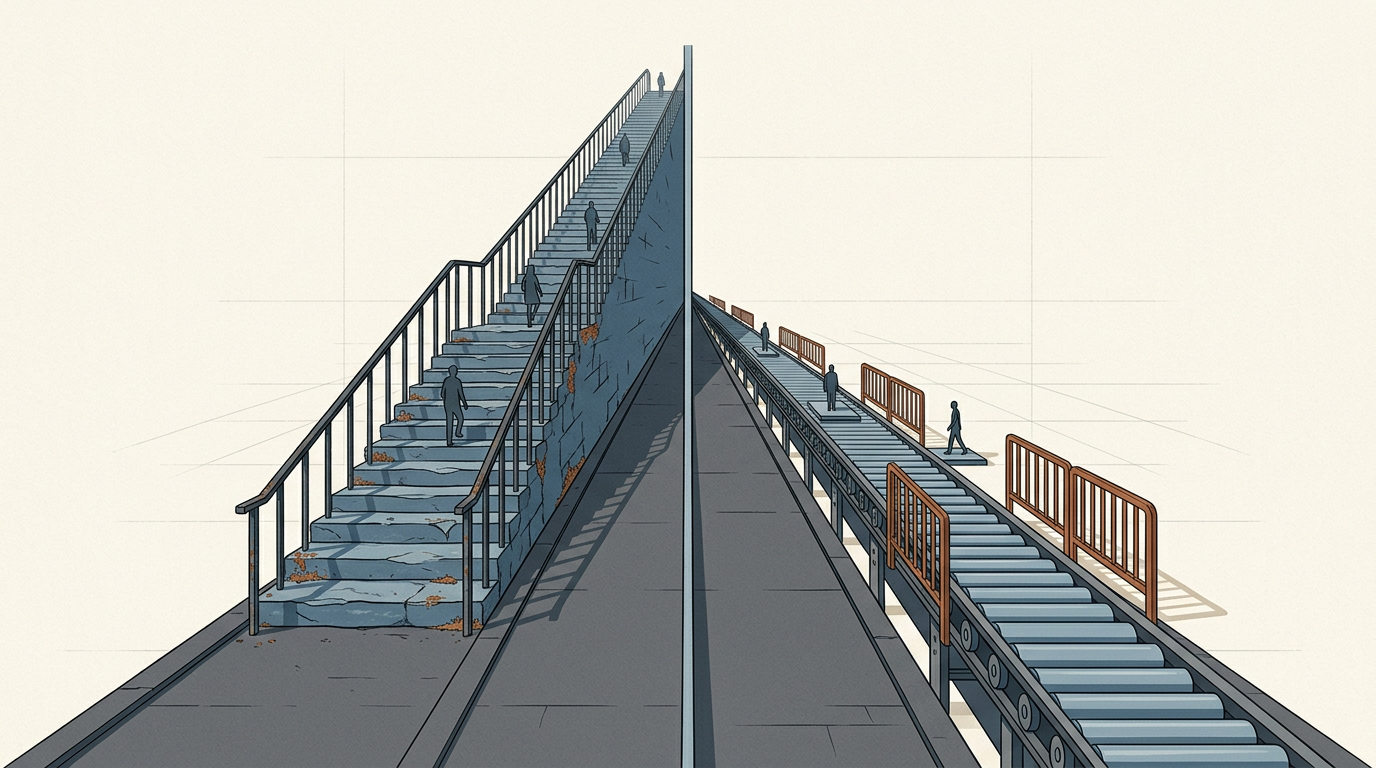
Over the past several days, Instagram users noticed an uninvited aesthetic shift: their vibrant, high-dynamic-range photographs were appearing in stark black and white. While the monochromatic look is a classic stylistic choice, this particular transition was involuntary — the result of a technical failure within the app's rendering pipeline rather than a resurgence of film-noir sensibilities.
Meta, Instagram's parent company, confirmed that the issue specifically targeted HDR photos, a format designed to capture a broader range of luminosity and color than standard digital files. The bug, which affected a subset of accounts, appears to have surfaced as early as April 18. The company has since announced that a fix is being deployed, with affected posts set to automatically revert to their original color states as the correction propagates through the system.
The quiet fragility of the imaging stack
HDR photography has become a default mode on most flagship smartphones. Apple, Samsung, and Google have each invested heavily in computational photography pipelines that blend multiple exposures into a single image file containing richer tonal data than conventional captures. The result is photographs that more closely approximate what the human eye perceives — deeper shadows, brighter highlights, more nuanced gradients of color. But that richness comes at a cost of complexity. HDR files rely on metadata and encoding standards — such as the Hybrid Log-Gamma (HLG) curve or the Perceptual Quantizer (PQ) transfer function — that every link in the distribution chain must correctly interpret.
When a platform like Instagram ingests an HDR image, it must transcode the file for display across a staggering diversity of devices: phones with wide-color OLED panels, older LCDs limited to the sRGB gamut, web browsers with varying levels of HDR support. A misstep at any point in that pipeline — a misread transfer function, a fallback to a luminance-only channel — can strip the image of its color information entirely, which appears to be what occurred here. The grayscale rendering was not a deletion of data but almost certainly a misinterpretation of it: the system likely read the brightness values while discarding or failing to map the chrominance layer.
This kind of failure is not unprecedented. The broader ecosystem of digital media has encountered similar translation errors as HDR content has proliferated. Video streaming platforms spent years refining tone-mapping algorithms to prevent washed-out or discolored playback on non-HDR displays. The challenge for a social platform is that the volume of content and the heterogeneity of source devices make exhaustive testing difficult. Every new phone model, every camera firmware update, every operating system revision introduces a potential point of incompatibility.
A platform's role as visual archive
The incident, minor in duration, raises a less minor question about the role platforms play as custodians of visual memory. Instagram is, for hundreds of millions of users, a de facto photo archive — the place where birthdays, travels, and milestones are stored and revisited. Unlike a local photo library, however, the images users see on Instagram are not the original files. They are processed derivatives, compressed and re-encoded according to the platform's internal specifications. When those specifications malfunction, the visual record changes without the user's knowledge or consent.
Meta's assurance that affected posts will automatically revert to their correct color states implies that the original data was preserved upstream and that the error occurred at the rendering or delivery layer. That distinction matters. Had the transcoding process itself been destructive — overwriting source data with the faulty grayscale output — restoration would have been far more difficult, if not impossible.
The episode sits at the intersection of two broader tensions in consumer technology. The first is the accelerating complexity of imaging standards, where each generation of hardware pushes file formats further from the simple JPEG baseline that once served as a universal lingua franca. The second is the concentration of visual culture on a small number of platforms whose backend decisions — intentional or accidental — can alter how the world's photographs appear. Whether the industry moves toward more resilient, standardized HDR handling or continues to rely on platform-specific pipelines that occasionally break remains an open question, one that each new bug report makes slightly more urgent.
With reporting from Engadget.
Source · Engadget