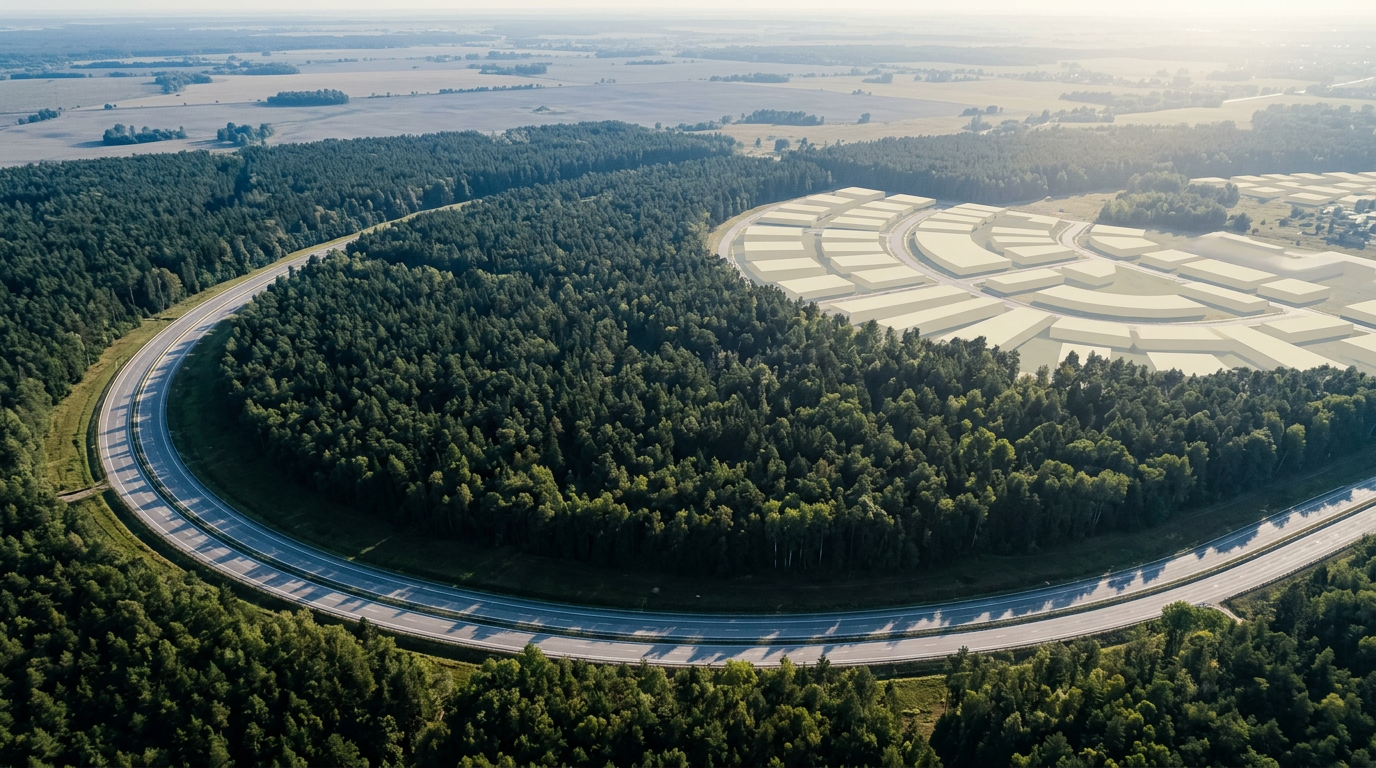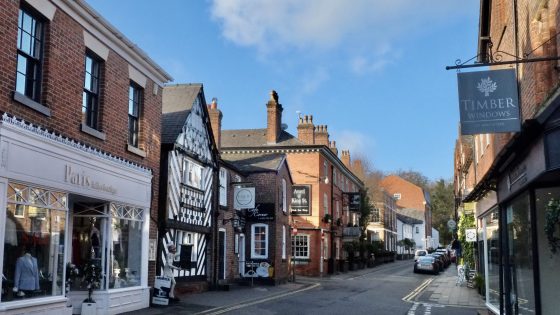
Knutsford Town Council has issued a formal call for a design team to lead the development of a new cycle path through Dog Wood, a green corridor on the edges of the Cheshire market town. The procurement, published through the council's standard commissioning process, sets a submission deadline of May 22, 2026, and signals a deliberate investment in active-travel infrastructure at the local level.
The project sits within a broader pattern across English towns and smaller municipalities that have begun channeling resources into cycling and walking networks — often as discrete, manageable commissions rather than sweeping metropolitan schemes. For a town the size of Knutsford, a single well-designed cycle path through a wooded area carries both practical transport value and symbolic weight: it communicates priorities about land use, public health, and the relationship between built infrastructure and natural landscape.
Active Travel and the Small-Town Commission
Much of the public conversation around cycling infrastructure in the United Kingdom has centered on larger cities — London's Cycle Superhighways, Manchester's Bee Network, and similar programs that attract national attention and substantial central-government funding. Smaller towns, by contrast, tend to pursue cycling improvements through incremental projects: a single route connecting a residential area to a school, a path linking a rail station to a town center, or — as in this case — a corridor through a semi-rural green space.
These commissions are modest in scale but architecturally consequential. A cycle path through woodland demands careful negotiation between engineering requirements and ecological sensitivity. Surface material, drainage, lighting, width, gradient, root protection zones, and habitat continuity all become design variables that a competent team must reconcile. The best examples of such paths — found in the Netherlands, Denmark, and increasingly in parts of the UK — demonstrate that infrastructure embedded in landscape can enhance rather than diminish the character of a place.
For design teams considering a submission, the Knutsford commission likely presents a familiar tension: a constrained budget paired with high expectations around environmental integration. Local councils rarely command the procurement budgets of national agencies, which means the winning team will need to deliver design quality within tight fiscal parameters.
What the Procurement Signals
The decision to issue a formal call for a design team — rather than appointing directly or relying on a highways department's in-house capacity — suggests Knutsford Town Council views the Dog Wood path as something more than a standard piece of civil engineering. Competitive procurement for landscape-infrastructure projects of this kind often reflects an ambition to achieve design distinction, community engagement, or both.
It also reflects a governance reality. English town and parish councils operate with limited statutory powers and budgets compared to district or county authorities. When they initiate infrastructure projects, they typically do so with a combination of precept funding, grants, and partnerships. The procurement structure chosen — open call with a defined deadline — indicates a degree of procedural formality that can help smaller councils demonstrate accountability and attract higher-caliber submissions.
The broader question is whether projects like the Dog Wood cycle path accumulate into something larger. Individual commissions in individual towns do not, on their own, constitute a national active-travel network. But they do establish local precedents, build design knowledge within communities, and create physical facts on the ground that shape future planning decisions. Whether Knutsford's path becomes a model for similar Cheshire towns or remains an isolated amenity depends on factors well beyond the design team's remit — political continuity, maintenance funding, and the willingness of neighboring authorities to connect their own networks to it.
The deadline for submissions is May 22, 2026. The commission's full scope is available through the council's procurement documentation.
With reporting from Architects Journal.
Source · Architects Journal