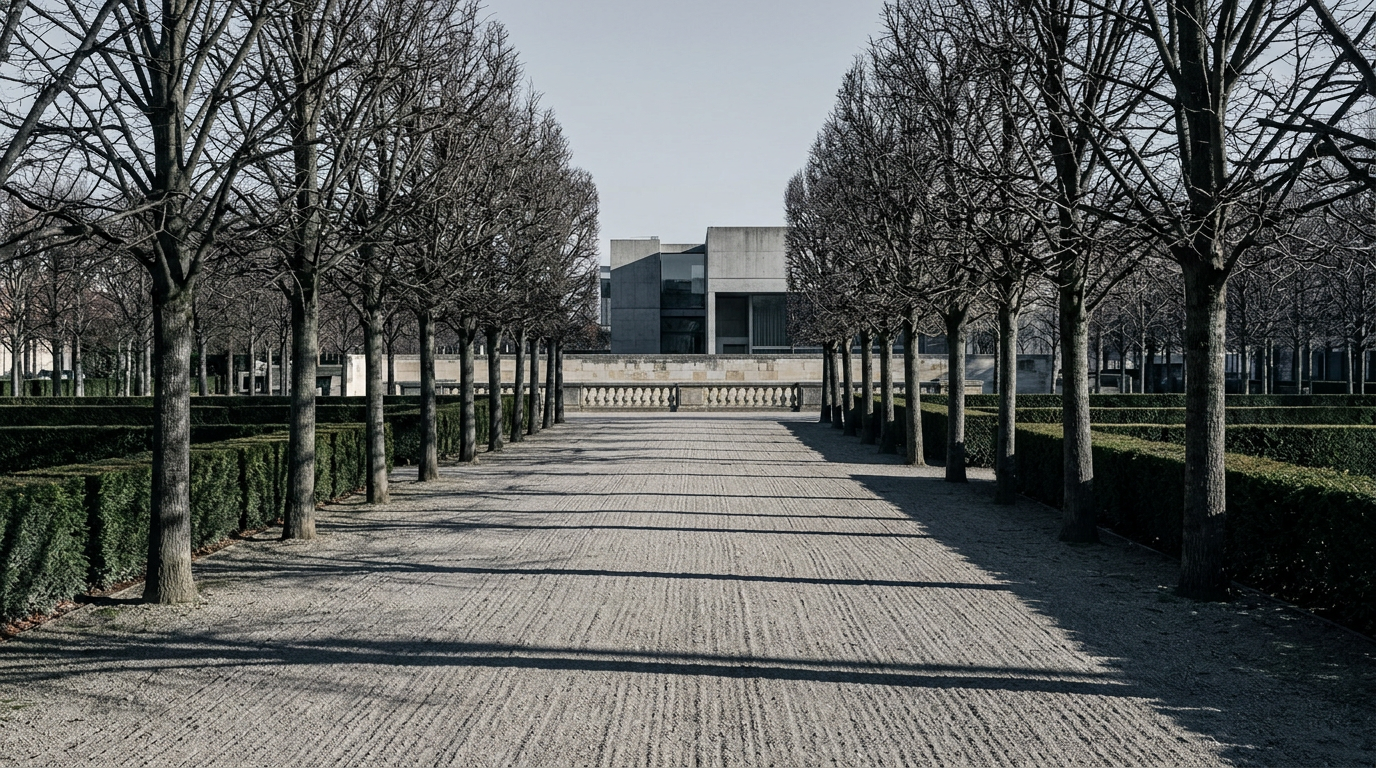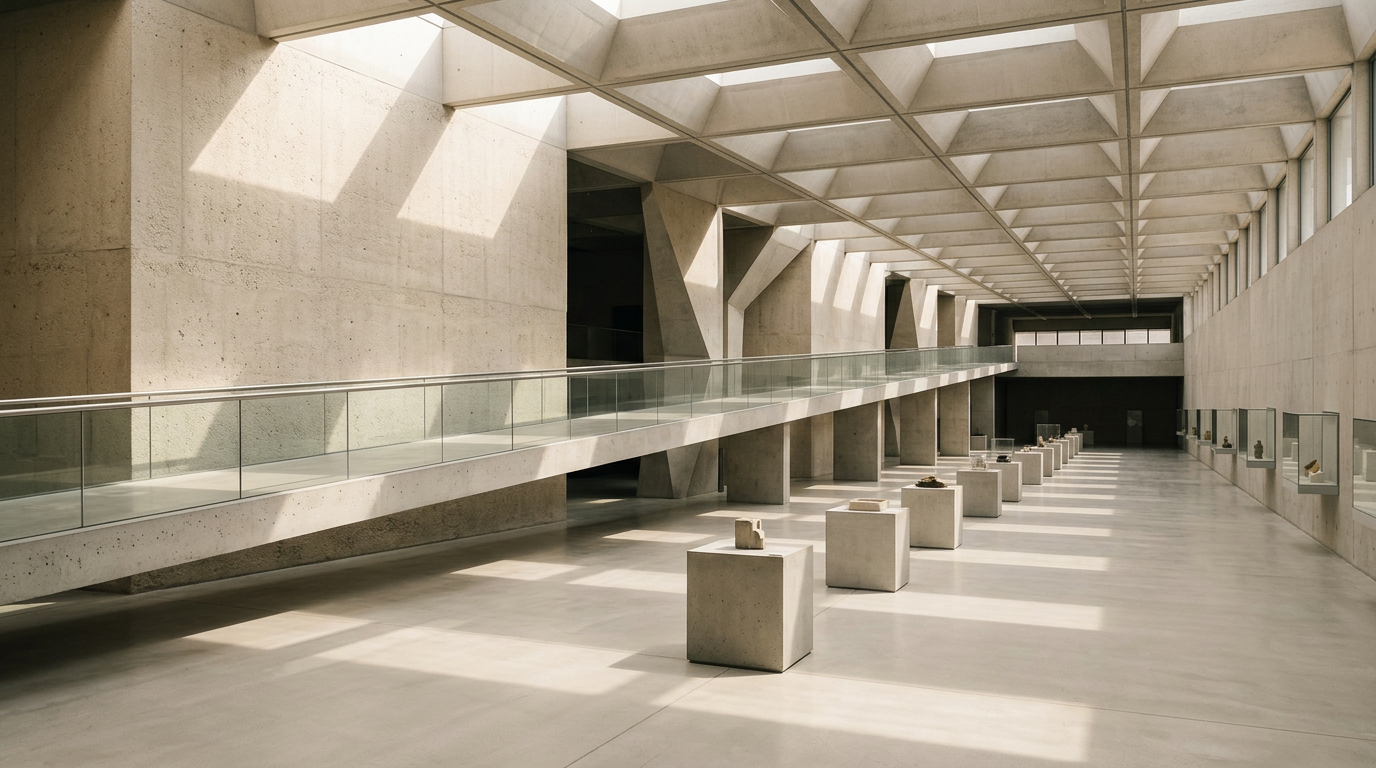
The Los Angeles County Museum of Art has opened the David Geffen Galleries, a purpose-built space that represents the most significant physical transformation of the institution in decades. The galleries are designed to realize a curatorial philosophy long championed by director Michael Govan: a museum without hierarchy, where artworks from different civilizations and centuries share the same rooms rather than being segregated by geography or period.
The approach breaks with a convention that has governed encyclopedic museums since the nineteenth century. Institutions such as the Metropolitan Museum of Art, the British Museum, and the Louvre typically organize their permanent collections into wings or departments — Egyptian, Greek and Roman, European Painting, Asian Art — each with its own curatorial staff and spatial territory. LACMA's new galleries reject that partitioning. Objects from disparate regions and eras are placed in direct proximity, inviting visitors to draw connections across traditions rather than within them.
A curatorial model with few precedents
The idea of cross-cultural juxtaposition is not entirely new. Smaller institutions and temporary exhibitions have experimented with thematic rather than geographic hang for years. The Musée du quai Branly in Paris, which opened in 2006, was conceived as a space where non-Western art could be encountered on its own terms rather than as ethnographic specimen. More recently, several major museums have begun rethinking departmental boundaries, acknowledging that strict taxonomies can reinforce outdated hierarchies between Western and non-Western traditions, or between "fine art" and "decorative" or "functional" objects.
What distinguishes LACMA's project is scale and permanence. This is not a temporary exhibition making a curatorial argument for a season; it is the organizing principle of a major wing of one of the largest art museums in the United States. The David Geffen Galleries are intended to ground the museum's collection in what the institution describes as a broader context of history, culture, and place — a framing that treats artistic production as a global phenomenon rather than a series of parallel national or regional stories.
The architectural container matters as much as the curatorial logic inside it. LACMA's campus has been undergoing a protracted and closely watched reconstruction. The new building replaces mid-century structures that had defined the museum's identity for decades. The shift to open, flexible gallery spaces is designed to support the non-hierarchical model physically: fewer walls between departments means fewer walls between worldviews.
What the model asks of its audience
A museum organized by geography offers visitors a clear navigational logic. A visitor who wants to see Japanese screens or Dutch Golden Age painting knows where to go. A non-hierarchical arrangement trades that legibility for something more demanding: the expectation that viewers will engage with juxtaposition itself as a form of meaning-making.
Critics of such approaches have argued that removing context can flatten difference, making disparate objects appear interchangeable rather than illuminating genuine connections. Supporters counter that traditional departmental structures already flatten — by implying that a Chinese bronze vessel and a Benin bronze have nothing to say to each other simply because they originated on different continents.
The tension between these positions is unlikely to be resolved by any single institution. What LACMA's new galleries do is place a significant institutional bet on one side of the argument. The museum is wagering that proximity generates insight, that a visitor standing between a pre-Columbian textile and a medieval European altarpiece will ask questions that neither object prompts in isolation.
Whether that wager pays off depends on factors that extend well beyond architecture and curatorial intent — including how the galleries are interpreted by docents, how digital guides frame the experience, and whether visitors accustomed to conventional museum navigation find the new model enriching or disorienting. Other encyclopedic museums will be watching closely. If LACMA's experiment attracts audiences and critical respect, it could accelerate a broader rethinking of how permanent collections are displayed. If it frustrates visitors or draws sustained scholarly criticism, it may serve as a cautionary case. Either outcome will shape the conversation about what museums owe their collections — and their publics — for years to come.
With reporting from Vogue.
Source · Vogue