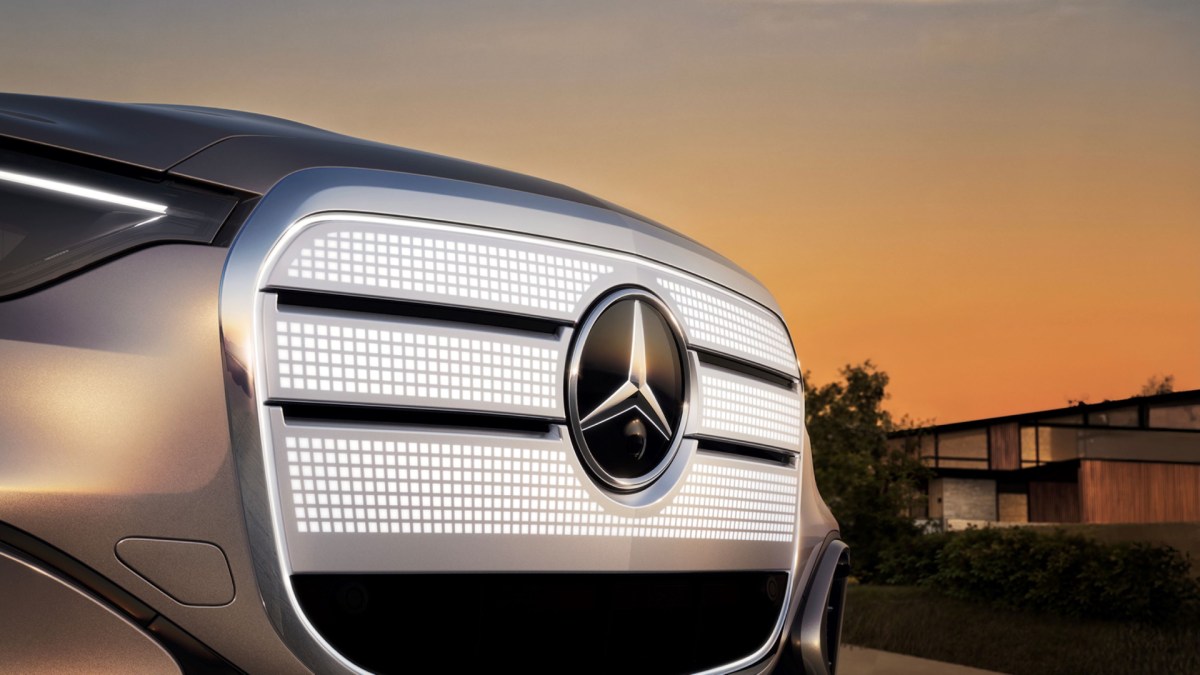
The transition to electrification is as much a logistical challenge as an engineering one. Mercedes-Benz has formalized a new partnership with Samsung SDI, securing a critical supply chain for the batteries that will power its forthcoming fleet of compact and mid-sized electric SUVs. The agreement covers high-performance cells for upcoming SUV and SUV-coupe models, but its strategic implications extend well beyond the immediate product cycle.
Samsung SDI, the battery manufacturing arm of the South Korean conglomerate, has positioned itself as one of the leading developers of solid-state battery technology — a class of power cells that replaces the liquid electrolyte found in conventional lithium-ion batteries with a solid material. The theoretical advantages are significant: higher energy density, which translates to longer range per kilogram of battery weight, and the potential for substantially faster charging times. For a luxury automaker building vehicles where range anxiety and charging convenience are purchase-deciding factors, the appeal is self-evident.
A supply chain play in a fragmented market
The partnership should be read against the backdrop of an increasingly fractured global battery supply chain. Over the past several years, European automakers have grappled with a structural dependency on Asian cell manufacturers — primarily in China, South Korea, and Japan. CATL, BYD, LG Energy Solution, and Samsung SDI dominate global cell production, and securing long-term supply agreements has become a strategic imperative for any automaker with serious electrification ambitions.
Mercedes-Benz is not new to this game. The company has pursued a multi-supplier strategy, maintaining relationships with several cell producers to avoid over-reliance on any single source. The Samsung SDI agreement fits within that framework, but it also signals a preference for a partner with credible next-generation technology credentials. Where some supply deals are purely about volume, this one appears to carry a research-and-development dimension tied to the eventual commercialization of solid-state cells.
The European push to build domestic battery manufacturing capacity — through gigafactory projects and public subsidies — has proceeded more slowly than initially projected. That reality makes partnerships with established Asian producers not just convenient but necessary for automakers operating on tight product-launch timelines. Mercedes, which has committed to an electric-first portfolio across its lineup, cannot afford gaps in cell availability as it rolls out new models.
The solid-state question
Solid-state batteries have occupied a peculiar position in the automotive industry for years: universally acknowledged as the next major leap in energy storage, yet persistently elusive in terms of mass production readiness. Toyota, Nissan, and several Chinese manufacturers have all announced development programs, but no automaker has yet brought a solid-state-powered vehicle to market at scale.
The core engineering challenges remain formidable. Solid electrolytes must maintain stable contact with electrodes through thousands of charge-discharge cycles, and manufacturing processes that work in laboratory conditions have proven difficult to scale without prohibitive cost increases. Samsung SDI has been among the more vocal players in claiming progress on these fronts, though the gap between prototype performance and factory-floor reality remains the central uncertainty.
For Mercedes, the calculus is pragmatic. The near-term deliverable from the Samsung partnership is a reliable supply of conventional high-performance cells for vehicles that will reach customers in the coming product cycle. The longer-term bet is that proximity to Samsung's solid-state research pipeline will give Mercedes early access to next-generation chemistry when — and if — it reaches commercial viability.
The arrangement illustrates a broader pattern in the automotive industry: partnerships that blend procurement with technology hedging. Automakers are no longer simply buying cells; they are buying optionality on future breakthroughs. Whether solid-state technology delivers on its theoretical promise at scale, or whether incremental improvements to existing lithium-ion architectures close the gap first, remains one of the defining open questions in electric vehicle development. Mercedes, by tying itself to Samsung SDI, has placed a deliberate wager on which side of that question it expects to land.
With reporting from Numerama.
Source · Numerama