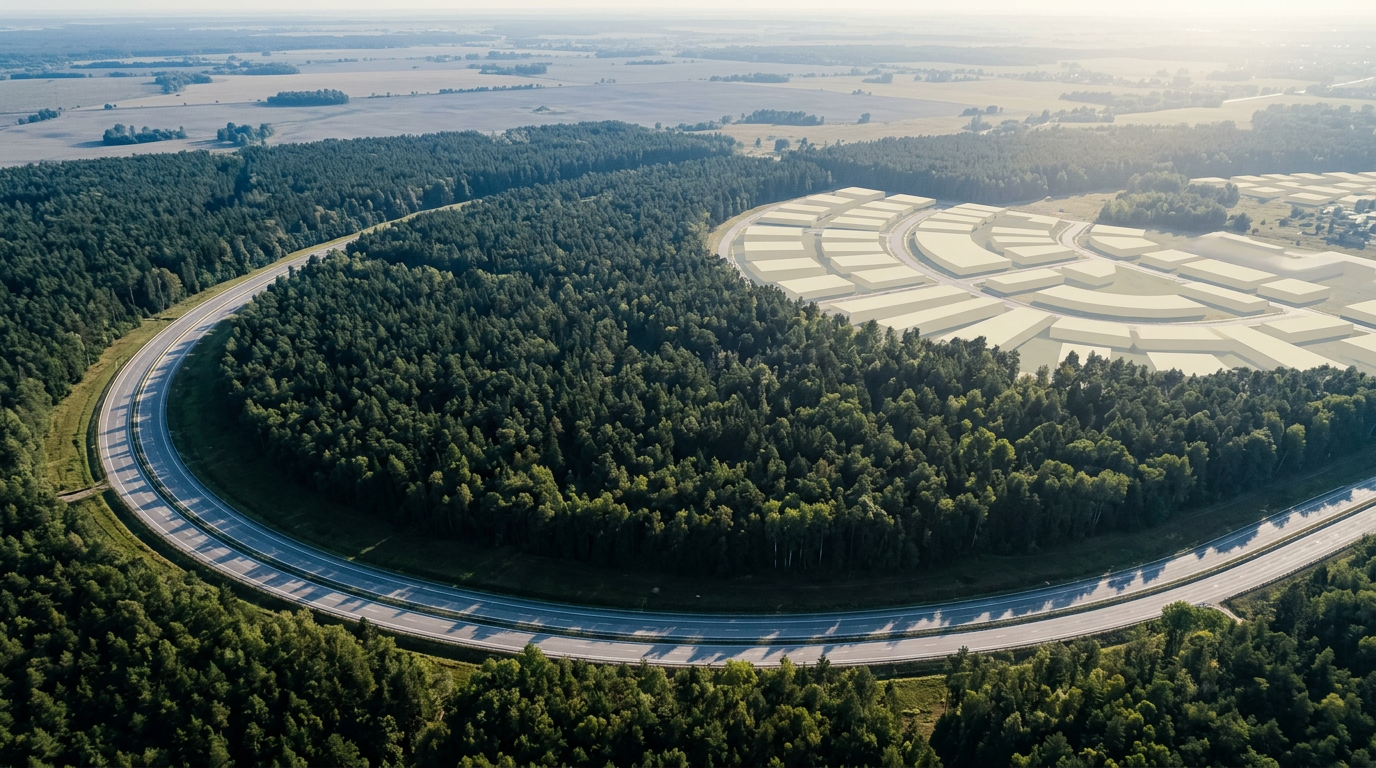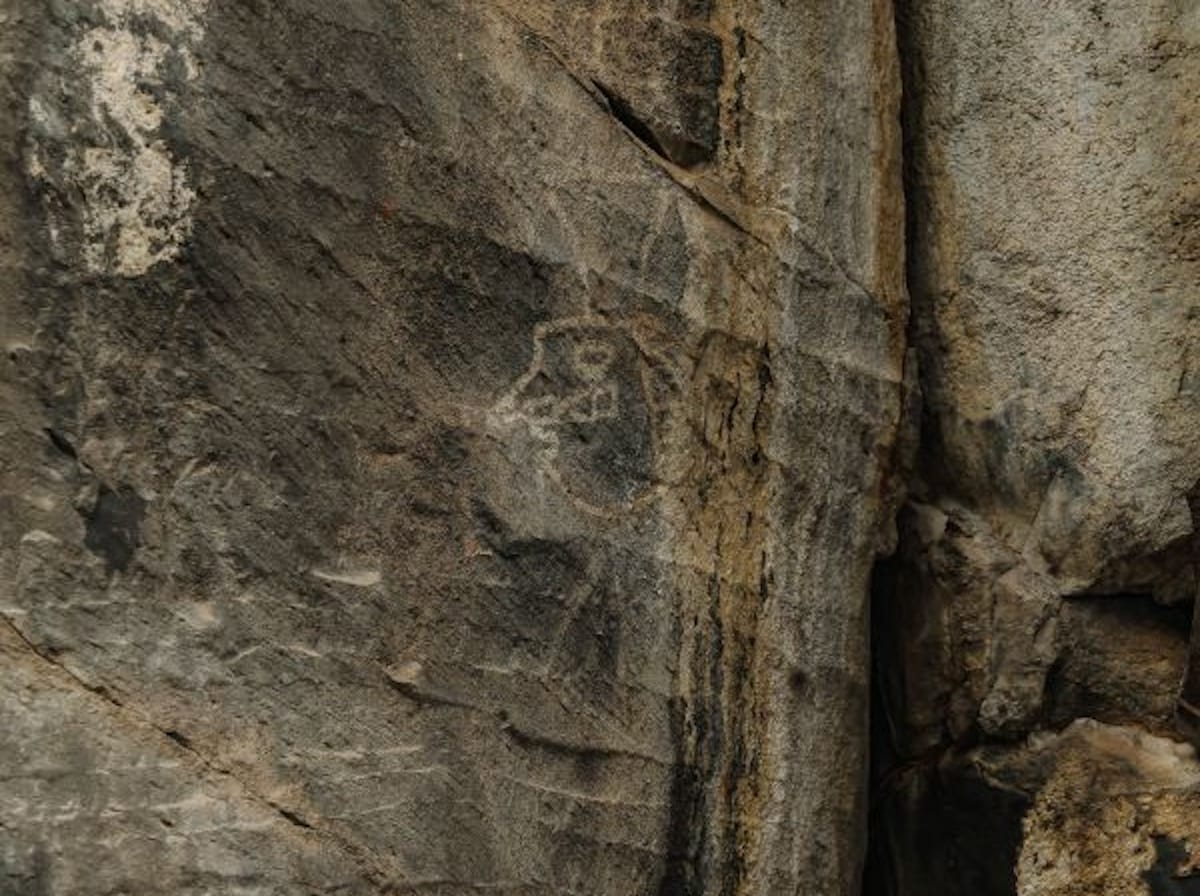
Infrastructure often advances with a certain indifference to the ground it breaks, but in Mexico, a multi-billion-dollar rail project is yielding to the deeper history of the landscape. President Claudia Sheinbaum announced that the planned passenger route connecting Mexico City to Querétaro will be diverted following the discovery of 16 pre-Hispanic artworks, including paintings and petroglyphs, along the path in the state of Hidalgo. The findings, documented by the National Institute of Anthropology and History (INAH), represent a chronological bridge across Mesoamerican history.
Some of the rock paintings date to the Postclassic period — roughly 900 CE until the Spanish conquest in 1521 — a time defined by the ascendancy of the Aztec Empire. Other figures are far older, reaching back more than 4,000 years into what archaeologists categorize as prehistory. The decision to reroute the $8 billion transit line rather than proceed through the site places the discovery at the center of a familiar but unresolved question in Mexican public life: how a rapidly developing country reconciles the demands of modern infrastructure with the density of its archaeological record.
A Landscape Layered With History
Mexico sits atop one of the richest archaeological terrains on Earth. INAH, the federal body responsible for cataloguing and protecting the country's cultural patrimony, oversees tens of thousands of registered archaeological sites, with new discoveries surfacing regularly as construction, agriculture, and urban expansion disturb previously untouched ground. The state of Hidalgo, where the petroglyphs were found, is less commonly associated with headline-grabbing ruins than neighbors like the State of Mexico or Oaxaca, but its landscape carries traces of habitation stretching back millennia — from early hunter-gatherer communities to Otomí and Nahua settlements that predated and coexisted with the Aztec expansion.
Petroglyphs — images carved or incised into rock surfaces — and painted rock art are among the most fragile categories of archaeological evidence. Unlike monumental architecture or ceramic artifacts, they cannot be relocated. Their survival depends entirely on the integrity of the geological formations that host them. This makes in-situ preservation not merely preferable but, in most cases, the only viable option. The rerouting of a rail corridor, while costly and logistically complex, reflects an acknowledgment that the site's value is inseparable from its physical context.
The Mexico City–Querétaro rail project has long been a symbol of the country's ambitions to modernize its passenger transit network. The corridor, one of the busiest in central Mexico, connects the capital to a fast-growing industrial and technology hub. Previous iterations of a high-speed rail plan for the route date back more than a decade, having been announced, cancelled, and revived under successive administrations. That the current government chose to absorb the disruption of a reroute rather than negotiate a compromise with the archaeological site signals a political calculation as much as a cultural one.
The Politics of Preservation
Mexico's legal framework for heritage protection is, on paper, among the strongest in Latin America. Federal law grants INAH broad authority to intervene in development projects that threaten registered or newly discovered sites. In practice, however, enforcement has been uneven. The construction of the Tren Maya railway across the Yucatán Peninsula drew sustained criticism from archaeologists and environmental groups who argued that the pace of construction outstripped the capacity for adequate survey and salvage work. Thousands of archaeological features were documented along that route, and debates over whether sufficient care was taken remain contentious.
The Hidalgo decision offers a contrasting case study. Where the Tren Maya proceeded through sensitive zones with mitigation measures applied during or after construction, the Mexico City–Querétaro reroute represents a preemptive concession to the archaeological record. Whether this reflects a shift in institutional posture or simply the specifics of the site — 16 artworks spanning four millennia carry a particular symbolic weight — is open to interpretation.
What remains less clear is the precedent this sets. Large-scale infrastructure in Mexico will continue to encounter buried or exposed heritage. Each discovery forces a negotiation between timelines, budgets, and the claims of the deep past. The petroglyphs in Hidalgo survived four thousand years of geological and human change. Whether the institutional will to protect such sites survives the next decade of development pressure is a different question entirely.
With reporting from Hyperallergic.
Source · Hyperallergic