Mexico's transition toward electric mobility is beginning to find its rhythm, moving beyond the niche of luxury early adopters into a more structural phase of growth. Data from the first quarter of 2024 reveals a synchronized expansion of both infrastructure and vehicle adoption — a convergence that, in most emerging EV markets, tends to precede a period of accelerated uptake. According to the Electro Movilidad Asociación (EMA), the nation's public charging network grew by 24.6% year-over-year, reaching 4,378 connection points. Simultaneously, private charging infrastructure — the residential and corporate plugs that often form the backbone of EV utility — surged by 25.7%, totaling over 55,000 positions.
The uptick in hardware is a necessary response to a sharp rise in demand. While official government figures from Inegi recorded 6,691 electric vehicle sales in the first quarter — a 54.7% increase — the EMA suggests the actual market footprint is even larger. By accounting for Chinese manufacturers like BYD that do not yet report to Inegi, the association estimates that over 10,000 fully electric units were sold in the same period. This discrepancy underscores the rapid entry of new players into the Mexican market, particularly from Asia, which is diversifying the price points available to consumers and complicating the statistical picture that policymakers rely on.
The corporate calculus behind fleet electrification
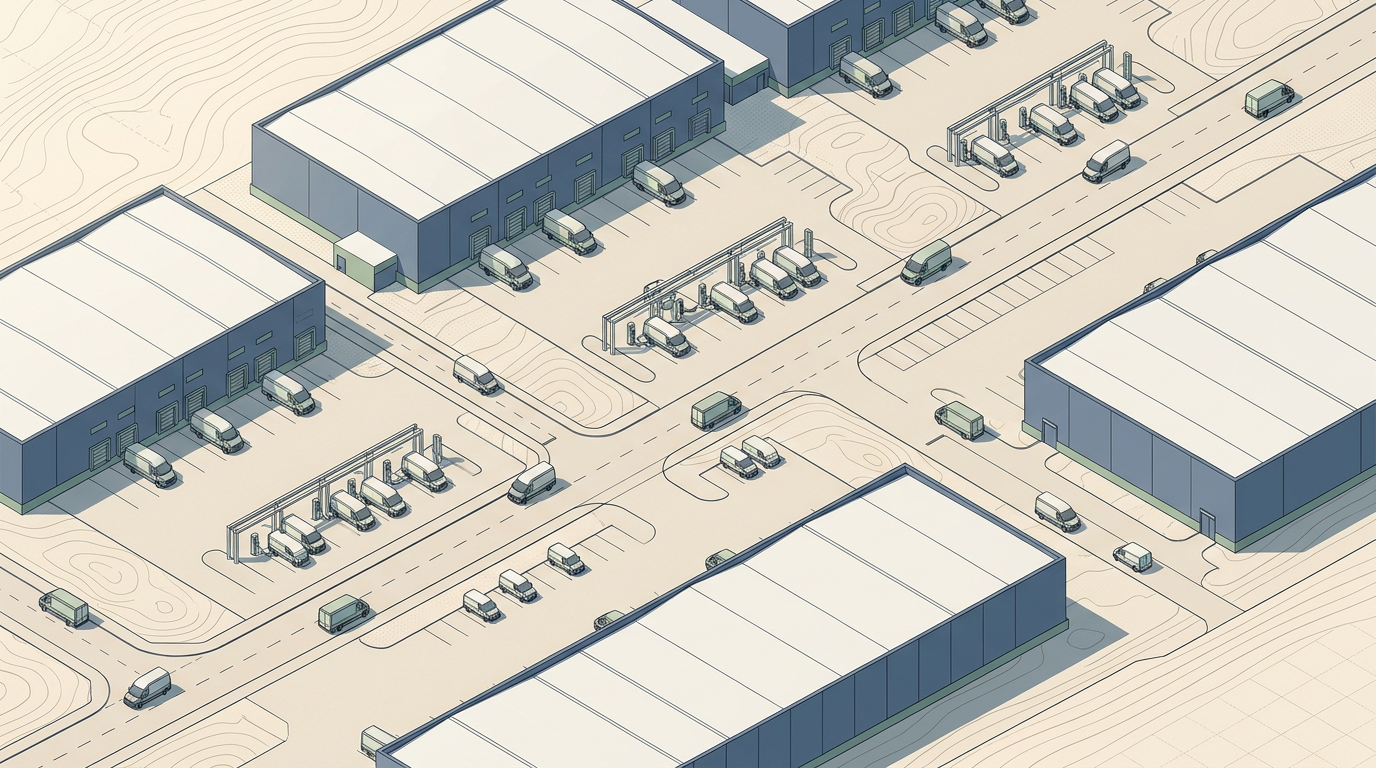
The momentum is increasingly driven by the cold logic of corporate logistics rather than environmental sentiment alone. For companies managing last-mile delivery and large-scale distribution fleets, the shift to electric is a hedge against the volatility of fossil fuels, which can account for roughly 30% of total operating costs. As charging networks densify across the country, the financial case for electrifying commercial fleets is becoming harder for Mexican firms to ignore, signaling a shift from experimental pilots to permanent infrastructure.
This pattern mirrors what played out in other large markets where fleet operators — not individual consumers — served as the demand anchor that pulled charging infrastructure into commercially viable density. In China and parts of Western Europe, ride-hailing companies, parcel delivery services, and municipal transit agencies provided the predictable, high-utilization demand that justified capital-intensive buildouts of charging stations. Mexico appears to be entering a similar phase. The difference is timing: Mexican fleet operators can now source vehicles at price points that were unavailable even two years ago, thanks in large part to the aggressive global expansion of Chinese automakers whose manufacturing scale has compressed costs across the EV supply chain.
The role of Chinese manufacturers in reshaping the Mexican market deserves particular attention. BYD and other brands entering Latin America are not simply adding volume; they are introducing vehicle segments — compact commercial vans, affordable sedans — that legacy automakers with Mexican assembly operations have been slower to electrify. The fact that these sales are not yet fully captured by Inegi's reporting framework raises a practical concern: infrastructure planning, subsidy design, and grid-capacity forecasting all depend on accurate demand data. A market growing faster than its own statistical apparatus can measure is a market at risk of planning misalignment.
Infrastructure density and the question of grid readiness
The 24.6% growth in public charging points is a meaningful signal, but raw numbers tell only part of the story. What matters for sustained adoption is geographic distribution and reliability. Mexico's charging network remains concentrated in a handful of metropolitan corridors — Mexico City, Monterrey, Guadalajara, and the routes connecting them. For fleet operators running regional logistics, coverage gaps outside these corridors impose range constraints that no amount of urban charging density can solve.
There is also the question of electrical grid capacity. Each new fast-charging station places incremental demand on local distribution networks, and Mexico's grid infrastructure varies considerably by region. The pace at which the Comisión Federal de Electricidad and private energy providers can accommodate rising load from EV charging will shape whether infrastructure growth can keep pace with vehicle sales — or whether bottlenecks emerge that slow the transition.
The structural forces at work — cheaper vehicles from new market entrants, corporate cost optimization, and a growing installed base of chargers — are mutually reinforcing. But so are the constraints: incomplete market data, uneven geographic coverage, and grid limitations that have yet to be tested at scale. Whether Mexico's EV momentum compounds into a durable shift or plateaus against these friction points depends on which set of forces proves stronger in the quarters ahead.
With reporting from Expansión MX.
Source · Expansión MX