What happened
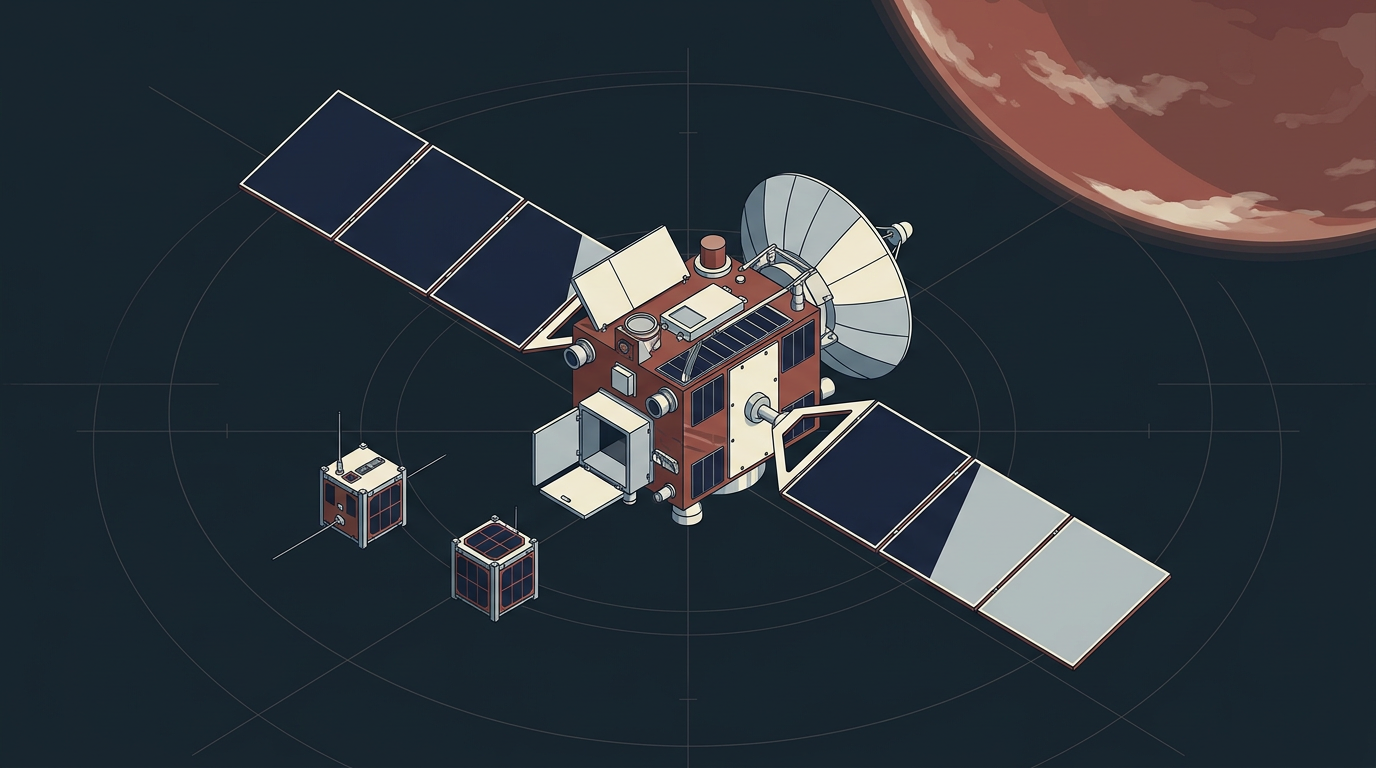
NASA, the U.S. civilian space agency, is reserving a small amount of space aboard a planned Mars telecommunications spacecraft for science payloads, according to SpaceNews. The reserved capacity could accommodate one or more cubesats, though specific instruments, science objectives, or partner institutions have not been confirmed in the available reporting.
Why it matters
Dedicated telecommunications relay orbiters have historically served a dual purpose at Mars — supporting surface missions while also carrying science instruments. By designating payload space early in the mission's planning, NASA signals an intent to continue that practice. Cubesats, small standardized spacecraft that have become increasingly common on deep-space missions, offer a relatively low-cost way to conduct focused science investigations as secondary payloads. Reserving space at this stage could allow science teams or external partners to begin instrument development in parallel with the primary telecommunications mission.
What to watch next
Key details still to emerge include the mission's launch timeline, the total payload capacity being reserved, whether NASA will issue a formal call for science proposals, and which institutions or instruments may ultimately fly. This report is based on a single SpaceNews alert and should be treated as an early-stage development pending further confirmation or official NASA announcement.
Source · SpaceNews