The development
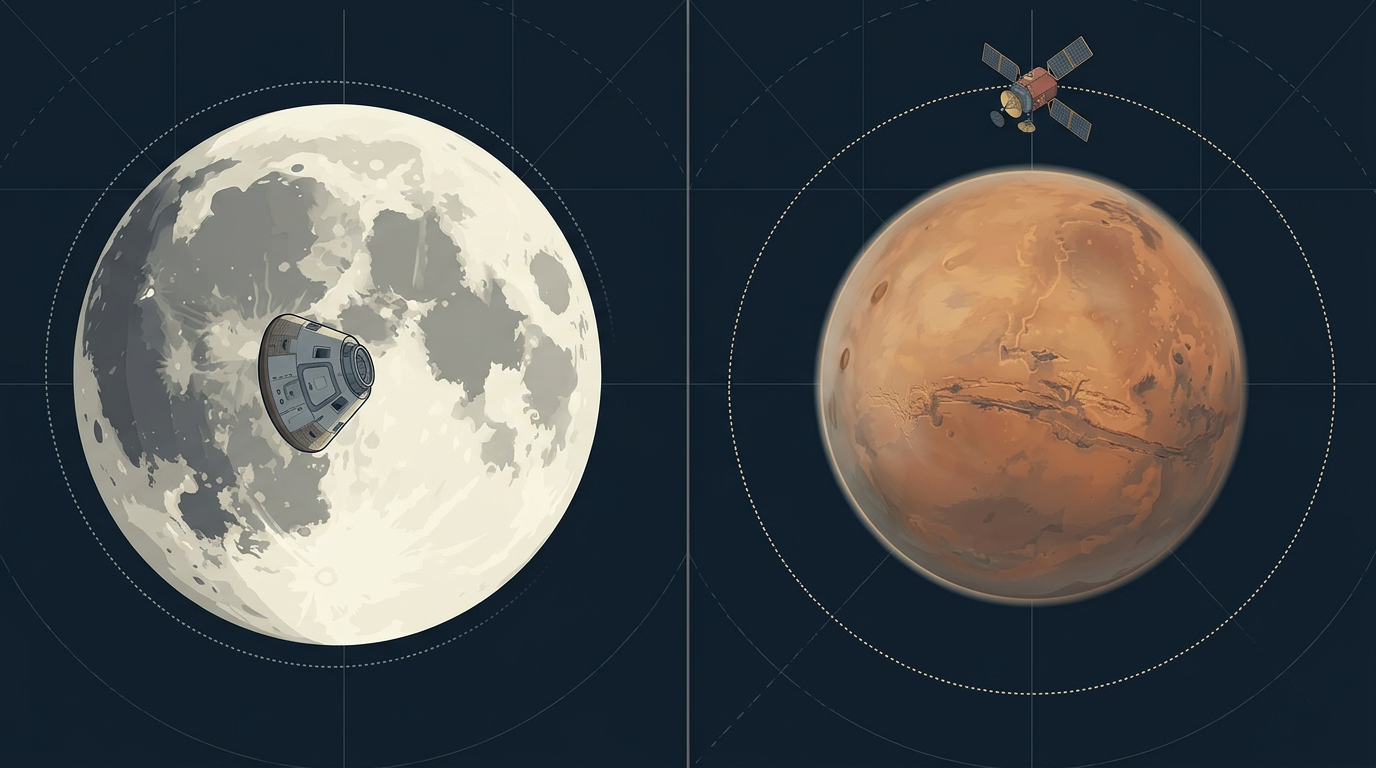
NASA, the U.S. civilian space agency, has shared a programmatic update on Artemis II, the first crewed mission under its Artemis lunar program. According to the agency's own communications, the update addresses hardware integration progress and crew training timelines. Artemis II is intended to carry astronauts on a lunar flyby, building on the uncrewed Artemis I flight.
Separately, SpaceNews reports that NASA has reserved science payload space aboard a planned Mars telecommunications mission — a step that, if confirmed, would indicate the agency is advancing planning for future Mars infrastructure while keeping scientific return in view.
The broader shift
The two signals, while distinct in scope, reflect NASA's parallel workstreams: sustaining near-term crewed lunar ambitions under Artemis while laying groundwork for longer-range Mars-oriented infrastructure. A dedicated Mars telecommunications relay would address a persistent operational gap — current Mars missions depend on a limited relay network with aging assets — though the SpaceNews report should be treated as partially verified at this stage.
Strategic implications
For Artemis II specifically, hardware integration and crew training updates are standard programmatic milestones, but their public communication signals that the mission timeline is progressing through defined checkpoints. The crew for Artemis II includes both NASA astronauts and a Canadian Space Agency astronaut, reflecting the international partnership structure of the broader Artemis program.
The Mars telecommunications payload reservation, if accurate, suggests NASA is attempting to embed scientific value into what would otherwise be a purely infrastructure-oriented mission — a pattern consistent with how the agency has approached prior relay and orbiter missions. However, no specific payload details, launch dates, or mission partners are confirmed in the available evidence.
What remains uncertain
Both signals carry partial verification status and were auto-clustered for editorial review. The Artemis II update is sourced from NASA directly but lacks granular detail in the evidence provided — specific integration milestones, revised launch windows, or crew training benchmarks are not confirmed here. The Mars telecommunications mission report from SpaceNews has not been independently corroborated in this evidence pack. Editors should verify current Artemis II schedule status and seek additional sourcing on the Mars payload claim before publication.
Source · NASA