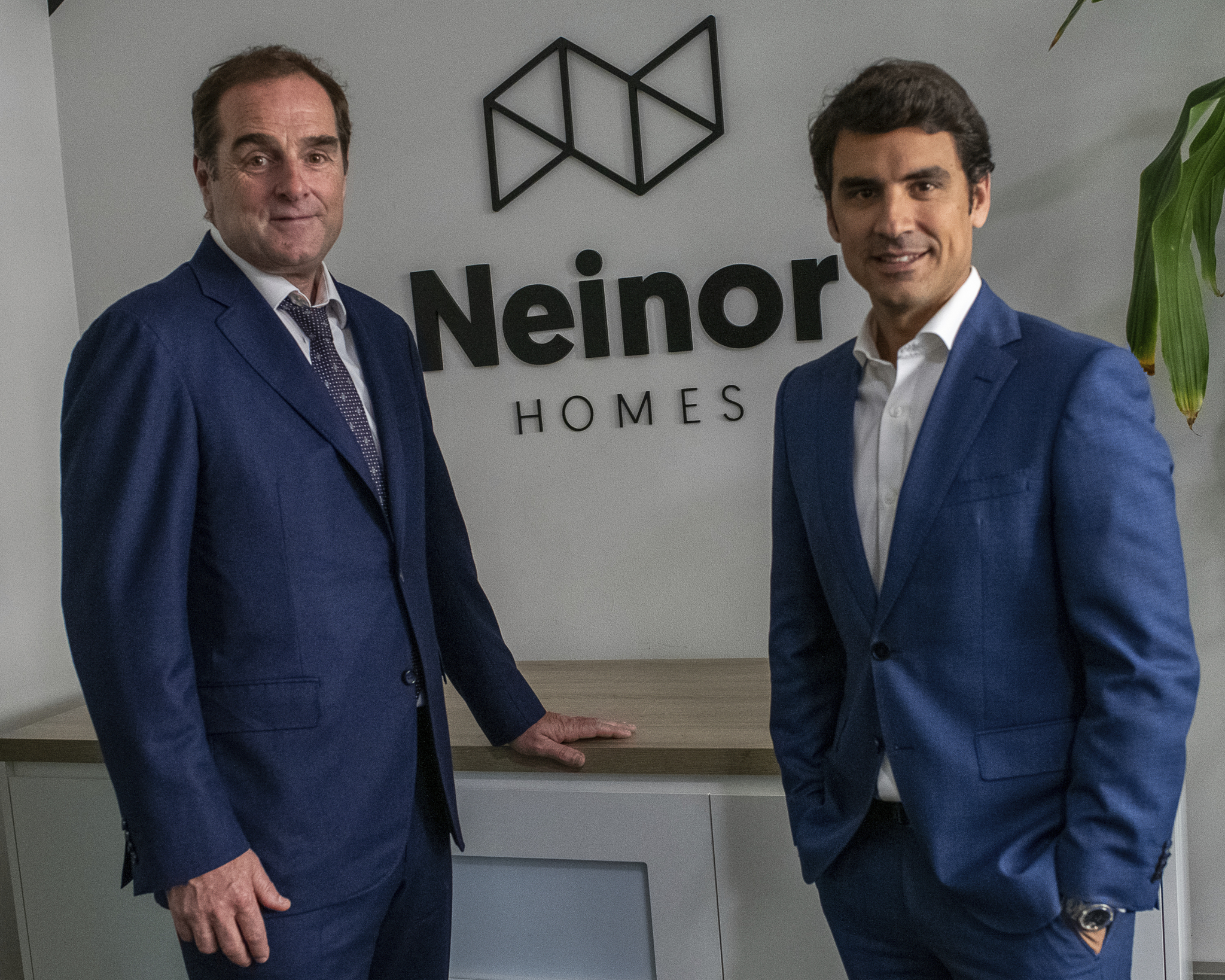
Neinor Homes, one of Spain's largest publicly listed residential developers, has announced that Jordi Argemí will succeed Borja García-Egotxeaga as chief executive, with the formal handover scheduled for 2027. García-Egotxeaga, who has led the company through a period of significant expansion, will step down at the end of this year but remain connected to the firm in a senior advisory capacity during the interim.
The decision to name a successor well in advance — effectively creating a multi-year bridge between one leadership era and the next — is unusual in Spain's homebuilding sector, where executive transitions tend to happen on shorter timelines. The structure of the announcement suggests a board intent on minimizing disruption, both operationally and in terms of market perception.
A deliberate approach to succession
Long-dated CEO appointments are more commonly associated with large industrial conglomerates or family-controlled enterprises than with publicly traded real estate developers. In the Spanish property market, leadership changes have historically followed a more reactive pattern — often triggered by shifts in ownership, market downturns, or strategic pivots. Neinor's approach stands in contrast to that norm.
By publicly naming Argemí with a defined start date still months away, the board accomplishes several things simultaneously. It removes uncertainty about the company's direction, gives the incoming CEO time to align with the existing management team, and provides García-Egotxeaga a structured exit rather than an abrupt departure. The advisory role carved out for the outgoing chief executive further reinforces the message: this is continuity, not rupture.
Argemí is not an outsider to the organization. His appointment from within the company's existing leadership structure suggests the board views the current strategic direction as sound and in no need of a sharp course correction. In sectors where investor confidence is closely tied to management stability — residential development being one, given its long project cycles and capital-intensive nature — such signals carry weight.
Context in a shifting Spanish housing market
The timing of this transition is worth noting. Spain's residential market has undergone considerable change since the post-2008 restructuring that gave rise to a new generation of institutional developers, Neinor among them. The company was formed out of assets originally held by Kutxabank and was backed by the American private equity firm Lone Star before its initial public offering. Since listing, Neinor has operated as one of the few large-scale, publicly traded homebuilders in a market still dominated by smaller, regional players.
The broader environment facing Spanish developers in the coming years includes persistent housing supply constraints in major metropolitan areas, evolving regulatory frameworks around land use and sustainability, and shifting demand patterns driven by demographic change and remote work. Any incoming CEO will need to navigate these dynamics while maintaining the financial discipline that public market investors expect.
Neinor's board appears to be betting that a smooth, well-telegraphed transition is the best way to preserve strategic focus during a period when the operating environment itself is in flux. The alternative — a sudden leadership change followed by a strategic review — carries risks that the company has evidently chosen to avoid.
Whether this deliberate pacing proves advantageous depends in part on factors outside the company's control: the trajectory of interest rates, land availability in key markets, and the regulatory posture of regional governments. What the announcement does accomplish, at minimum, is the removal of one variable — leadership uncertainty — from an already complex equation. The question that remains is whether the strategy Argemí inherits will prove as durable as the succession plan designed to protect it.
With reporting from Expansión.
Source · Expansión — España