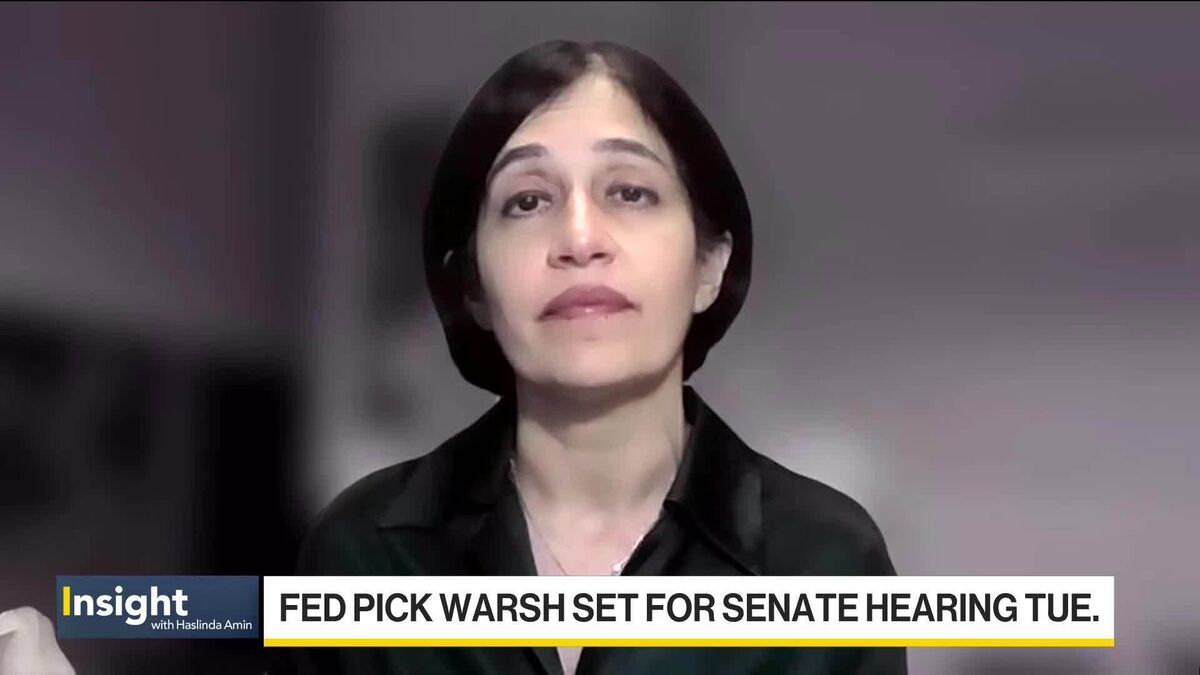
The possibility of a major disruption to global oil supply routes continues to shape portfolio strategy across emerging markets. Pooja Malik, chief investment officer of Nipun Capital, has outlined a scenario in which a blockade of the Strait of Hormuz — the narrow waterway through which a significant share of the world's seaborne crude passes — could push oil prices to $100 per barrel and add roughly 90 basis points to U.S. inflation. The warning underscores how geopolitical chokepoints remain central to macroeconomic risk, even as the global economy gradually pivots toward alternative energy sources.
Malik, who manages a $2 billion portfolio, frames the risk in terms of its downstream effects: higher energy costs feeding into consumer prices, a more cautious Federal Reserve reluctant to ease monetary policy, and tighter financial conditions that disproportionately affect emerging market economies dependent on dollar-denominated capital flows. A brief but acute disruption, in her assessment, would hit equities hardest, particularly in import-dependent economies where energy costs translate quickly into margin compression and consumer strain.
Geopolitical risk and the inflation transmission channel
The Strait of Hormuz has long occupied a unique place in energy security analysis. Situated between Iran and Oman, it serves as the transit point for a substantial portion of globally traded crude oil and liquefied natural gas. Any credible threat to its navigability — whether through military confrontation, diplomatic escalation, or proxy conflict — tends to ripple through commodity markets with speed. The scenario Malik describes is not without precedent in terms of market anxiety: tensions in the Persian Gulf have periodically triggered oil price spikes, though a full blockade remains a tail risk rather than a base case.
What makes the current environment distinctive is the interaction between energy price shocks and an already complex inflation picture. Central banks in developed economies have spent the past several years navigating post-pandemic price pressures, supply chain dislocations, and fiscal expansion. An oil-driven inflation impulse would complicate the Federal Reserve's path, potentially delaying rate cuts or forcing a reassessment of the neutral rate. For emerging markets, the consequences compound: higher U.S. rates strengthen the dollar, raise the cost of servicing external debt, and reduce the appeal of risk assets in frontier economies.
Structural bets across China, AI, and energy
Malik's portfolio positioning reflects a dual logic — hedging against near-term commodity risk while building exposure to structural growth themes. Her emphasis on Saudi upstream oil serves as a tactical buffer: if supply disruptions materialize, producers with spare capacity and proximity to global shipping routes stand to benefit. At the same time, her allocation toward China and AI supply chains signals a longer-term thesis about where value creation is migrating.
The AI supply chain dimension is particularly notable. As demand for semiconductors, data center infrastructure, and advanced manufacturing accelerates, emerging markets that occupy critical nodes in these supply chains — from chip packaging in Southeast Asia to rare earth processing in China — become strategic portfolio exposures rather than purely cyclical bets. The intersection of energy security and technology supply chains is increasingly difficult to disentangle: AI infrastructure is energy-intensive, and the cost of powering it is sensitive to the same commodity dynamics Malik is hedging against.
Her insistence that structural demand for clean energy remains a vital long-term driver adds a third layer. The tactical case for fossil fuel exposure does not, in this framework, contradict the secular case for renewables. It reflects a recognition that energy transitions are nonlinear — punctuated by geopolitical shocks, policy reversals, and capital cycles that create temporary dislocations between short-term returns and long-term direction.
The tension at the center of this strategy is one that many institutional allocators now face. Geopolitical risk is not a background variable to be modeled and discounted; it is an active force reshaping capital flows, supply chains, and inflation expectations in real time. Whether the Strait of Hormuz scenario materializes or remains a planning exercise, the portfolio logic it produces — balancing commodity hedges, technology exposure, and clean energy conviction — reveals how deeply intertwined energy, security, and innovation have become in emerging market strategy.
With reporting from Bloomberg — Technology.
Source · Bloomberg — Technology