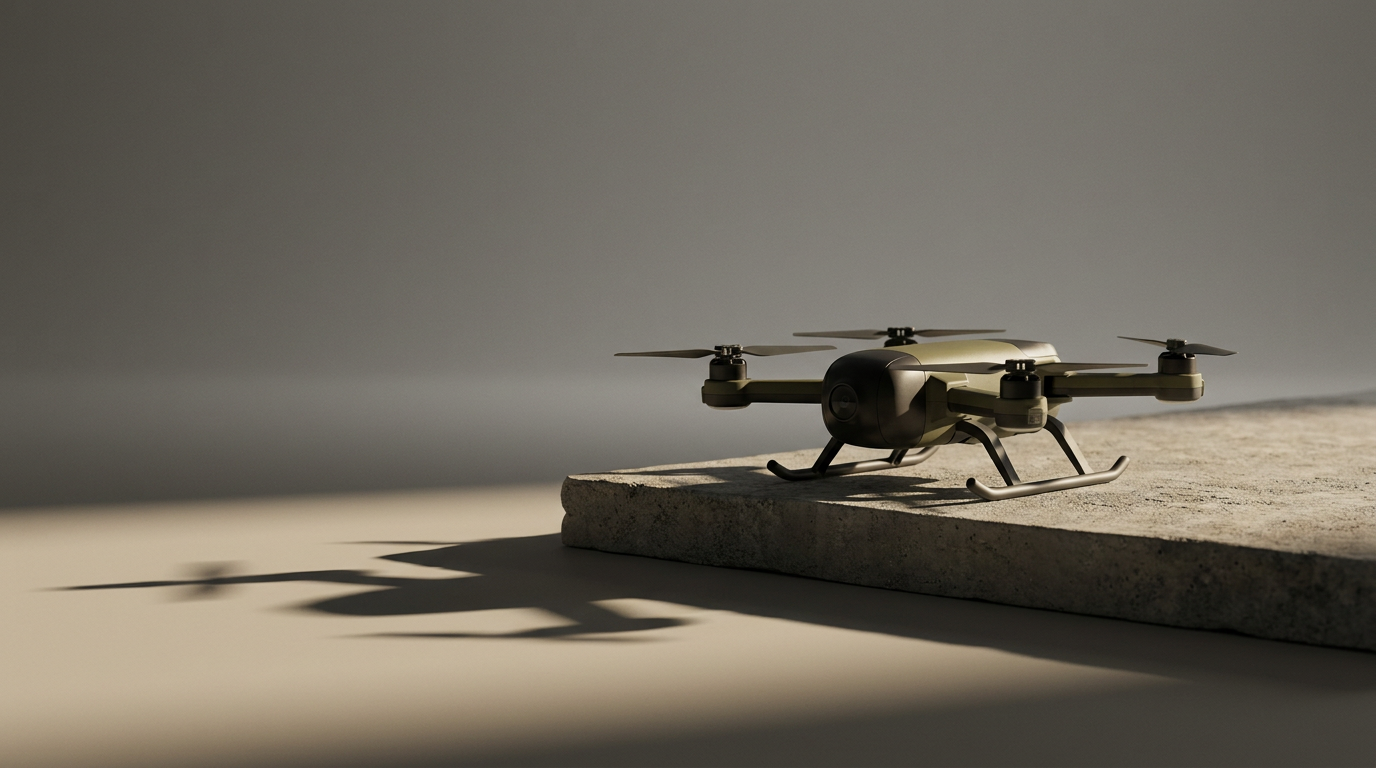
The deployment of autonomous systems — from delivery drones to warehouse robots to unmanned ground vehicles — has accelerated sharply in recent years. Yet the governance and security frameworks required to manage these machines at scale have not kept pace. A platform called ZTASP (Zero-Trust Autonomous Systems Platform) aims to close that gap by applying zero-trust security principles, long established in enterprise IT, to the physical domain of robotics and autonomous fleets.
Zero-trust architecture rests on a straightforward premise: no entity inside or outside a network is trusted by default. Every request, every data exchange, every command must be continuously authenticated and verified. In the context of autonomous systems, this means that a drone, a sensor, a flight controller, and a human operator are all treated as potentially compromised until proven otherwise — and that proof must be renewed constantly, not granted once at login.
From Cyber to Physical: What Zero-Trust Means for Robots
The zero-trust model emerged in enterprise cybersecurity as a response to the limitations of perimeter-based defenses. Traditional network security assumed that anything inside the firewall was safe — an assumption that proved catastrophic as threats moved laterally through corporate systems. The same logic applies, arguably with higher stakes, to autonomous machines operating in the physical world. A compromised sensor on an industrial robot or a spoofed GPS signal on a delivery drone does not merely risk data loss; it risks kinetic harm.
ZTASP addresses this through two core technical pillars. Secure Runtime Assurance (SRTA) monitors the behavior of autonomous agents in real time, enforcing safety constraints even when higher-level decision-making software behaves unexpectedly. Secure Spatio-Temporal Reasoning (SSTR) adds a layer of contextual awareness, verifying that the physical state of a system — its location, trajectory, timing — aligns with what the mission profile expects. Together, these mechanisms allow a fleet to maintain operational integrity in degraded conditions: intermittent communications, partial hardware failure, or active adversarial interference.
The distinction matters because most existing approaches to autonomous system safety focus on the autonomy stack itself — perception, planning, control — rather than on the trust architecture that governs how those components interact. ZTASP shifts the emphasis from making autonomy work to ensuring autonomy remains trustworthy under pressure.
Readiness and the Path to Civilian Use
The platform has reached Technology Readiness Level (TRL) 7 in mission-critical environments, meaning it has been demonstrated in an operational setting representative of its intended use. Some of its hardware components, including the Saluki secure flight controllers, have reached TRL 8 and are integrated into active customer systems. These readiness levels, originally defined by NASA and widely adopted across defense and aerospace, indicate that ZTASP is no longer a laboratory concept.
The platform's origins appear rooted in high-consequence mission environments — a category that typically encompasses defense, intelligence, and critical national infrastructure. But the trajectory toward civilian application is logical and, in some respects, inevitable. Healthcare logistics networks that rely on drone delivery, urban air mobility corridors, and autonomous vehicles operating on public roads all share a common requirement: verifiable, continuous assurance that every component in the system is behaving as intended. The regulatory landscape is moving in this direction as well. Aviation authorities and standards bodies have increasingly signaled that autonomous operations at scale will require not just functional safety but cybersecurity governance baked into the architecture from the outset.
The deeper question is whether a unified governance platform can scale across the diversity of autonomous systems now entering service — systems built by different manufacturers, running different software stacks, operating under different regulatory regimes. Zero-trust in enterprise IT succeeded in part because the underlying infrastructure was relatively homogeneous. Robotics is not. The tension between a universal trust framework and the heterogeneity of the physical autonomous world will likely define how platforms like ZTASP evolve — and whether they become a foundational layer of the autonomous economy or remain confined to high-security niches.
With reporting from IEEE Spectrum Robotics.
Source · IEEE Spectrum Robotics