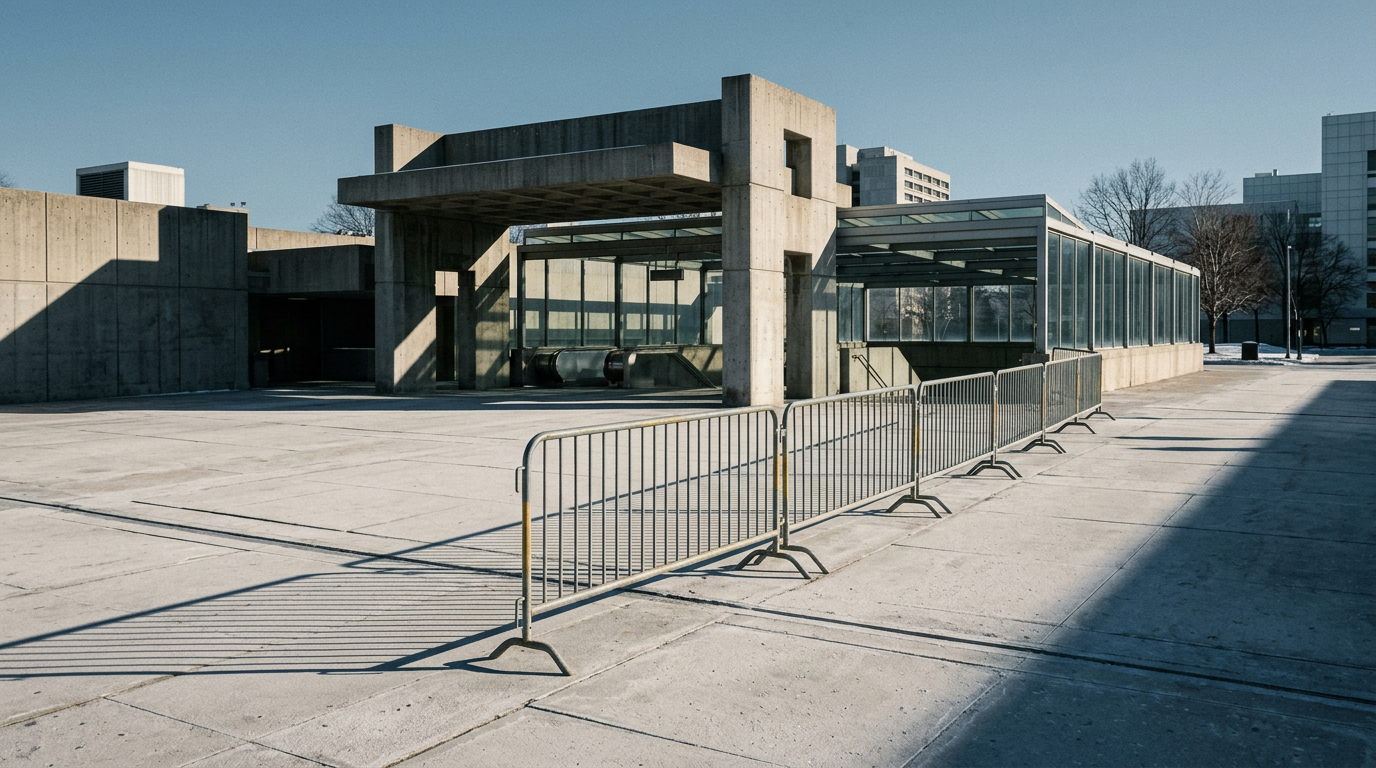
In the quiet squares of Hässelby Gård and the transit hubs of Älvsjö, Stockholm is confronting a fractured reality. The Swedish capital, long defined by its social cohesion, now faces a divergent set of urban anxieties: gang recruitment on one hand and public drug use on the other. In response, the city's Moderate Party has proposed a drastic expansion of the municipal security apparatus, calling for a 600 percent increase in the number of ordningsvakter — public order officers who occupy the grey space between private security and the national police.
The proposal has sparked a political tug-of-war over the very nature of urban management. These guards, who possess limited enforcement powers compared to the police, have become a ubiquitous presence in Swedish civic life. For proponents, they represent a flexible, visible deterrent capable of reclaiming public spaces from crime and disorder. For critics, the reliance on secondary forces suggests a systemic abdication of state responsibility, raising questions about whether security is becoming a scalable commodity rather than a public service.
The Swedish model under strain
The ordningsvakt system is a distinctly Swedish institution. Licensed by the national police authority, these officers are authorized to use limited force, check identification, and detain individuals in certain circumstances — powers that exceed those of private security guards but fall well short of full police authority. Historically, they were deployed at venues such as nightclubs, sports arenas, and transit stations. Their proposed expansion into broader neighborhood patrol work represents a meaningful shift in scope and ambition.
That shift arrives against a backdrop of sustained pressure on Swedish law enforcement. Gang-related violence, particularly in the suburbs of major cities, has been a defining domestic policy challenge for the better part of a decade. Shootings and bombings linked to organized crime have strained police resources and eroded public confidence in the state's ability to maintain order. The national police force has faced persistent recruitment and retention difficulties, and the gap between demand for visible security and available officers has widened.
In this context, the Moderate Party's proposal can be read as a pragmatic response to resource scarcity. Rather than waiting for a national police expansion that may take years to materialize, the city would deploy a parallel force capable of filling the vacuum. The logic is not unlike that seen in other European cities — London's use of community support officers, or the proliferation of municipal police forces in France — where tiered policing models have emerged to supplement overstretched national services.
Deterrence, accountability, and the limits of presence
The deeper question is whether more guards produce more safety or merely the appearance of it. The theory of environmental deterrence — the idea that visible authority in public spaces suppresses low-level disorder and, by extension, more serious crime — has a contested track record. It informed New York City's policing strategies in the 1990s and has been adapted, with varying results, across dozens of cities since. The evidence suggests that presence matters, but that its effects depend heavily on training, accountability structures, and the degree to which officers are integrated into the communities they patrol.
For ordningsvakter, the accountability framework is thinner than for police. Oversight mechanisms are less developed, and the guards' intermediate legal status can create ambiguity in confrontational situations. Scaling the force by a factor of seven would amplify both its potential benefits and its institutional risks. A poorly trained or loosely supervised guard force operating in neighborhoods already marked by tension between residents and authorities could deepen mistrust rather than resolve it.
There is also a fiscal and philosophical dimension. If municipalities assume a growing share of the security burden through contracted or semi-public forces, the incentive for the national government to invest in full police capacity may weaken. The short-term fix risks becoming a structural feature — one in which the quality of public safety a neighborhood receives depends on the budget and political priorities of its local council.
Stockholm's debate, then, is not simply about headcount. It sits at the intersection of two unresolved tensions: the gap between what citizens expect from the state and what the state can currently deliver, and the question of whether delegating enforcement to lighter-touch institutions strengthens or dilutes the social contract. How the city navigates that tension will be watched closely — not only across Sweden, but in every European capital grappling with the same arithmetic of disorder and diminishing public resources.
With reporting from Dagens Nyheter.
Source · Dagens Nyheter