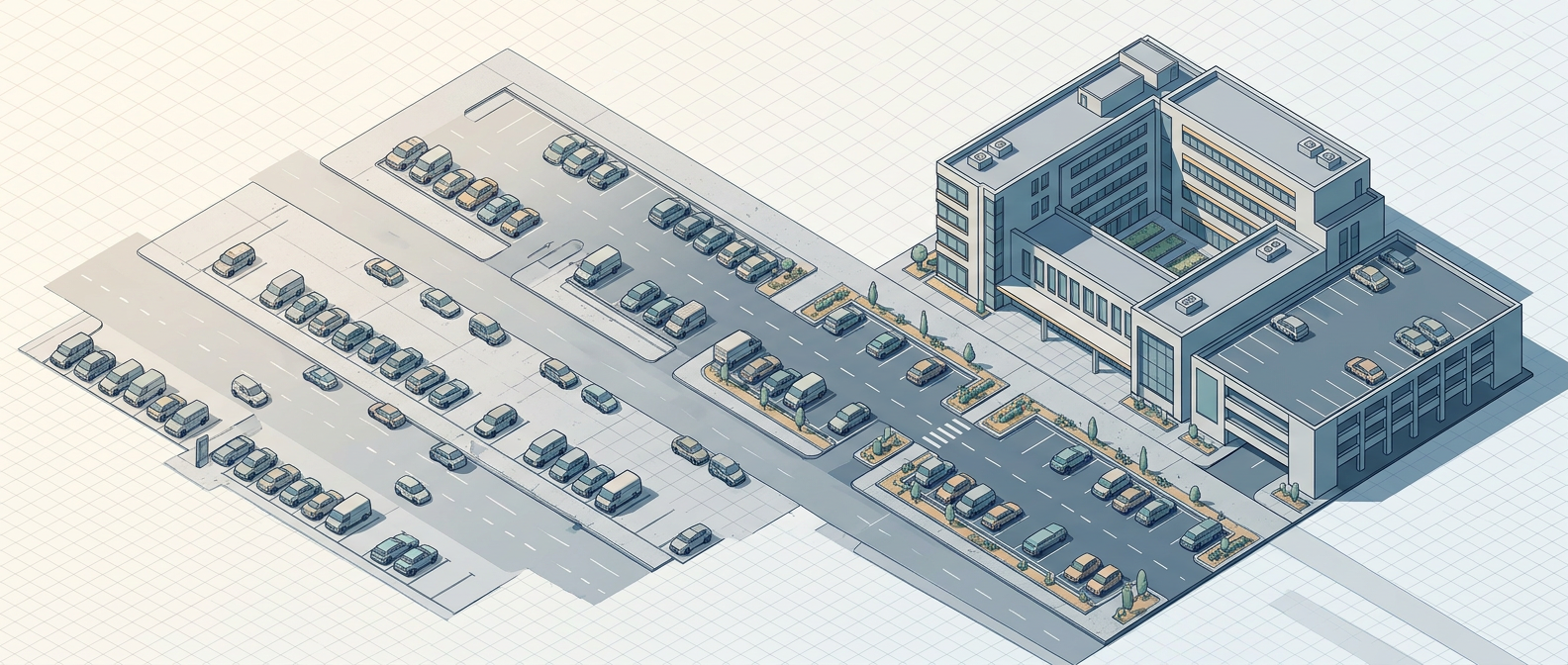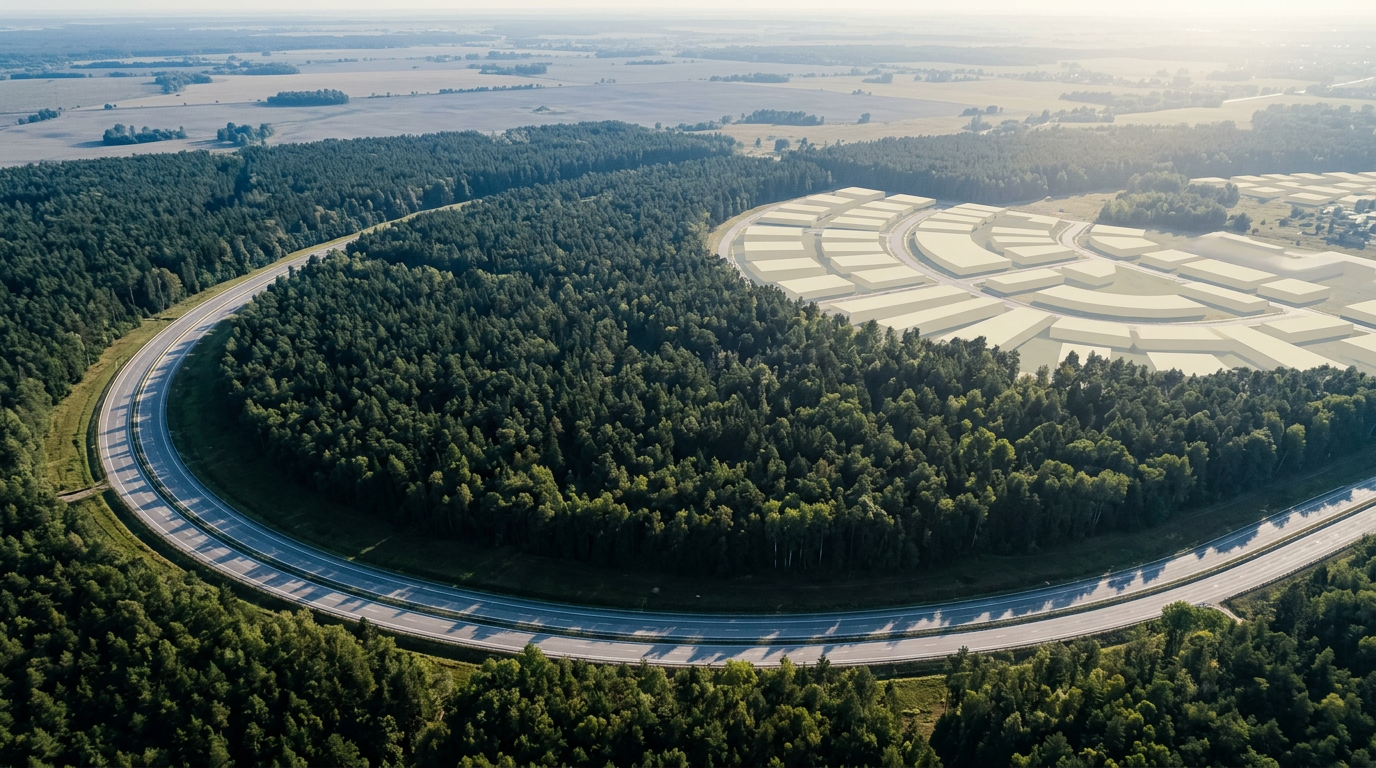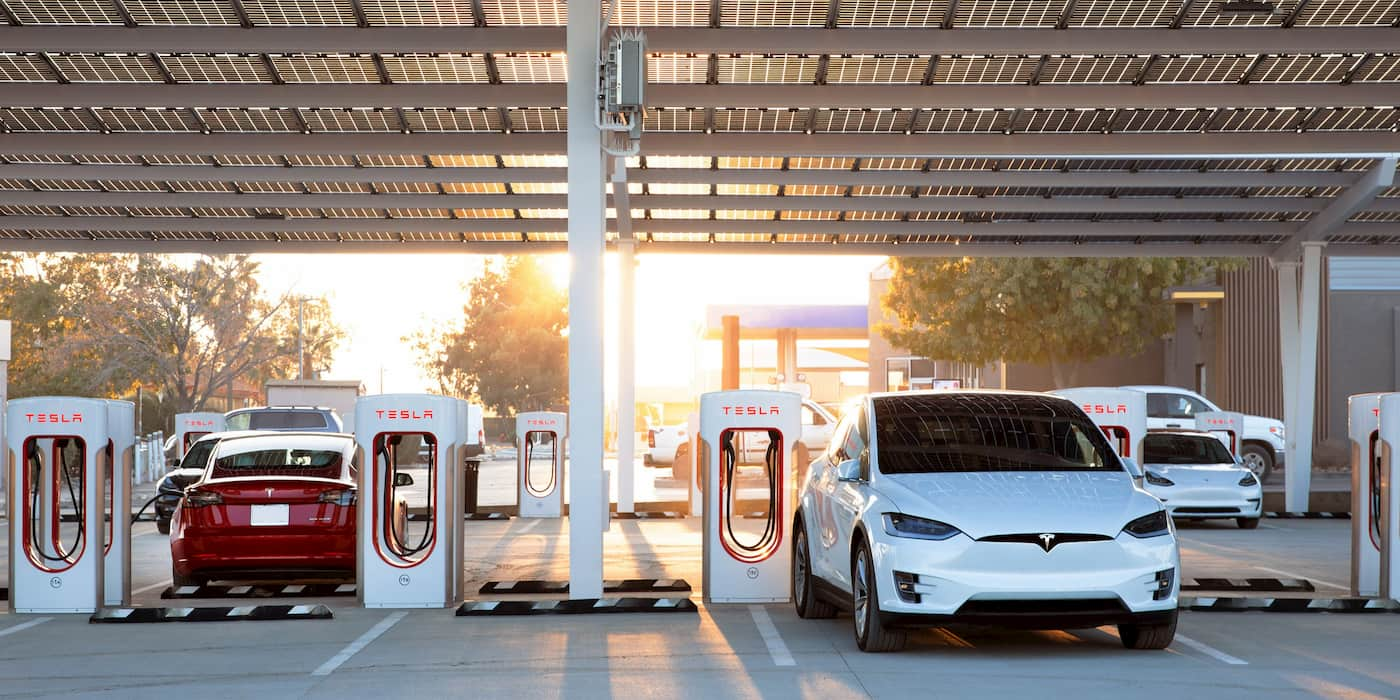
Tesla's long-promised pivot from a mass-market automaker to an autonomous transport provider is beginning to take physical shape. Recent permit applications discovered in municipal records for Chandler and Mesa, Arizona, reveal plans for the company's first Supercharger stations dedicated exclusively to its Robotaxi fleet. Unlike the network of chargers that have become a staple of American highways, these sites will remain strictly closed to the public.
The filings specify the installation of V4 Supercharger stalls, Tesla's latest hardware iteration, designed to support the high-voltage demands of a constant-use autonomous fleet. By carving out private charging hubs, Tesla is signaling a shift toward a vertically integrated service model — one where the company controls not just the vehicle and the software, but the critical infrastructure required to keep a driverless fleet in motion.
From open network to closed loop
Tesla's Supercharger network has, for most of its existence, served a dual strategic purpose: reducing range anxiety for its own customers and, more recently, generating revenue by opening access to other automakers' electric vehicles. The decision to build stations that exclude the public entirely marks a notable departure from that trajectory. It suggests the company views its robotaxi operation not as an extension of its consumer business but as a distinct logistics enterprise with its own infrastructure requirements.
The logic is straightforward. An autonomous fleet operating around the clock faces charging constraints that differ fundamentally from those of privately owned vehicles. A consumer might charge overnight at home and use a Supercharger on road trips. A robotaxi has no home. It needs fast, reliable access to charging between rides, with minimal downtime and predictable availability. Shared public stations, subject to congestion and variable wait times, are poorly suited to that operational cadence. Dedicated facilities allow fleet operators to manage throughput, schedule charging during off-peak demand windows, and maintain hardware to fleet-specific standards.
This is a pattern already visible in other autonomous vehicle programs. Waymo, which has operated a commercial robotaxi service in the Phoenix metropolitan area for several years, relies on dedicated depot facilities for charging, cleaning, and maintenance of its fleet. Cruise, before pausing operations, maintained similar closed-loop infrastructure in San Francisco. The depot model is, in effect, the industry default for any company serious about running autonomous vehicles as a service rather than a demonstration.
Arizona as proving ground
The choice of Arizona is hardly incidental. The state has cultivated one of the most permissive regulatory environments for autonomous vehicle testing and deployment in the United States. Chandler and Mesa sit within the Phoenix metropolitan area, where Waymo has accumulated millions of autonomous miles and where the road infrastructure, climate, and suburban grid layout offer relatively favorable conditions for self-driving technology. Tesla's decision to plant its first dedicated charging stations in this corridor aligns with a broader industry consensus that the region offers the lowest regulatory and operational friction for early commercial deployment.
What distinguishes Tesla's approach, however, is the degree of vertical integration it implies. Most autonomous vehicle operators rely on third-party charging networks or partner with utilities to build depot infrastructure. Tesla, uniquely, manufactures its own vehicles, develops its own autonomy stack, and now appears intent on owning the energy layer as well. If the model scales, it would give the company end-to-end control over the cost structure of each ride — from electrons to algorithms to passenger experience — in a way no current competitor can replicate.
The permits, of course, are permits. They represent construction intent, not operational robotaxi service. Tesla has a well-documented history of announcing ambitious timelines for autonomous capabilities that have subsequently slipped. The gap between filing for charging infrastructure and running a reliable, revenue-generating driverless fleet remains considerable, encompassing regulatory approval, software validation, insurance frameworks, and municipal licensing.
Still, infrastructure is harder to walk back than a software promise. Pouring concrete and pulling electrical permits in specific municipalities constitutes a material commitment — one that binds capital to geography and timeline in ways that conference-stage announcements do not. Whether these stations end up serving a functioning robotaxi network or standing as premature monuments to an unrealized vision depends on variables that extend well beyond charging hardware. The tension between Tesla's infrastructure pace and its autonomy readiness is now, quite literally, being built into the ground.
With reporting from Electrek.
Source · Electrek