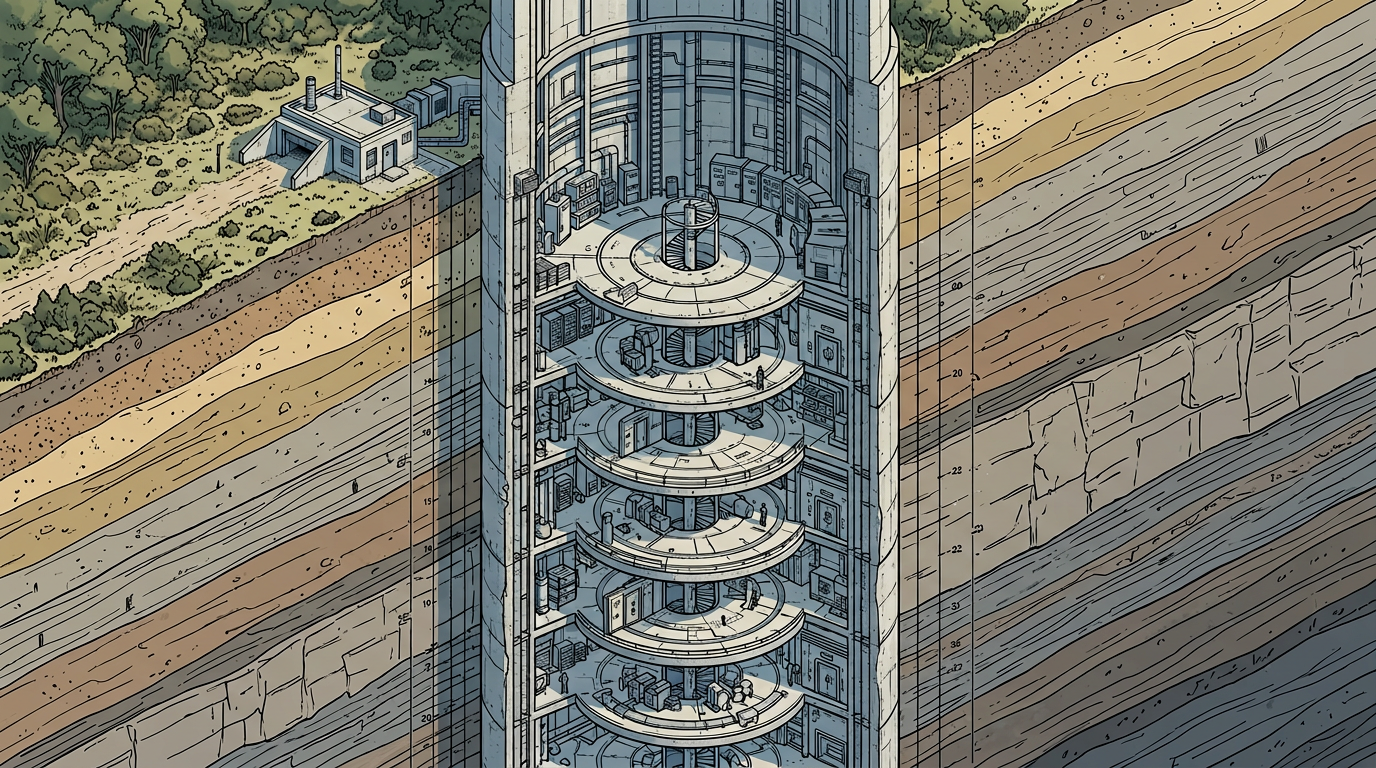
Apple TV+ has confirmed that Silo, its adaptation of Hugh Howey's dystopian novel series, will return for a third season on July 3. The new installment marks a narrative pivot: rather than pushing further into the mysteries of the surface world, the show will turn its lens backward, toward the origins of the underground bunkers and the decisions that sealed humanity beneath the earth. A teaser released alongside the announcement foregrounds this shift, with protagonist Juliette—played by Rebecca Ferguson—delivering a voiceover about the necessity of understanding how things began before confronting how they might end.
The move follows a second-season finale that significantly expanded the show's geography, revealing a world beyond the single silo that had defined the first two seasons. New cast members Colin Hanks, Jessica Henwick, and Ashley Zukerman join the ensemble for what Apple has designated the penultimate season, with a fourth and final run already confirmed.
Origin stories as structural strategy
Turning toward the "before times" is a familiar move in serialized science fiction, but it carries particular weight in a story built around information control. The central tension of Silo has always been epistemic: who knows the truth about the world, who decides what gets remembered, and what happens when suppressed knowledge resurfaces. A season dedicated to origins does not merely fill in backstory—it reframes every lie and omission the audience has already witnessed.
This approach aligns the show more closely with its source material. Howey's Wool series, which began as a self-published novella in 2011 before expanding into a trilogy, is meticulous in its treatment of institutional architecture. The books do not simply describe a bunker; they interrogate the logic of designing a society meant to forget its own creation. Translating that interrogation to screen requires a different dramatic register than the thriller mechanics of earlier seasons. The risk is pacing; the reward is coherence.
Apple's decision to announce the final two seasons in tandem suggests confidence in a planned arc rather than reactive renewal. In an industry where streaming platforms routinely cancel series without resolution or extend them past narrative exhaustion, a four-season structure with a declared endpoint is notable. It mirrors the approach taken by a handful of prestige dramas that have benefited from knowing their finish line in advance.
Apple's quiet genre portfolio
The timing of the Silo return also positions it within a broader pattern at Apple TV+. The streamer has assembled a portfolio of speculative fiction that leans toward deliberate pacing and conceptual ambition over spectacle. Severance, Foundation, Dark Matter—each occupies a different register, but collectively they represent a programming thesis: that science fiction built around ideas rather than action sequences can anchor a subscription platform. Silo fits this thesis perhaps more naturally than any of its stablemates, given its source material's roots in self-publishing and its focus on systems rather than heroes.
Whether this strategy translates into subscriber growth remains an open question. Apple does not disclose viewership figures with the granularity of competitors, making it difficult to assess the commercial performance of any individual title. What is observable is sustained investment: renewed seasons, expanded casts, and summer release windows designed to capture attention during a period when competing platforms often thin their slates.
The deeper question Silo now faces is whether excavating its own mythology can sustain the tension that propelled its first two seasons. Stories about the architecture of catastrophe—how systems of control are designed, justified, and maintained—carry inherent dramatic weight. But they also demand a different kind of engagement from audiences accustomed to forward momentum. The show's third season will test whether looking backward can generate the same urgency as the drive toward revelation, or whether the act of understanding origins inevitably softens the dread of what comes next.
With reporting from Engadget.
Source · Engadget