The Cannes Film Festival has long operated on a dual frequency: the prestige of the Official Selection and the experimental friction of its independent sidebars. With the recent announcements from Director's Fortnight, Critic's Week, and L'Acid, the 2026 edition now has its full programming map. These parallel strands — each with distinct selection committees and curatorial philosophies — have historically served as the festival's laboratory, prioritizing aesthetic risk over red-carpet orthodoxy. The list of filmmakers who first appeared in the sidebars before ascending to the Palme d'Or competition is long enough to constitute its own canon.
Director's Fortnight, founded in 1969 as a direct response to the upheaval of May '68, has always positioned itself as the section most attuned to emerging formal vocabularies. Critic's Week, limited to debut and second features, functions as an even narrower filter — a bet on directors with almost no track record. L'Acid, the youngest of the three, operates as a cooperative run by filmmakers themselves, lending it a distinct peer-driven sensibility. Together, these sections form a parallel festival that often proves more consequential for the medium's long-term trajectory than the main competition.
Balagov's Anglophone Pivot and the Logic of Crossover
This year's Director's Fortnight is anchored by Kantemir Balagov's Butterfly Jam. Balagov, who emerged from Alexander Sokurov's filmmaking workshop in Nalchik and gained international recognition with the austere intensity of Beanpole — which won the Best Director prize in Cannes' Un Certain Regard section — now makes his English-language debut with a cast including Barry Keoghan and Riley Keough. The move follows a well-established pattern in which festival-circuit auteurs from non-Anglophone traditions eventually attempt a film in English, a transition that carries both commercial logic and artistic peril. Directors such as Michael Haneke, Park Chan-wook, and Paolo Sorrentino have navigated this passage with varying degrees of success. The inclusion of Butterfly Jam in the Fortnight rather than the main competition suggests a curatorial judgment: the film is positioned as an extension of Balagov's artistic project rather than a bid for mainstream prestige. Whether that distinction holds once critics weigh in remains to be seen.
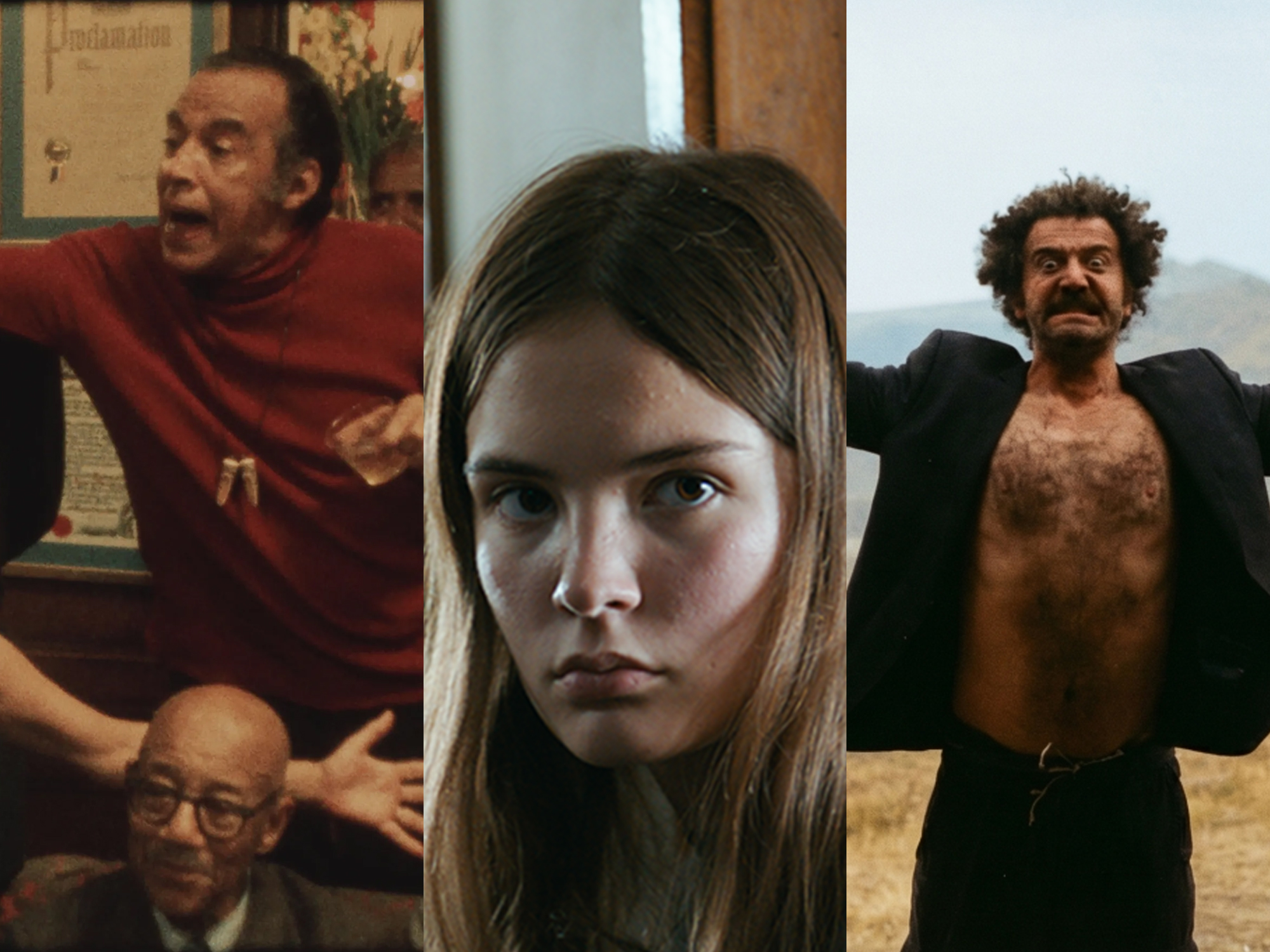
Perhaps more striking is the archival resonance found in Once Upon A Time in Harlem. A documentary project initiated by the late William Greaves and completed by his son, David, the film serves as a recovered time capsule of a 1972 gathering at Duke Ellington's home. Greaves, a pioneering figure in American nonfiction filmmaking whose work spanned decades of Black cultural documentation, left behind a body of material that continues to surface posthumously. The selection of this film highlights a growing institutional appetite for recovered histories — cinematic artifacts that offer counter-narratives to the traditional festival canon. Cannes has increasingly made room for such archival projects, recognizing that the boundaries between preservation and premiere are more porous than they once appeared.
Familiar Provocateurs and the Value of Repetition
The lineup is rounded out by figures whose presence at Cannes has become almost structural. Radu Jude, the Romanian director whose work has systematically interrogated the intersections of history, language, and image — most notably in Bad Luck Banging or Loony Porn, which won the Golden Bear in Berlin — returns to the Croisette. Quentin Dupieux, meanwhile, maintains his relentless output with appearances across both the Midnight screenings and the sidebars. Dupieux's prolific pace — often releasing more than one feature per year — raises a question that festival programmers increasingly face: at what point does reliable eccentricity become its own form of predictability?
The tension embedded in these sidebar lineups is worth observing. On one side, there is the gravitational pull of the market — English-language debuts, recognizable cast names, the machinery of international distribution. On the other, there is the archival impulse, the recovered documentary, the stubborn insistence on formal experimentation without commercial alibi. Cannes has always contained both impulses, but the sidebars are where the friction between them is most visible. The question is not which tendency will prevail — it is whether the festival's architecture can continue to hold both without one absorbing the other.
With reporting from Little White Lies.
Source · Little White Lies