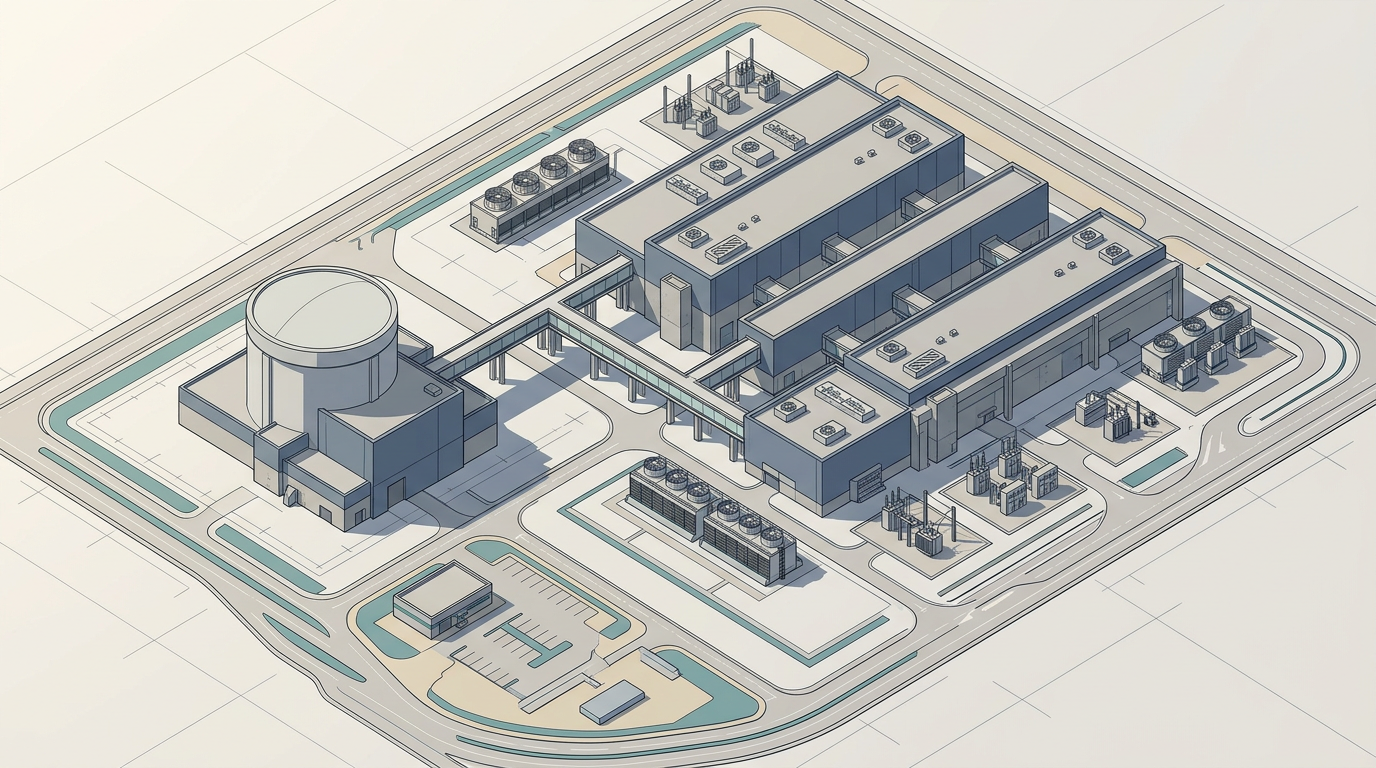
The insatiable appetite of artificial intelligence for compute power is increasingly colliding with the physical limitations of the electrical grid. As hyperscale data centers expand to meet the demands of generative AI, they threaten to overwhelm traditional power systems in regions where grid capacity was never designed for such concentrated loads. In response, Canadian engineering giant AtkinsRéalis has announced a partnership with Nvidia to design a new breed of infrastructure: the nuclear-powered AI campus.
The collaboration aims to decouple these so-called "AI factories" from the public grid by integrating dedicated nuclear reactors directly on-site. The proposed designs are expected to feature capacities ranging from 740 to 1,000 megawatts — roughly the output of a small modular reactor, or SMR, a class of nuclear technology designed to be factory-built and deployed in smaller footprints than conventional plants. According to Sam Stephens, head of digital at AtkinsRéalis Nuclear, this on-site integration necessitates a total reimagining of the data center's layout, moving away from conventional sprawl toward a more resilient, self-contained industrial ecosystem.
The grid bottleneck and the nuclear proposition
The partnership arrives at a moment when the tension between AI infrastructure growth and available power supply has become one of the defining constraints of the industry. Large-scale data centers can consume hundreds of megawatts each, and clusters of them in key corridors — Northern Virginia, parts of Texas, the Nordics — have begun to strain local grids, delay interconnection timelines, and drive up electricity prices for surrounding communities. Utilities in several markets have signaled that new large-load connections may face multi-year wait times, a bottleneck that threatens to slow the buildout of AI capacity regardless of how much capital is available.
Nuclear power offers a specific set of characteristics that few other energy sources can match for this use case: high energy density, carbon-free baseload generation, and operational independence from weather patterns. Unlike solar or wind, a reactor produces power continuously, which aligns with the round-the-clock demand profile of a hyperscale facility. Unlike natural gas, it carries no direct carbon emissions during operation. The trade-off, historically, has been cost, regulatory complexity, and construction timelines measured in decades rather than years. SMR technology is designed in part to compress those timelines, though no commercial SMR has yet reached full-scale operation in most Western markets.
By co-locating the power source with the load, the AtkinsRéalis-Nvidia concept sidesteps the grid entirely — eliminating transmission losses, avoiding interconnection queues, and creating what amounts to a private utility embedded within a computing campus.
Beyond the server rack
The partnership also seeks to leverage Nvidia's proprietary computing technologies to digitize and streamline the notoriously complex nuclear planning and licensing process. Nuclear projects have long suffered from cost overruns and schedule delays driven in part by the sheer volume of engineering documentation and regulatory review required. Applying simulation, digital twin modeling, and AI-assisted design to that process represents an attempt to bring the speed of the technology sector to an industry that has historically resisted it.
The vision extends past the server racks themselves. The firms suggest these campuses could serve as utility anchors for local communities, sharing electrical infrastructure and repurposing waste heat for nearby industrial or residential use. District heating from nuclear plants is an established practice in parts of Northern Europe and has precedent in several operating reactor sites. Applying that model to a data center campus would reframe the facility not as a parasitic load on local resources but as a contributor to the surrounding energy ecosystem.
By treating the data center and the power plant as a single, unified system, the initiative attempts to solve the energy crisis of the silicon age with the dense, reliable physics of the atomic one. Whether the regulatory and construction realities of nuclear development can move at the pace the AI industry demands remains the central tension. The technology sector operates on product cycles measured in quarters; nuclear licensing authorities operate on timelines shaped by safety mandates that do not bend to commercial urgency. How — and whether — those two clocks can be synchronized will determine if the atomic campus becomes a scalable model or remains an ambitious architectural concept.
With reporting from Dezeen Architecture.
Source · Dezeen Architecture