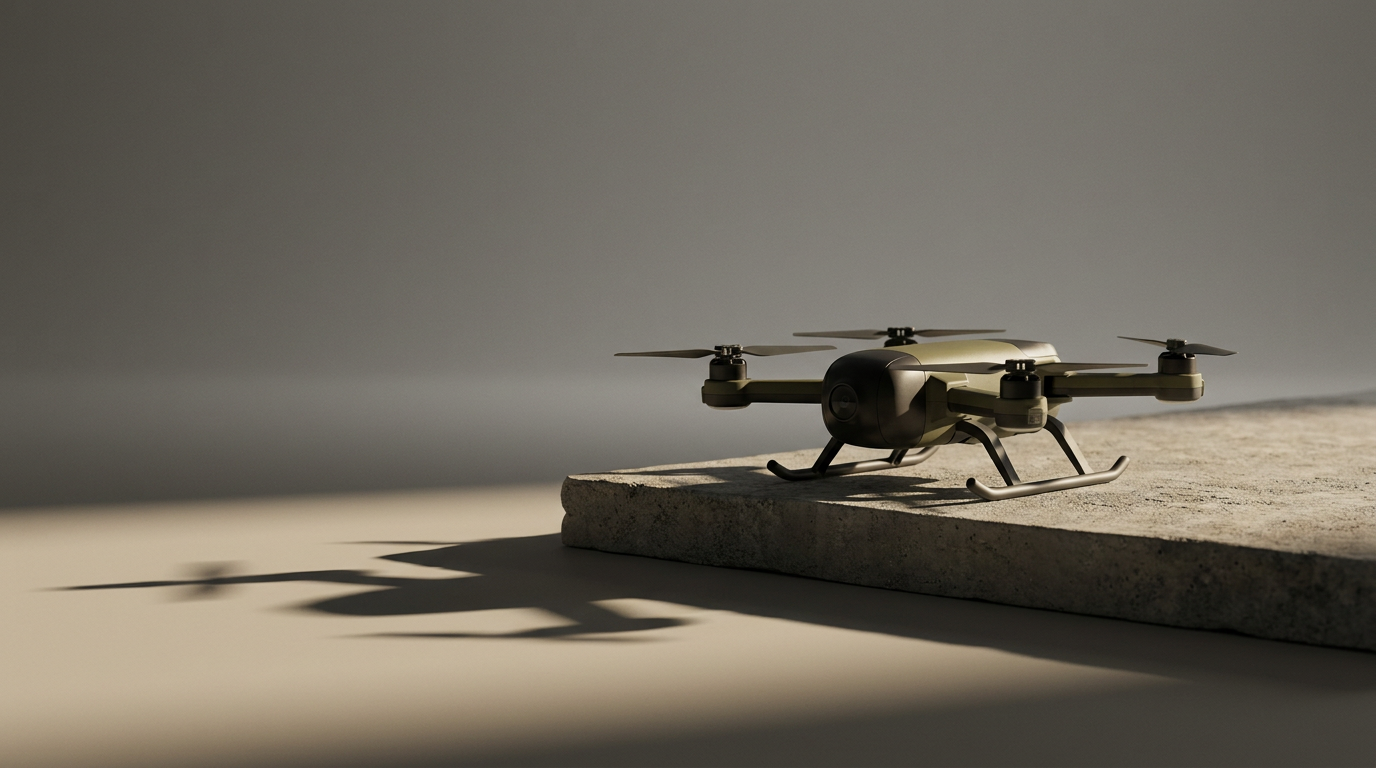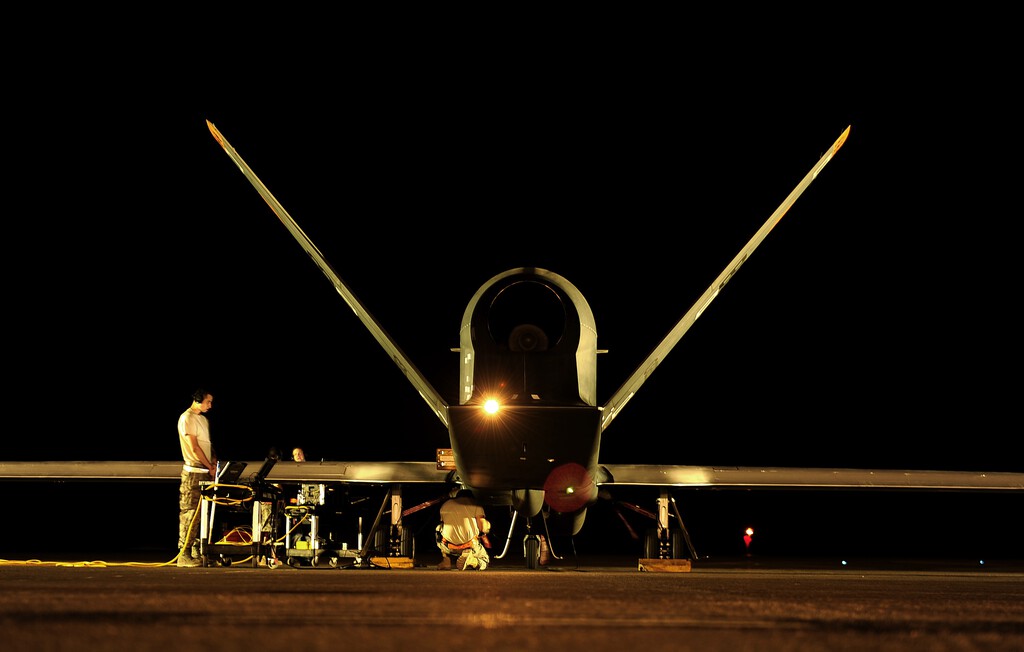
A decade ago, a group of Google engineers sparked a corporate crisis by protesting Project Maven, a Pentagon initiative that used the company's software to analyze drone footage. At the time, the idea of algorithms assisting in lethal decisions felt like a threshold that required cautious deliberation. Today, that threshold has been crossed with clinical efficiency. In the current landscape of global conflict, the "kill chain"—the process of identifying, tracking, and striking a target—has been compressed into a near-instantaneous algorithmic loop.
Modern warfare is entering a phase where human intervention is no longer the engine of decision-making, but rather a final, almost symbolic step in a process dominated by software. Systems developed by firms like Palantir, now integrated with sophisticated models from providers like Anthropic, ingest a relentless stream of satellite imagery, drone telemetry, and intercepted signals. These platforms do more than just filter data; they generate comprehensive attack plans and prioritized target lists in seconds, presenting commanders with a menu of kinetic options.
From OODA Loop to Algorithmic Reflex
The conceptual backbone of military targeting has long been the OODA loop—observe, orient, decide, act—a framework developed by Air Force strategist John Boyd during the Cold War. Boyd's insight was that the side capable of cycling through this loop faster than its adversary would hold a decisive advantage. For decades, that acceleration was achieved through better training, faster communications, and improved sensors. What AI introduces is a qualitative break: the observe, orient, and decide phases can now be collapsed into a single computational pass, leaving the human operator responsible only for the final "act"—and even that responsibility is narrowing.
Pentagon officials have described the current state of targeting as a process of "left click, right click," where the gravity of a lethal strike is reduced to the mechanical simplicity of selecting options on a screen. The phrase captures something more than bureaucratic shorthand. It reflects a structural shift in which the cognitive labor of warfare—pattern recognition, threat assessment, collateral damage estimation—has migrated from trained human analysts to machine learning pipelines. The officer at the terminal is not making a judgment so much as ratifying one already made.
This compression carries strategic logic. In contested environments where adversaries deploy electronic warfare, hypersonic missiles, and swarm drones, reaction windows can shrink to seconds. A kill chain that depends on layers of human deliberation becomes a liability. The United States, Russia, and China are each investing in autonomous targeting architectures precisely because the tempo of modern conflict punishes hesitation. The competitive pressure is self-reinforcing: once one power automates, the others face strong incentives to match or exceed that speed.
The Accountability Gap
The legal and ethical architecture governing the use of force was built around the assumption that a human being weighs each lethal decision. International humanitarian law requires distinction between combatants and civilians, proportionality in the use of force, and precaution in attack. These principles presuppose a deliberative agent capable of contextual judgment. When the system generating target recommendations operates at machine speed and the human role is reduced to approval or veto under time pressure, the conditions for meaningful deliberation erode.
The 2018 Google employee revolt over Project Maven was, in retrospect, an early signal of this tension. Google eventually withdrew from the contract, but the underlying capability migrated to other contractors and continued to mature. The episode illustrated a recurring pattern in dual-use technology: ethical objections at one node in the supply chain rarely halt development; they redirect it. The demand signal from defense establishments is strong enough to find willing suppliers.
What remains unresolved is where accountability sits when an algorithmic recommendation leads to civilian casualties. If the system identified the target, assessed the threat level, calculated the blast radius, and proposed the weapon-target pairing, the human who clicked "approve" exercised authority in a formal sense but not necessarily in a substantive one. Military legal frameworks have not yet adapted to this distribution of cognitive labor between human and machine.
The physical reality of combat is increasingly mediated through a streamlined user interface. As the three major military powers race to automate their arsenals, the human operator is being relegated to a supervisory role, tasked with validating the outputs of a system that moves faster than organic thought. Whether that supervisory role remains meaningful—or becomes a legal fiction designed to preserve the appearance of human control—may depend less on technology than on whether institutions choose to ask the question honestly.
With reporting from Xataka.
Source · Xataka