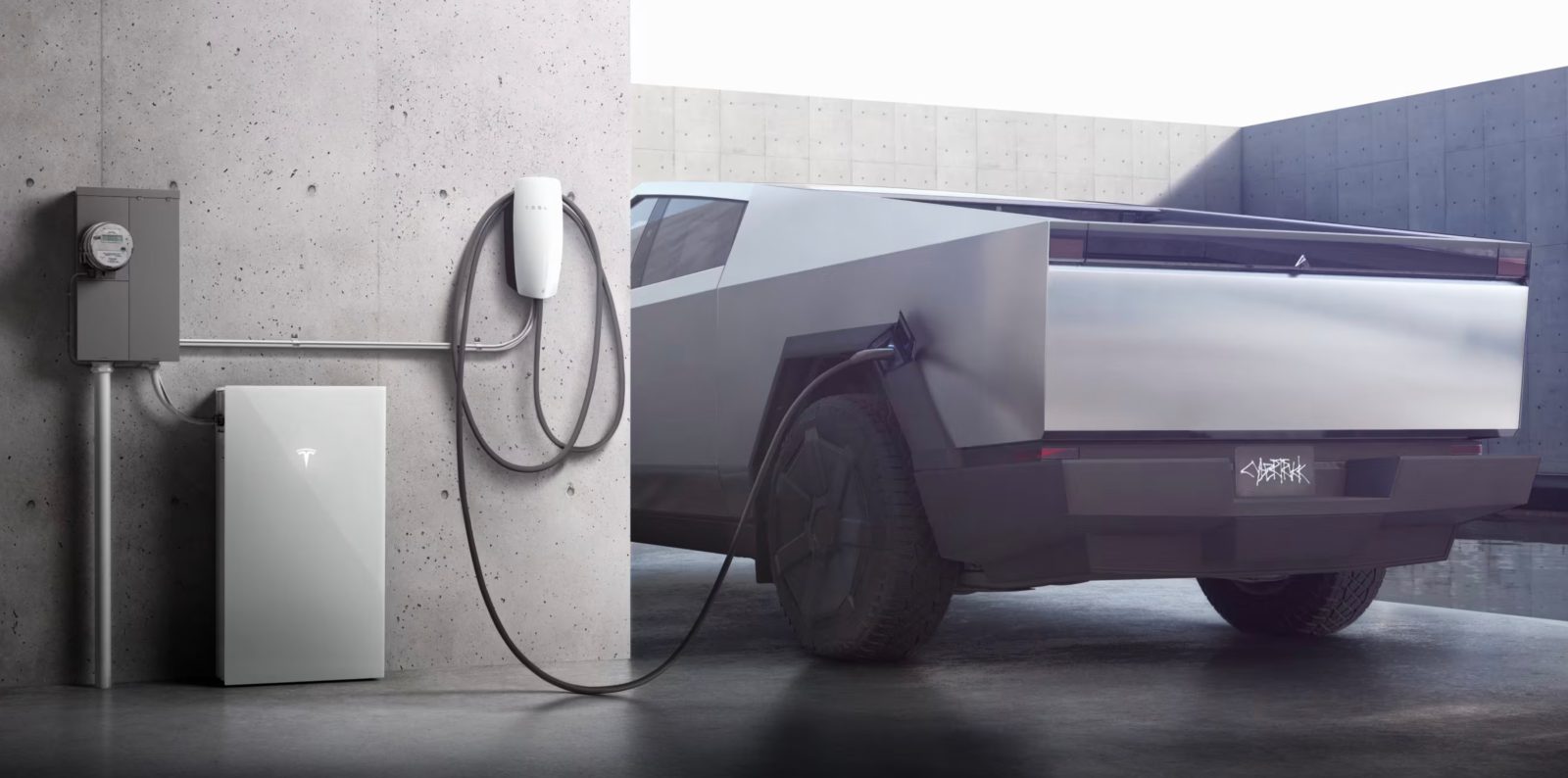
The Tesla Cybertruck has moved beyond its role as a polarizing piece of industrial design to become a functional component of California's energy infrastructure. Pacific Gas and Electric (PG&E) and Tesla recently announced that the electric pickup is now the first vehicle approved for the utility's residential Vehicle-to-Everything (V2X) pilot program using an alternating current (AC) architecture. The approval marks a concrete step in a long-theorized model of distributed energy: turning parked electric vehicles into grid assets capable of absorbing and discharging power on demand.
The technical distinction at the center of this development — AC versus DC vehicle-to-grid architecture — is more than a footnote. While competitors like Ford and General Motors have previously integrated their vehicles into similar grid-stabilization programs, those efforts rely on direct current (DC) systems. DC setups require expensive, specialized external inverters to convert the battery's stored energy into the alternating current that homes and the grid use. By using an AC-based system, the Cybertruck leverages its own onboard inverter to handle that conversion, significantly lowering the barrier to entry for homeowners. To encourage adoption, the program offers up to $4,500 in incentives toward equipment and installation costs.
Why AC architecture changes the economics
Vehicle-to-grid technology, often abbreviated as V2G, has been discussed in energy policy circles for more than a decade. The premise is straightforward: electric vehicles spend most of their time parked, sitting on large battery packs that could serve double duty as distributed energy storage. The challenge has always been practical. DC-based V2G systems require bidirectional chargers that can cost thousands of dollars beyond the vehicle itself, and installation often demands specialized electrical work. The result is a technology that looks elegant in theory but has struggled to scale beyond small pilot programs and early adopters willing to absorb the upfront cost.
An AC-based approach shifts some of that complexity from the external infrastructure to the vehicle's own hardware. If the onboard inverter can handle the conversion natively, the homeowner's installation becomes simpler and cheaper — closer to a standard electrical panel upgrade than a bespoke energy project. Whether this difference proves large enough to move V2G from niche to mainstream remains an open question, but the direction is clear: reducing friction at the point of adoption.
The distinction also matters for automakers' competitive positioning. Ford's F-150 Lightning drew attention for its Intelligent Backup Power feature, which can supply a home during outages, but that capability relies on DC architecture and a compatible home integration system. General Motors has pursued similar functionality across its Ultium-based lineup. Tesla's AC approach does not necessarily make these alternatives obsolete, but it does introduce a different cost structure that utilities and regulators will watch closely as they design future incentive programs.
Grid resilience and the distributed power model
For PG&E, the pilot fits within a broader strategic imperative. California's grid faces recurring stress from wildfire-related shutoffs, extreme heat events, and the growing penetration of intermittent renewable generation. The state has invested heavily in utility-scale battery storage, but distributed resources — rooftop solar, home batteries, and now vehicles — offer a complementary layer of resilience that does not depend on centralized infrastructure.
The concept of a "mobile battery" feeding power back during periods of peak demand effectively turns each participating vehicle into a node in a distributed power plant. The aggregated capacity of thousands of such vehicles could, in principle, provide meaningful load relief during the hours when California's grid is most strained — typically late afternoon and evening, after solar generation drops but demand remains high.
Yet significant questions remain. Battery degradation from frequent charge-discharge cycling is a concern that neither Tesla nor PG&E has fully addressed in public documentation. The economics for individual owners depend on rate structures, incentive longevity, and how much real-world cycling the program demands. And the scale of participation needed to make a material difference to grid stability is orders of magnitude beyond any current pilot.
What is notable is not that vehicle-to-grid technology has arrived — the concept has been demonstrated before — but that the cost architecture may finally be shifting toward accessibility. Whether AC-based V2G becomes the standard or remains one approach among several will depend on how utilities structure their programs, how automakers respond, and whether the economics hold up beyond the incentive period. The tension between a promising distributed energy model and the practical realities of consumer adoption at scale is where this story will be decided.
With reporting from Electrek.
Source · Electrek