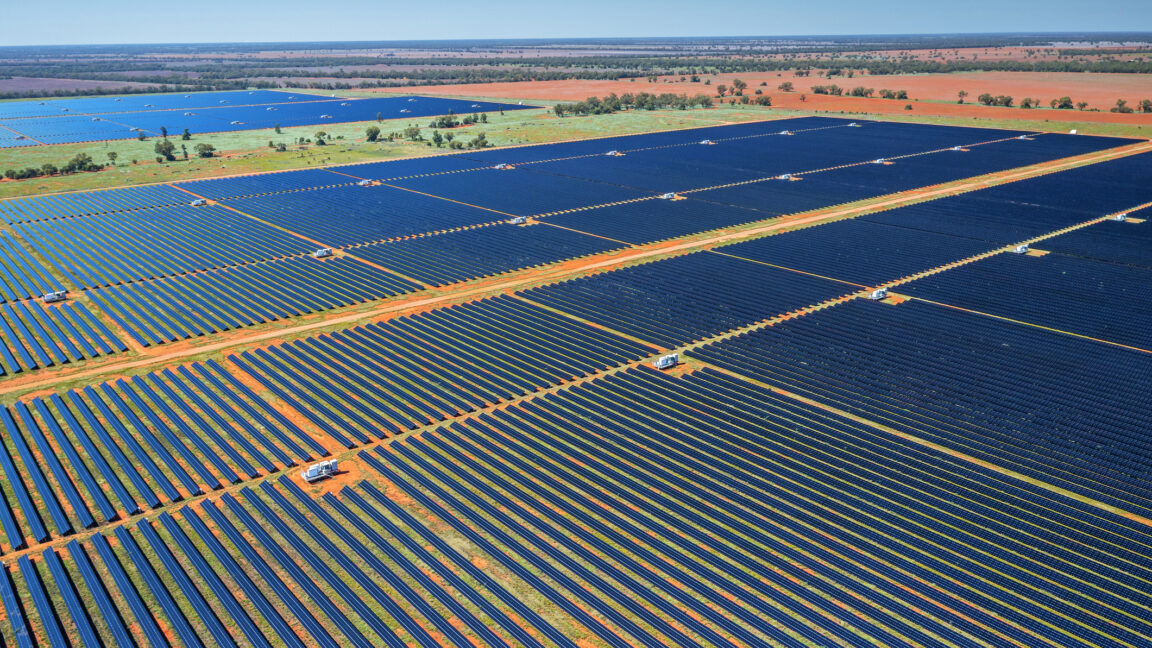
The global energy landscape reached a definitive inflection point in 2025. According to a new analysis from the Energy Information Administration (EIA), solar power's expansion has become the most rapid growth ever recorded for any energy source — surpassing any single-year addition previously seen from coal, natural gas, nuclear, or wind. The finding led the agency to declare that the world has officially entered what it calls the "Age of Electricity," a framing that carries weight given the EIA's role as the primary statistical authority on energy in the United States.
The declaration is not merely symbolic. It reflects a structural shift in how energy is consumed, not just how it is produced. While overall energy demand continues to rise, the appetite for electricity is growing at roughly twice that rate. The divergence is driven by the steady displacement of combustion-based systems across sectors that historically ran on liquid and gaseous fuels: electric vehicles are eroding gasoline demand, while high-efficiency heat pumps are increasingly replacing traditional gas and oil heating in residential and commercial buildings.
A record with few precedents
To appreciate the scale of solar's 2025 expansion, it helps to consider the history of energy transitions. Past shifts — from wood to coal in the nineteenth century, from coal to oil and natural gas in the twentieth — unfolded over decades, often driven as much by geopolitics and infrastructure lock-in as by economics. Solar's trajectory has compressed that timeline. The technology's cost curve, which has fallen by more than 99 percent since the late 1970s, created the preconditions; manufacturing scale, particularly in East and Southeast Asia, provided the supply; and policy frameworks in Europe, China, India, and parts of the Americas created the demand pull.
What distinguishes the current moment from earlier milestones — such as solar reaching price parity with fossil fuels in certain markets — is that the growth is no longer confined to favorable geographies or subsidy-dependent niches. The EIA's data suggests a broad-based expansion across continents and grid types, from utility-scale installations feeding national grids to distributed rooftop systems in emerging economies. The sheer volume of new capacity added in a single year has no analog in the historical record for any energy source.
The storage question and the fossil fuel plateau
Crucially, the rise of solar has been bolstered by a massive expansion in battery storage capacity. Grid-scale lithium-ion systems, once a marginal complement to renewables, have become a structural feature of power systems managing the intermittency inherent in solar generation. Without storage, solar's contribution would remain constrained by the mismatch between peak generation — midday — and peak demand, which in many markets falls in the evening. The parallel growth of storage capacity addresses this gap, though the ratio of storage to generation remains a closely watched metric among grid planners.
For the first time, the growth of carbon-free energy has outpaced the increase in global demand, even as fossil fuel consumption remains largely stagnant rather than declining. This distinction matters. A plateau in fossil fuel use is not the same as a retreat. Coal, oil, and natural gas still constitute the majority of primary energy supply worldwide, and the infrastructure supporting them — pipelines, refineries, LNG terminals — represents trillions of dollars in sunk capital with decades of operational life remaining. The EIA's framing suggests a system in transition, not one that has completed the journey.
The broader implication is a reorientation of the global energy economy around the electron rather than the molecule. Electrification of transport, heating, and industrial processes shifts demand toward the power grid and away from direct combustion. That shift carries its own set of challenges: grid capacity, transmission bottlenecks, mineral supply chains for batteries and panels, and the political economy of phasing out incumbent fuels. Whether the pace of solar deployment can be sustained — and whether storage, grid infrastructure, and policy can keep up — remains the central tension. The EIA has named the era. The question is how quickly its logic plays out.
With reporting from Ars Technica.
Source · Ars Technica