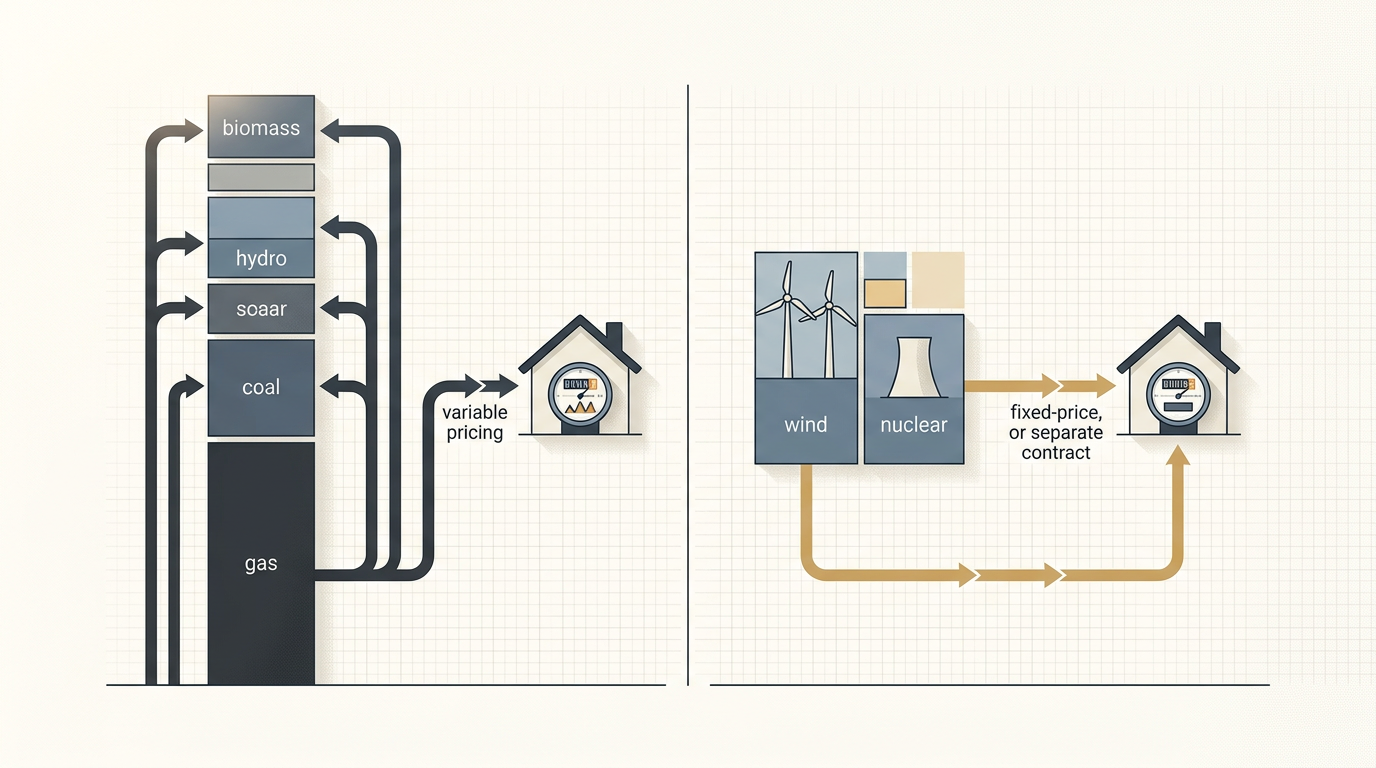
The structural logic of the United Kingdom's energy market is facing a long-overdue reckoning. For decades, the price of electricity in the UK has been tethered to the price of natural gas — a system that made sense when fossil fuels dominated the generation mix but has become increasingly paradoxical as renewables take center stage. Amid a global energy landscape shaped by conflict in the Middle East and persistent supply-chain fragility, the British government has announced a strategy to begin decoupling these costs, aiming to ensure that the low marginal cost of wind and solar power is actually reflected in consumer bills.
The mechanism at the heart of the problem is the so-called marginal pricing system, common across liberalized electricity markets. Under this design, the most expensive generator needed to meet demand at any given moment sets the wholesale price for all electricity sold in that period. Because gas-fired power stations frequently serve as the marginal unit, the price of natural gas effectively anchors the price of electricity — even when the majority of electrons flowing through the grid come from wind turbines or nuclear reactors that operate at a fraction of the cost. The result is a market structure that transmits fossil fuel volatility directly into household bills, regardless of how green the underlying supply has become.
Windfall taxes and fixed-price contracts
The government's approach is incremental rather than radical. Rather than pursuing a total market redesign — an option that carries significant regulatory complexity and transition risk — the plan focuses on two primary levers. Starting in July 2026, the "electricity generator levy," a windfall tax on older renewable and nuclear plants, will be increased. These generators, many of which were built under earlier subsidy regimes, have benefited from elevated wholesale prices driven by gas market turbulence. The resulting revenue is intended to soften the blow of rising energy costs for households.
The second lever involves encouraging older green energy projects to transition into fixed-price contracts, sometimes known as contracts for difference. Under such arrangements, a generator agrees to sell its output at a predetermined price over a set period. When wholesale prices rise above that level, the generator returns the surplus to the system; when prices fall below, the generator receives a top-up. The effect is to insulate both consumers and producers from the price volatility inherent in the global gas trade, creating a more predictable cost base for the electricity system as a whole.
This dual approach echoes reforms debated across Europe since the energy price crisis that followed the disruption of Russian gas supplies to the continent in 2022. Several EU member states explored similar interventions — revenue caps on inframarginal generators, accelerated deployment of contracts for difference — though implementation varied widely in scope and ambition. The UK's move sits within this broader continental trend but reflects the particular dynamics of a market where offshore wind capacity has grown rapidly while legacy pricing structures have remained largely unchanged.
A balancing act with long-term stakes
The immediate impact of the policy may be subtle. By weakening rather than completely severing the link between gas and electricity, the government is attempting a delicate balancing act: providing relief to consumers without destabilizing the investment signals required to continue the transition to clean power. New renewable projects still need confidence that they will earn adequate returns; an abrupt shift in market design could chill capital flows at precisely the moment the grid needs them most.
There is also a question of timing. Fixed-price contracts reduce exposure to upside volatility, but they also limit the windfall gains that generators capture during price spikes — gains that, in some cases, have helped finance further clean energy deployment. Whether redirecting those revenues through taxation and contract restructuring proves more efficient than allowing market signals to do the work is a matter the coming years will test.
The policy amounts to a tacit admission that in a decarbonizing world, the old rules of energy pricing are no longer fit for purpose. But the tension between consumer protection and investment incentive is not easily resolved by incremental adjustment alone. The deeper question — whether marginal pricing itself should be replaced, and with what — remains open. How the UK navigates that question will shape not only its own energy transition but potentially offer a template, or a cautionary tale, for other markets wrestling with the same structural contradiction.
With reporting from Carbon Brief.
Source · Carbon Brief