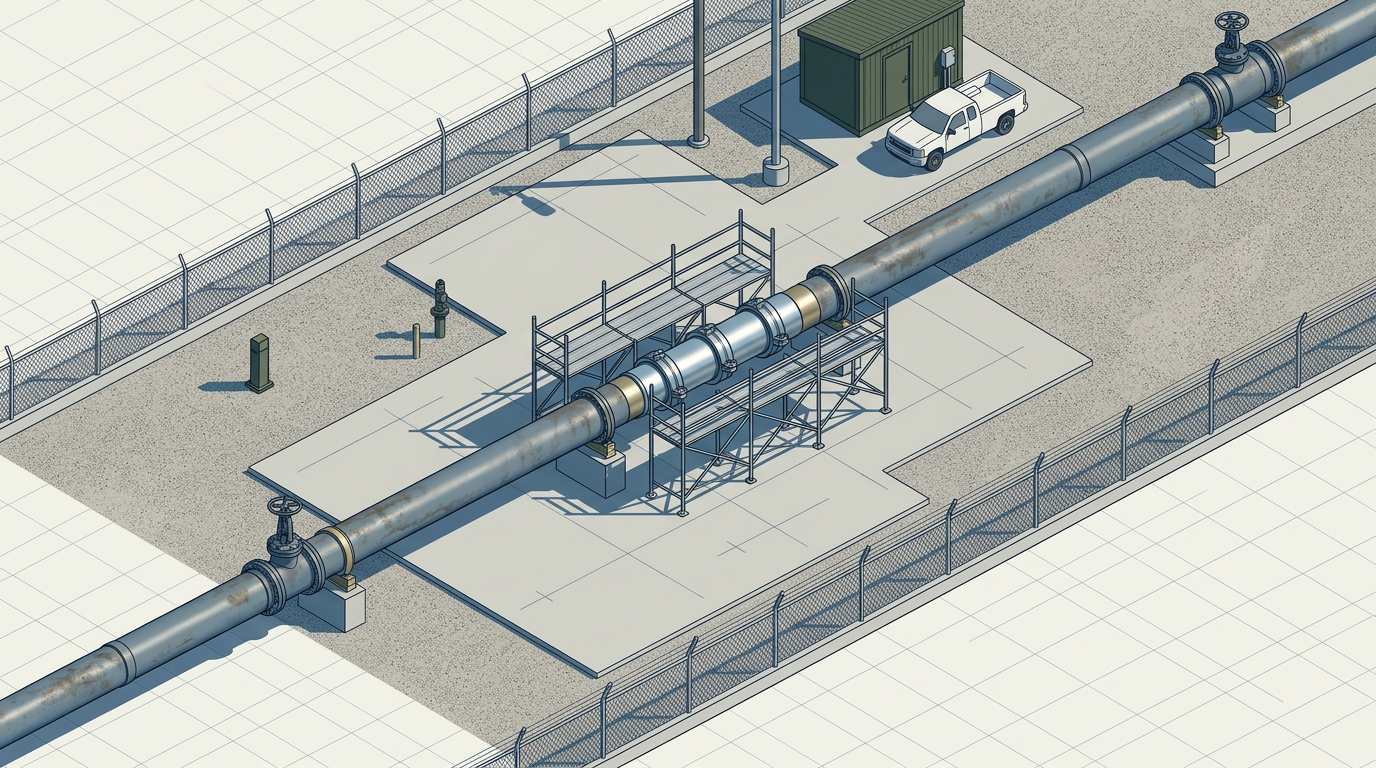
President Volodymyr Zelensky announced on Wednesday that Ukraine has completed repairs to the Druzhba pipeline, a critical artery of energy infrastructure that transports Russian oil through Ukrainian territory to Hungary and Slovakia. The system, which had been sidelined following attacks in August 2025, is expected to resume operations immediately. While Zelensky cautioned that security remains precarious given the threat of further Russian strikes, he confirmed that Ukrainian specialists have established the "basic conditions" necessary to restore the flow.
The technical restoration of the pipeline carries significant weight in the diplomatic arena. For months, a €90 billion European Union aid package for Ukraine has been held in limbo, largely due to opposition from Hungary. However, the political landscape in Budapest has shifted following the defeat of Viktor Orbán by Péter Magyar in April. With the physical flow of energy now secured, Kyiv argues that the primary justification for withholding the financial support has been removed.
A pipeline as old as the Cold War — and just as political
The Druzhba — Russian for "Friendship" — is one of the longest oil pipeline networks in the world, built during the Soviet era to supply crude to satellite states across Central and Eastern Europe. For decades after the Cold War ended, it remained a functioning relic of that dependency, quietly pumping Russian oil westward through Belarus and Ukraine into refineries in Hungary, Slovakia, the Czech Republic, and Germany. The northern branch of the system lost much of its relevance after European buyers diversified supply routes in the wake of Russia's full-scale invasion of Ukraine in 2022. But the southern branch, running through Ukrainian territory to Hungary and Slovakia, continued to operate — a paradox that placed Kyiv in the unusual position of safeguarding infrastructure that served both its adversary's revenue stream and its own neighbors' energy needs.
That paradox has now become an explicit bargaining chip. By restoring the pipeline after the August 2025 disruptions, Ukraine is not merely performing a technical repair; it is demonstrating its reliability as a transit state and, in doing so, removing the cover that allowed certain EU members to delay financial commitments. Zelensky framed the restoration as the fulfillment of a specific European request, turning the act of maintenance into a diplomatic receipt.
The aid package and the shifting politics of obstruction
The €90 billion support package represents one of the largest single commitments the EU has discussed in the context of the war. Its prolonged delay reflected not only budgetary complexity but also the bloc's consensus-based decision-making, which grants individual member states effective veto power over major financial instruments. Hungary, under Orbán's government, had repeatedly leveraged that mechanism to slow or block Ukraine-related funding, citing energy security concerns among other objections.
The change of government in Budapest alters the calculus. Péter Magyar's arrival shifts Hungary's posture within the European Council, though the degree and durability of that shift remain to be tested across a range of policy areas beyond Ukraine. What is clear is that one of the most persistent institutional obstacles to the aid package has weakened. Kyiv's pipeline restoration is designed to close the remaining gap — to make continued delay politically untenable by satisfying the stated precondition.
The broader pattern is worth noting. Throughout the conflict, Ukraine has repeatedly used infrastructure stewardship as leverage: managing gas transit contracts, maintaining pipeline integrity under wartime conditions, and timing operational decisions to coincide with diplomatic windows. It is a strategy born of necessity — a country fighting for survival deploying every asset at its disposal, including the pipes that carry its enemy's exports.
Whether the EU moves swiftly to release the funds will signal more than fiscal generosity. It will indicate whether the bloc's internal politics have genuinely shifted or whether new pretexts for delay will emerge to replace the old ones. The pipeline is ready. The question is whether the political infrastructure on the European side proves equally functional.
With reporting from InfoMoney.
Source · InfoMoney