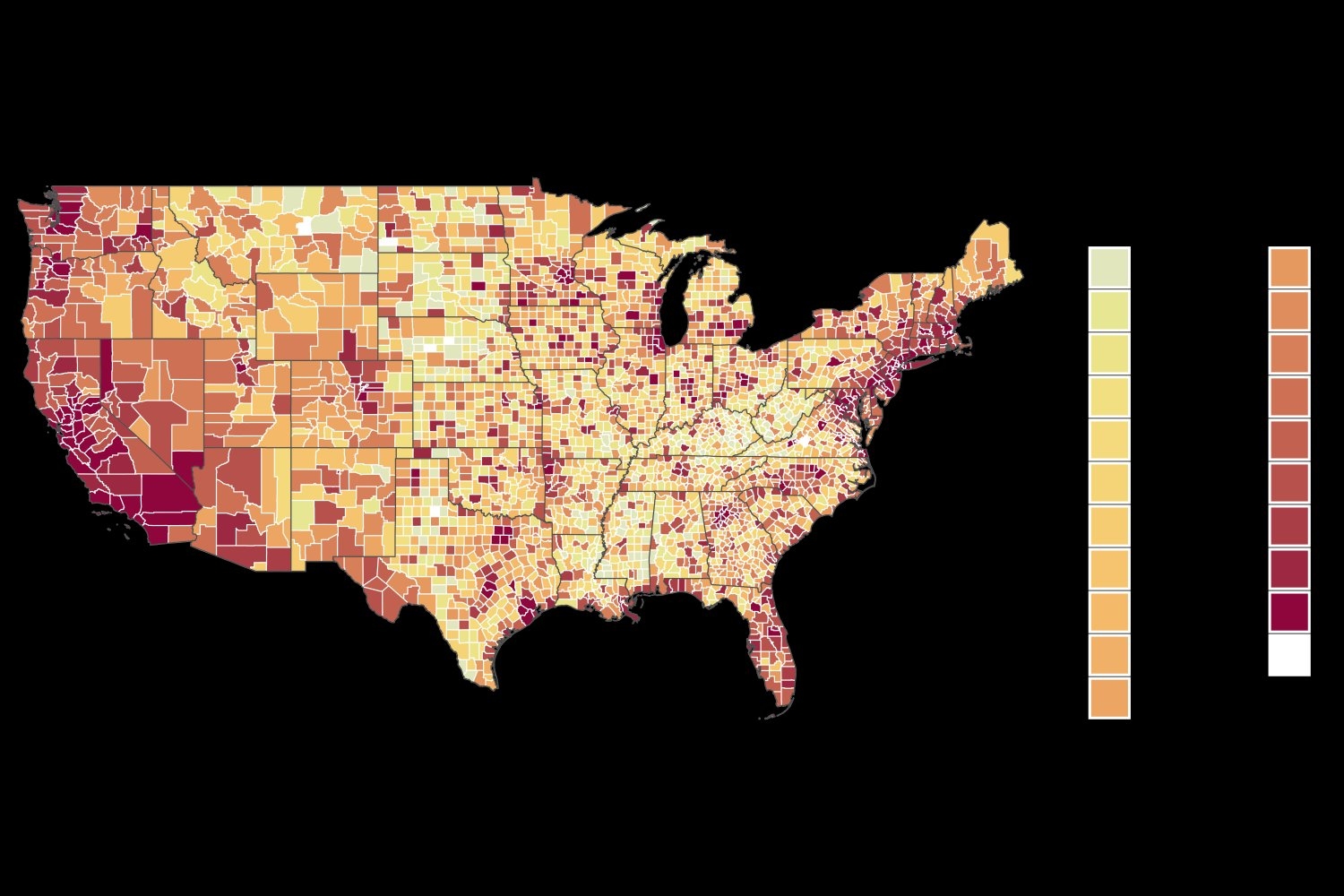
The narrative of the American suburb has long been intertwined with the perceived quality of its school districts. Families pay premiums to live near high-performing schools, and real estate agents routinely cite test scores as a selling point. New research from economists at MIT and the University of Cincinnati adds a layer to that familiar dynamic: in counties that received significant numbers of high-skilled Asian immigrants between 2008 and 2019, home prices rose not simply because more buyers entered the market, but because the quality of local K-12 education measurably improved.
The study examined a specific cohort — immigrants from China, India, Japan, Korea, the Philippines, and Vietnam who arrived on non-permanent work or study visas. Often pre-selected by elite universities and corporate employers, these individuals represent a concentrated influx of human capital. Their presence, the researchers found, appears to create a feedback loop: a collective cultural and economic preference for rigorous education translates into better school performance, which in turn elevates property values for the entire community.
A Mechanism Beyond Supply and Demand
Conventional housing economics treats immigration primarily as a demand shock. More people competing for a fixed housing stock pushes prices upward — a straightforward relationship that has fueled political debates in high-cost metropolitan areas for years. The MIT and Cincinnati findings complicate that framing by identifying what economists call an "amenity channel." In this model, the new residents do not merely bid up prices through competition; they enhance the desirability of the location itself.
The concept of amenity value in housing is well established. Parks, transit access, low crime rates, and school quality all function as local public goods that get capitalized into property prices. What the study isolates is a demographic mechanism through which one of those amenities — education — is actively improved by the characteristics of incoming residents. High-skilled immigrants, by definition holders of advanced degrees or specialized professional credentials, tend to invest heavily in their children's schooling. When that investment is concentrated geographically, the aggregate effect on school performance becomes visible in standardized metrics, and those metrics feed back into the housing market.
This dynamic has a parallel in the broader literature on "sorting" — the tendency of households with similar preferences and resources to cluster together. Research on domestic migration within the United States has long documented how educated, high-income families gravitate toward districts with strong schools, reinforcing the advantage those districts already hold. The new contribution is to show that a similar sorting process operates through international migration channels, with consequences that extend beyond the immigrant households themselves to benefit existing homeowners and long-term residents.
Implications for Policy and Perception
The findings carry weight at a moment when immigration policy in the United States remains deeply contested. Much of the public debate centers on labor market effects — whether immigrants depress wages, fill critical skill gaps, or both. Housing affordability is another flashpoint, particularly in technology corridors and university towns where visa-holding workers concentrate. The study does not dismiss those concerns, but it introduces a countervailing factor that rarely enters the conversation: the possibility that high-skilled immigration generates positive externalities in education that are capitalized across an entire community's housing stock.
There is a tension worth noting. If improved school quality raises property values, it also raises the cost of entry for lower-income families, potentially deepening the stratification that already characterizes American public education. The same feedback loop that rewards existing homeowners with appreciation may price out the next wave of residents — immigrant or otherwise — who lack equivalent economic resources. Whether the educational gains documented in the study are broadly shared or primarily accrue to those already positioned to benefit remains an open question.
Equally unresolved is how durable the effect proves to be. The study's window, 2008 to 2019, coincides with a period of rapid expansion in H-1B visa issuance and a surge in Chinese and Indian graduate enrollment at American universities. Shifts in visa policy, geopolitical relations, or the competitive landscape of global higher education could alter the volume and composition of high-skilled immigration in ways that either amplify or attenuate the mechanism the researchers describe.
The research reframes a familiar story — immigrants and housing prices — by inserting education as the mediating variable. It does not settle the broader debate, but it sharpens the terms. The question is no longer simply whether immigration raises home values, but through what channels, for whom, and at what cost to the communities that absorb the change.
With reporting from MIT News.
Source · MIT News