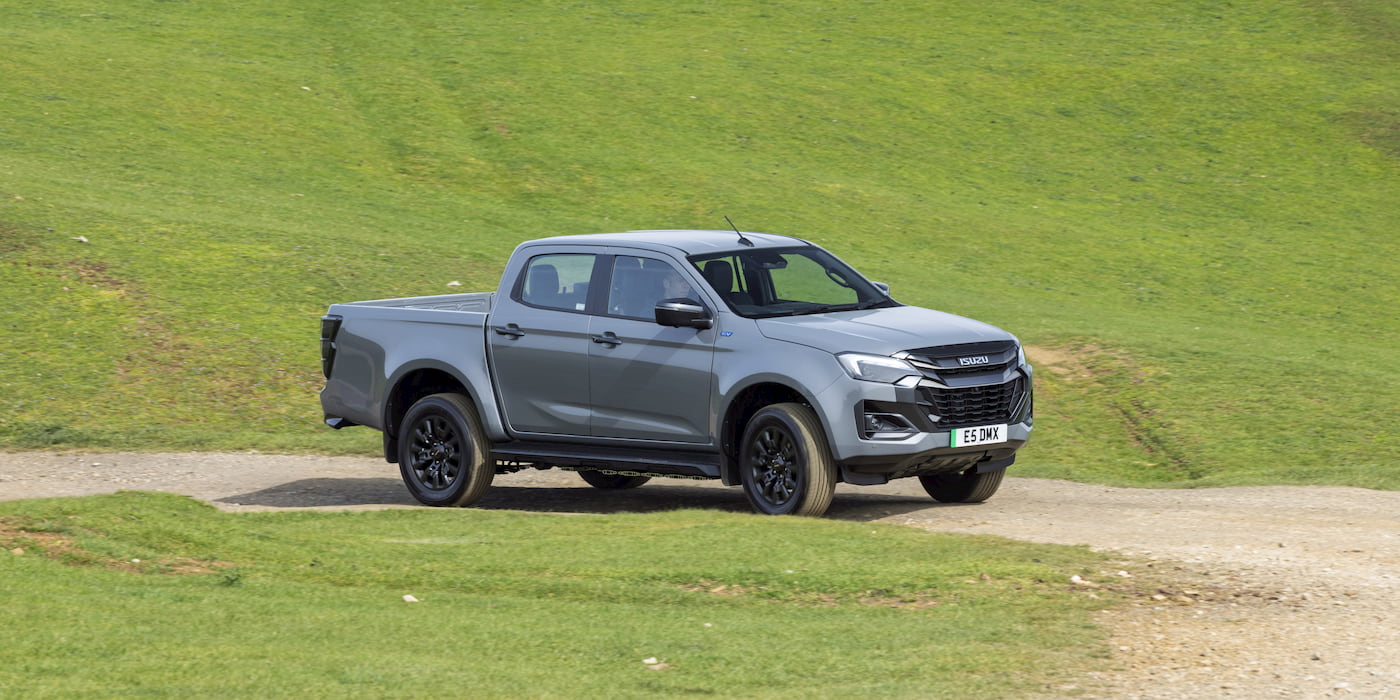
The transition of the pickup truck from diesel workhorse to electrified utility vehicle has reached a new milestone in the United Kingdom. Isuzu, a brand synonymous with rugged reliability in the commercial sector, has officially launched the D-MAX EV — the company's first battery-electric pickup — targeting the heavy-duty utility market. The move places Isuzu ahead of Toyota, whose electric Hilux remains in development, and stakes a claim in a segment where electrification has lagged behind the broader automotive industry.
The D-MAX EV is engineered to preserve the utilitarian credentials that define the brand's reputation. It maintains a towing capacity of over 7,700 pounds and a wading depth of nearly 24 inches, supported by a dedicated "Rough Terrain Mode" for off-road navigation. By porting these capabilities to an electric drivetrain, Isuzu is attempting to address the central tension of the EV transition for professional users: maintaining performance in harsh environments where battery weight, range limitations, and power delivery have historically been points of skepticism among fleet operators.
However, this shift toward cleaner energy arrives with a significant financial barrier. Isuzu's entry is priced at a notable premium over its diesel equivalent, positioning it as a specialized tool for early-adopting fleets rather than a mass-market replacement for the ubiquitous diesel pickup.
Why the commercial pickup took so long to electrify
The passenger car market has moved aggressively toward battery-electric powertrains over the past half-decade, but the commercial pickup segment has proved more resistant. The reasons are structural. Pickups used in agriculture, construction, and logistics face duty cycles that stress battery range — long days in remote areas, heavy payloads, and the expectation of refueling in minutes rather than hours. Diesel engines, with their high torque output and energy-dense fuel, have remained the default precisely because no electric alternative could match the combination of endurance, capability, and cost.
Isuzu's approach with the D-MAX EV appears calibrated to neutralize at least part of that objection. By preserving the towing and off-road specifications of the diesel model, the company is signaling that capability parity is achievable. The remaining question — whether battery range and charging infrastructure can support the daily demands of a working truck — is one that fleet operators will answer through real-world deployment rather than specification sheets.
The UK market offers a particular incentive structure for this kind of vehicle. Clean air zones in cities like London, Birmingham, and Bristol impose charges on older diesel vehicles, creating a direct financial motivation for fleet managers to consider zero-emission alternatives. Government procurement targets and corporate sustainability commitments add further pressure. For operators whose trucks move between urban delivery routes and rural job sites, an electric pickup with genuine off-road credentials fills a gap that vans and passenger EVs cannot.
The competitive landscape and the price question
Isuzu's first-mover advantage in the heavy-duty electric pickup space is real but potentially narrow. Toyota's Hilux BEV, when it arrives, will bring the weight of the world's largest automaker and an established dealer and service network that few competitors can match. The Hilux nameplate carries decades of accumulated trust in commercial markets across Europe, Africa, and Asia-Pacific — a brand equity that Isuzu, despite its loyal following, cannot easily replicate at scale.
The premium pricing of the D-MAX EV introduces a familiar dilemma. Early electric vehicles in nearly every segment have launched at prices above their combustion equivalents, relying on total cost of ownership arguments — lower fuel costs, reduced maintenance, tax incentives — to justify the upfront gap. For consumer vehicles, this calculus has gradually shifted as battery costs have declined. For commercial pickups, the math is more demanding. Fleet purchasers model vehicle costs over years of hard use, and the economics of battery degradation under heavy loads remain less well understood than those of a diesel engine with hundreds of thousands of documented service miles.
Isuzu's bet, then, is not merely on the technology but on the timing. If fleet operators in the UK prove willing to absorb the premium — whether driven by regulation, sustainability mandates, or genuine operational savings — the D-MAX EV could establish a beachhead before larger competitors arrive. If the price gap proves too wide for the commercial buyer's spreadsheet, the vehicle risks becoming a statement of intent rather than a volume product. The answer will depend less on engineering than on the speed at which the economic and regulatory environment closes the gap between aspiration and arithmetic.
With reporting from Electrek.
Source · Electrek