In 2001, the U.S. Forest Service codified a realization that was as much about fiscal pragmatism as it was about ecology: the agency had built more roads than it could afford to maintain. The resulting Roadless Area Conservation Rule effectively froze development across nearly 60 million acres of national forest, preventing new road construction and commercial logging in the country's most pristine remaining wildlands. For nearly a quarter-century, the rule has functioned as one of the broadest land-conservation measures in American history — not through the creation of new parks or wilderness designations, but through the quieter mechanism of simply declining to build.
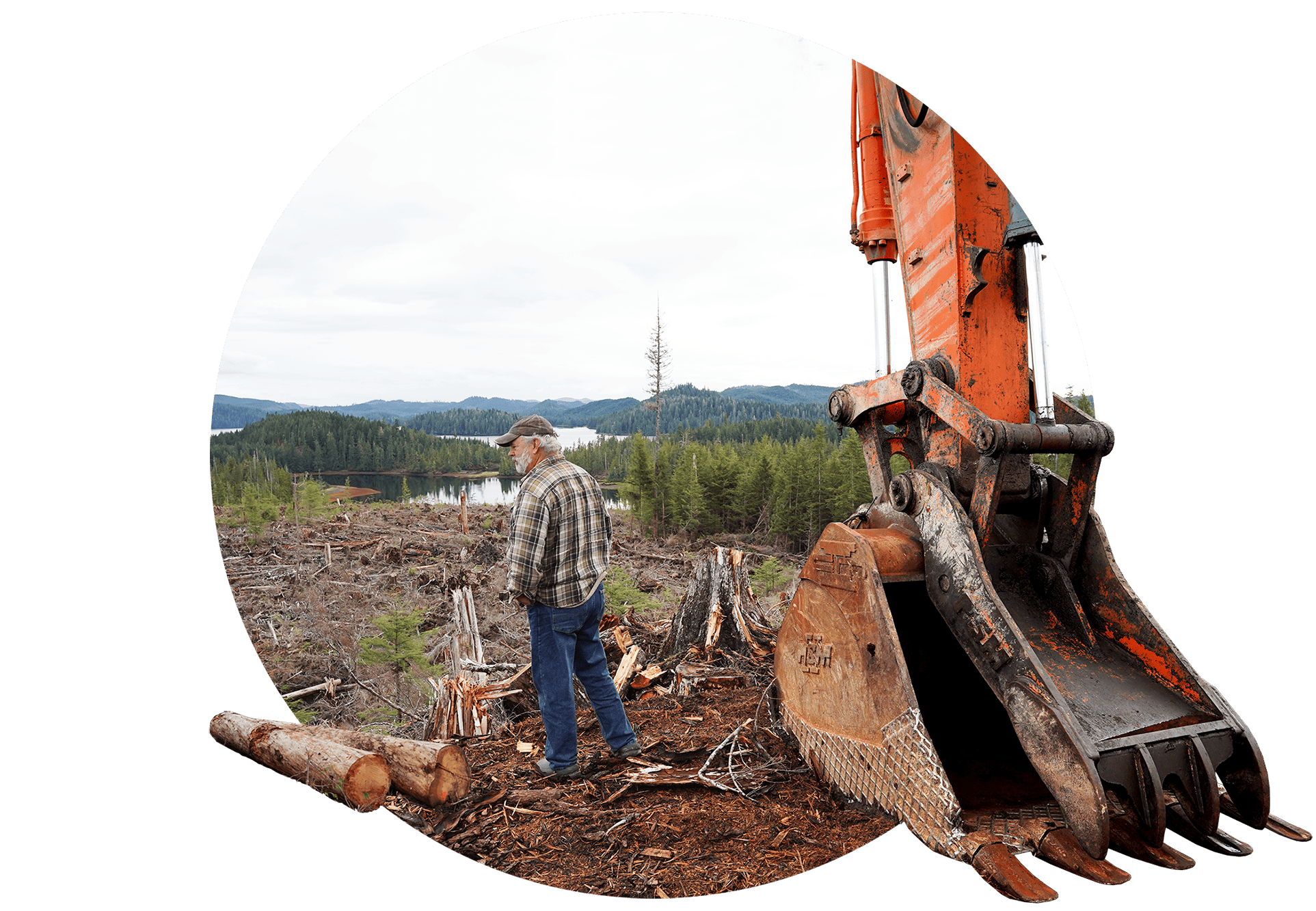
While the Roadless Rule is often associated with the sweeping vistas of the American West — the alpine basins of Colorado, the old-growth corridors of the Pacific Northwest — it also extends protections to vital, fragmented patches of forest across the densely developed Eastern United States. The Trump administration has now moved to dismantle those protections, arguing that the restrictions hamper the Forest Service's ability to manage wildfire risks and maintain land access. The proposal would open affected acreage to logging and mining, reclassifying these lands as active industrial resources rather than protected ecological preserves.
A Rule Born of Maintenance Debt
The origins of the Roadless Rule are worth revisiting, because they illuminate why its rollback carries consequences beyond the ideological. By the late 1990s, the Forest Service maintained a road network stretching roughly 380,000 miles — larger than the U.S. interstate highway system — with a maintenance backlog that ran into the billions of dollars. Building new roads into undeveloped forest was not only ecologically disruptive; it was financially unsustainable. The Clinton-era rule addressed both problems at once, halting new road construction in inventoried roadless areas and, by extension, the timber sales and mineral extraction that roads would have facilitated.
The rule survived multiple legal challenges over the following decades, including state-level attempts to carve out exemptions. Courts repeatedly upheld its core framework, reinforcing the principle that the federal government had both the authority and the rationale to keep these lands undeveloped. That legal durability made the rule a cornerstone of federal conservation policy — one that successive administrations, including the first Trump administration, probed but never fully dismantled.
The current push goes further. By framing the rollback as a wildfire-management necessity, the administration positions road construction and timber harvesting as tools of forest health rather than extraction. The argument has a surface logic: road access can facilitate fuel-reduction treatments and firefighting operations. But the Eastern forests at the center of this debate are predominantly hardwood and mixed-hardwood ecosystems, where fire regimes differ substantially from the fire-prone coniferous landscapes of the West. The ecological case for road-building as fire management is considerably weaker in Appalachian coves and mid-Atlantic ridgelines than in the Sierra Nevada.
What Eastern Forests Stand to Lose
The Eastern dimension of this policy shift deserves particular scrutiny. In a region where urbanization, agriculture, and highway infrastructure have already consumed the vast majority of original forest cover, the remaining roadless areas function as disproportionately important ecological anchors. They serve as carbon sinks, water filtration systems, and biodiversity corridors connecting otherwise isolated habitat fragments. Species that require interior forest conditions — far from roads, edges, and human disturbance — depend on exactly the kind of unbroken canopy that the Roadless Rule was designed to preserve.
Fragmentation is the operative threat. Once a road penetrates a previously intact forest block, the ecological effects cascade: invasive species gain entry corridors, interior-dwelling wildlife loses habitat, and hydrological patterns shift as compacted road surfaces alter runoff. These are not speculative harms; they are well-documented consequences of road construction in forested landscapes, observed across decades of forestry research.
The administration's framing presents a binary — active management or neglect — that conservation science does not support. Forests can be managed for resilience without road construction; prescribed burns, selective thinning along existing access routes, and other low-infrastructure interventions are standard practice. The question is whether the policy objective is genuinely about forest health or whether wildfire rhetoric provides political cover for reopening public lands to extractive industry.
That tension — between stewardship framed as access and conservation framed as restraint — is not new in American land policy. But the stakes in the East are distinct. Unlike Western roadless areas, which often span hundreds of thousands of contiguous acres, Eastern roadless parcels tend to be smaller, more isolated, and more vulnerable to the cumulative effects of incremental development. Losing protections for even a fraction of them could redraw the ecological map of a region that has little margin left.
With reporting from Grist.
Source · Grist