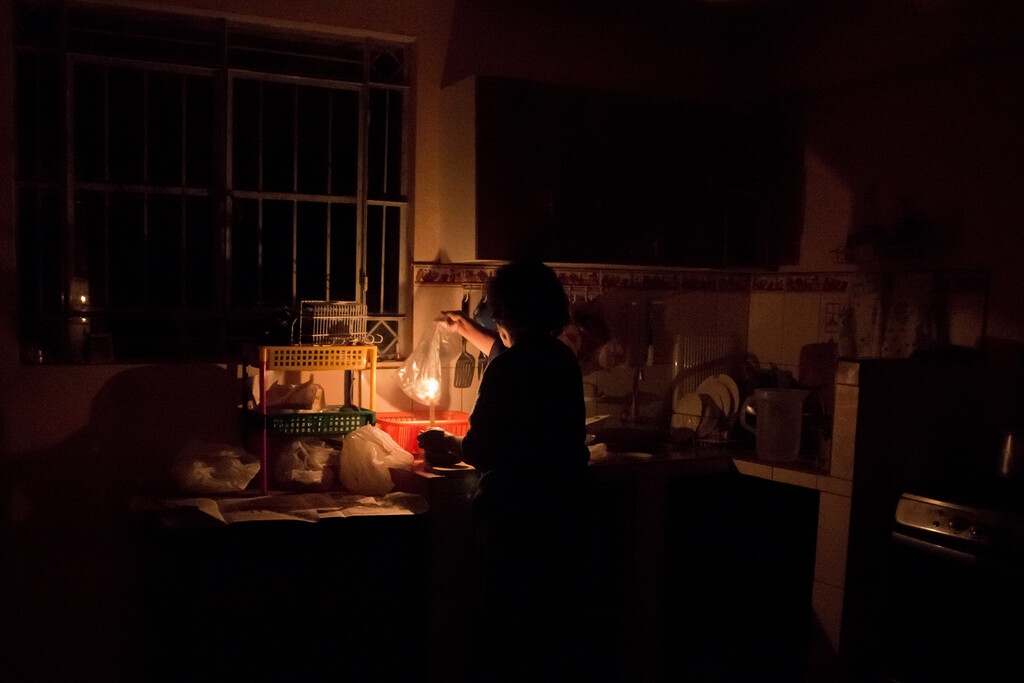
On April 28, a year will have passed since Spain and Portugal experienced a "zero energy" event that plunged 60 million people into a pre-digital silence. For up to 16 hours, the Iberian Peninsula lived without internet, traffic signals, or banking systems — a stark reminder that the modern world is built upon a remarkably fragile electrical foundation. The blackout was the largest synchronous grid failure in Western European history, and its anniversary has become an inflection point for how the continent thinks about energy security.
A year of forensic analysis has culminated in a 472-page report by the European Network of Transmission System Operators (ENTSO-E). The findings describe a "perfect storm" rather than a single point of failure. The collapse began with a sudden overvoltage in Spain, but the system's inability to stabilize itself was exacerbated by what investigators call "operational blindness" — a condition in which grid operators lacked real-time visibility into how distributed generation assets were behaving at the moment of crisis.
The mechanics of a cascade
The report reveals that many renewable energy plants were operating with a fixed power factor, rendering them unable to "read" the overvoltage surging through the grid. A power factor, in simplified terms, describes the relationship between the energy a plant delivers and the reactive power it absorbs or injects to keep voltage stable. When that factor is fixed rather than dynamic, the plant cannot adjust its behavior in response to sudden grid disturbances. In a defensive reflex, these plants disconnected simultaneously to protect their own hardware. This mass exodus of power sources triggered a rebound effect that local voltage controls, which were poorly aligned with the broader network, could not contain.
The sequence echoes a pattern familiar to grid engineers. Large-scale blackouts — from the 2003 Northeast blackout in the United States and Canada to Italy's cascading failure the same year — tend to follow a similar grammar: an initial disturbance, a failure of automated protections to coordinate, and then a rapid, uncontrollable cascade. What distinguishes the Iberian event is the role played by renewable generation. Traditional thermal and nuclear plants carry large spinning turbines whose physical inertia helps absorb frequency shocks, buying operators seconds to respond. Solar inverters and many wind turbines lack that mechanical buffer. When renewables constitute a large share of instantaneous generation — as they increasingly do on the Iberian grid — the system loses a layer of passive resilience that was never explicitly designed but was always implicitly present.
This does not make renewable energy inherently destabilizing. It does, however, expose a gap between the pace at which clean generation capacity has been added and the pace at which grid codes, communication protocols, and ancillary service markets have been updated to accommodate it. The ENTSO-E report's use of the phrase "operational blindness" points less to a hardware deficit than to an information deficit: the grid's central nervous system could not see what its extremities were doing.
Resilience as infrastructure, not afterthought
As Spain reflects on the anniversary of the blackout, the conversation has shifted from the shock of the darkness to the technical cost of resilience. Grid-forming inverters — devices that can actively set voltage and frequency rather than merely follow them — are one widely discussed remedy. Mandatory dynamic power factor requirements for new renewable installations are another. Both demand investment, regulatory coordination across national borders, and a willingness to treat grid stability as a shared public good rather than a byproduct of market competition.
The Iberian case carries implications well beyond the peninsula. Across Europe, the share of inverter-based generation continues to climb. Germany, Ireland, and Denmark face analogous integration challenges at varying scales. The question is whether grid modernization can keep pace with the energy transition or whether it will remain a step behind, surfacing its shortcomings only during the next failure.
The blackout did not discredit renewable energy. It did, however, demonstrate that adding clean generation to an aging synchronous grid without upgrading the coordination layer is a form of structural risk — one that compounds quietly until a single overvoltage event makes it visible to 60 million people at once. Whether that lesson translates into sustained infrastructure spending or fades into the background noise of policy debate remains the central tension as the anniversary approaches.
With reporting from Xataka.
Source · Xataka