Lee Cronin's ascent to the helm of a major studio horror production seemed a logical progression after the lean, blood-soaked efficiency of 2023's Evil Dead Rise. That film demonstrated a director capable of wringing genuine terror from confined spaces and fractured family bonds, all while delivering the visceral thrills expected of its franchise lineage. Yet in Lee Cronin's The Mummy, the director struggles to scale his signature intensity to a broader canvas. What remains is a film that attempts to graft hardcore gore and elaborate practical effects onto a narrative framework that fails to sustain its own weight — an experience both overstuffed and curiously hollow.
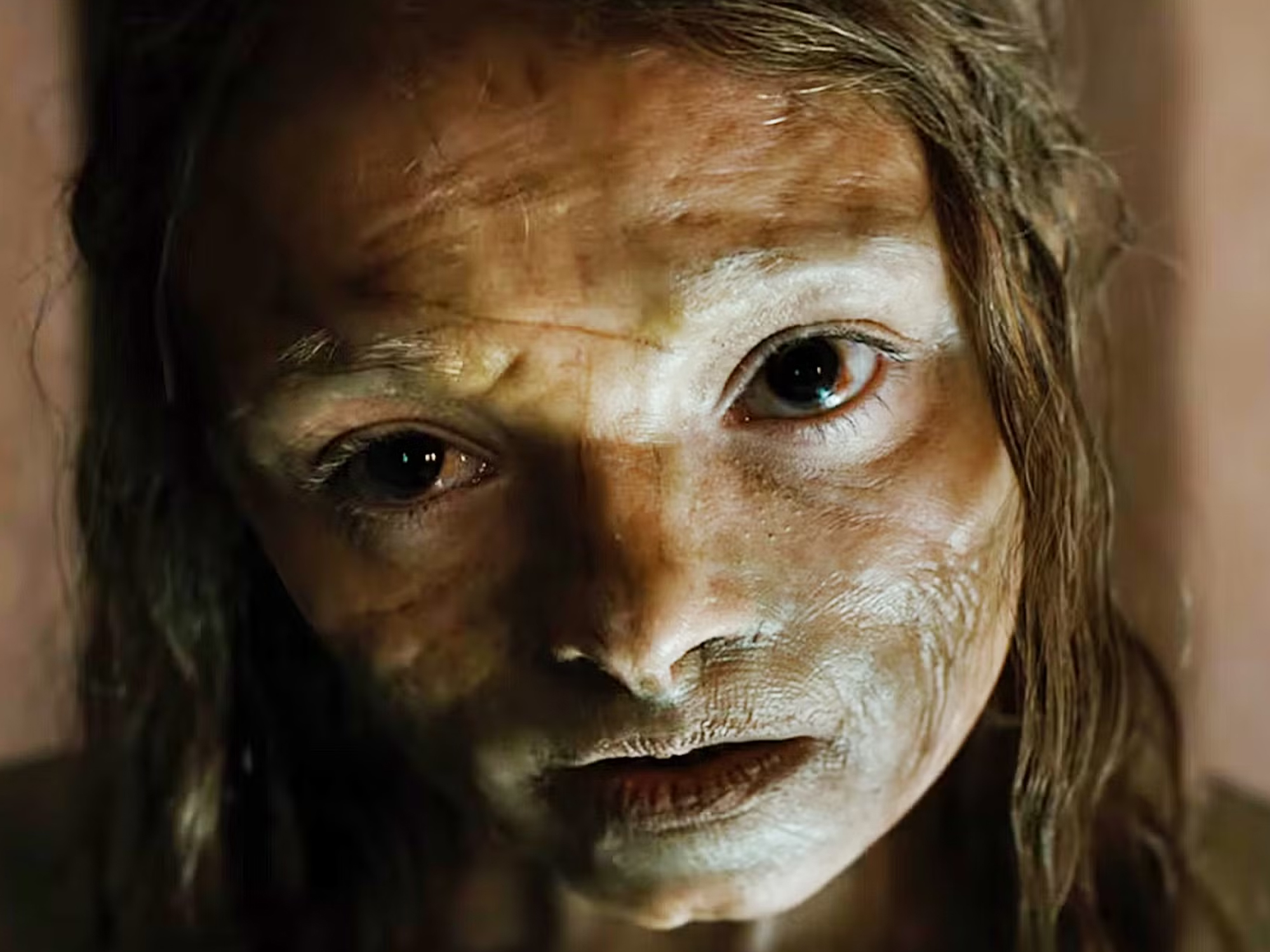
The film centers on the Cannon family, led by Charlie (Jack Reynor), a reporter stationed in Egypt, and his wife Larissa (Laia Costa). When their daughter Katie vanishes into a sudden sandstorm, the family unit — a recurring obsession in Cronin's work — is fractured. The story resumes eight years later when Katie reappears inside a mysterious sarcophagus. The premise carries genuine emotional potential: a child returned from the unknown, the question of what she has become, the guilt and hope that warp a family over years of absence. But the emotional resonance of this reunion is buried under a script that defies internal logic, trading the claustrophobic tension of Cronin's earlier work for a flabby, unwieldy structure.
The curse of the franchise upgrade
The Mummy as a property occupies a peculiar position in horror cinema. Universal's original 1932 film with Boris Karloff was less a creature feature than a slow, atmospheric meditation on obsession and the transgression of ancient boundaries. The 1999 Stephen Sommers version pivoted decisively toward adventure spectacle, a shift that proved commercially potent but moved the franchise away from horror altogether. The ill-fated 2017 Tom Cruise vehicle attempted to launch an interconnected "Dark Universe" and collapsed under the weight of corporate ambition rather than creative vision. Each iteration has wrestled with the same fundamental tension: whether the mummy belongs in horror or in blockbuster adventure.
Cronin's version appears to want both, and the result is a film that commits fully to neither. The practical effects work — reportedly extensive — suggests a filmmaker determined to honor the tactile, physical tradition of horror craftsmanship. But spectacle without narrative architecture becomes mere display. The titular mummies, rather than functioning as embodiments of ancient menace or metaphors for the family's buried trauma, serve as little more than an inconvenient plot device. They arrive, they threaten, they recede, without accumulating the kind of dread that sustained Cronin's best work in Evil Dead Rise.
This is a familiar pattern. Directors who prove themselves in contained, lower-budget horror frequently receive invitations to larger productions, and the transition is rarely smooth. The move from a single apartment building to the deserts of Egypt is not merely a change of location — it is a change of grammar. Confined horror derives its power from limitation: limited space, limited escape, limited information. Blockbuster horror must generate tension across open landscapes, multiple subplots, and longer runtimes. The skills do not always transfer.
Family as structure, family as debris
What made Evil Dead Rise effective was its willingness to use family not as sentimental backdrop but as structural scaffolding. The relationships between sisters, between mother and children, gave the horror stakes that transcended the physical. Cronin clearly intended the same architecture here — the Cannon family's eight-year wound, the ambiguity of Katie's return — but the script scatters its attention across too many narrative obligations. Supporting characters multiply without deepening. Set pieces arrive disconnected from emotional throughlines.
The result is a film that illustrates a tension worth watching across the genre: the gap between what a director's sensibility demands and what a franchise-scale production permits. Whether Cronin's next project returns to the tighter constraints that sharpened his craft, or whether this experience reshapes his approach to scale, remains an open question. What The Mummy makes clear is that ambition and coherence are not the same thing — and that the distance between a director's best instincts and a studio's structural demands can swallow a film whole.
With reporting from Little White Lies.
Source · Little White Lies