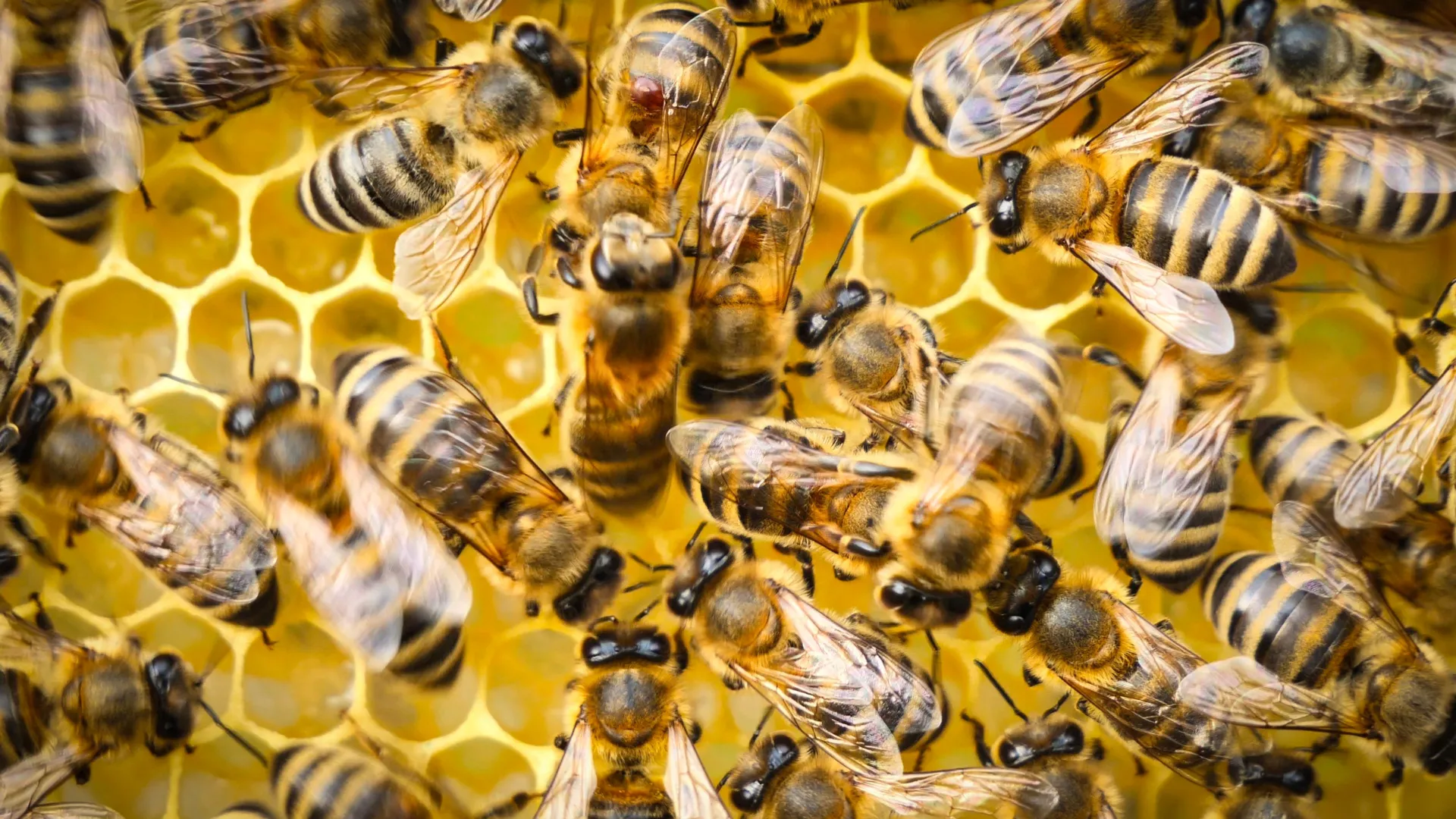
For decades, the Varroa destructor mite has been the primary antagonist of North American apiculture. The parasitic mite, which feeds on the fat bodies of honeybees and transmits a suite of debilitating viruses, is capable of collapsing entire colonies within a single season if left unchecked. Beekeepers across the United States have relied on a rotating arsenal of miticides — chemical treatments that carry their own costs, from residue buildup in wax to the gradual emergence of resistant mite populations. Colony losses in the country have remained stubbornly high for years, a problem that reverberates well beyond the honey industry into the broader agricultural systems dependent on managed pollination.
Yet in the feral landscapes of Southern California, a specific hybrid honeybee appears to be charting a different course. Researchers have identified colonies composed of genetically diverse, locally adapted lineages that maintain significantly lower mite loads without any chemical intervention. These are not designer bees engineered in a controlled breeding program. They are the product of natural selection operating across generations in an unmanaged environment — a living experiment in evolutionary resilience.
Diversity as defense
The finding challenges a longstanding tension in commercial apiculture. For much of the twentieth century, breeding programs in North America prioritized traits valued by industry: docility, high honey yield, and uniformity. That narrowing of the gene pool, while commercially rational, may have inadvertently stripped managed colonies of the genetic variability needed to mount effective defenses against novel threats. The Southern California hybrids suggest the inverse principle: that a broad and heterogeneous genetic base, shaped by local ecological pressures rather than human selection criteria, can produce populations with robust parasite resistance.
This pattern has precedent elsewhere. Feral honeybee populations in parts of Europe — notably on the Swedish island of Gotland and in certain regions of France — have been observed surviving without treatment over extended periods. In each case, the surviving colonies tend to exhibit a cluster of behavioral and physiological traits, from heightened grooming behavior to reduced brood area, that collectively suppress mite reproduction. The Southern California population appears to fit within this broader framework, though with a mechanism that draws particular attention to the earliest stage of colony life.
A brood-level disruption
Perhaps the most consequential observation is that the larvae of these hybrid bees appear to be naturally less attractive to Varroa mites. The mite's reproductive cycle depends on entering brood cells just before they are capped, where it lays eggs on the developing pupa. If the chemical or biological cues emitted by larvae are altered — even subtly — the parasite's ability to identify suitable hosts is disrupted before reproduction can begin. This is a fundamentally different point of intervention than the adult-bee-focused strategies that dominate current management practices.
The distinction matters. Most existing approaches, whether chemical or behavioral, target mites after they have already established themselves in a colony. A brood-level resistance mechanism, by contrast, operates upstream, suppressing the parasite's population growth at its source. If the specific cues involved can be identified and understood at a molecular level, they could inform breeding strategies that do not require narrowing the gene pool back down to a handful of selected lines.
The tension, however, is real. Feral-adapted bees are not necessarily suited to the demands of commercial beekeeping. Traits that confer survival in an unmanaged environment — smaller colony size, higher swarming tendency, defensive behavior — often conflict with the requirements of large-scale pollination services and honey production. Whether the genetic architecture underlying mite resistance can be isolated and introduced into managed populations without sacrificing commercial viability remains an open question, one that sits at the intersection of evolutionary biology, agricultural economics, and the practical realities of an industry under sustained pressure.
What the Southern California hybrids offer is not a solution so much as a proof of concept: that honeybee populations, given sufficient genetic diversity and evolutionary time, can develop durable resistance to Varroa destructor. Whether that insight can be translated into scalable practice — and how much the industry is willing to rethink its breeding philosophy to get there — is the harder problem.
With reporting from Science Daily.
Source · Science Daily