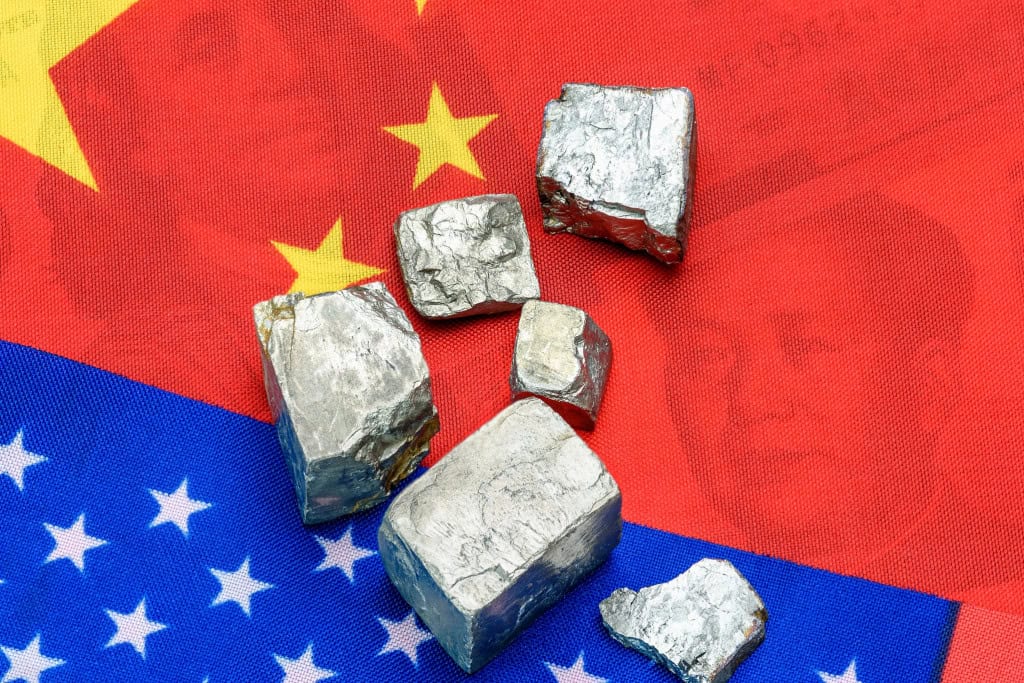
USA Rare Earth (USAR) has finalized an agreement to acquire 100% of the Serra Verde Group, the operator of Brazil's only active rare earth production and processing facility. The transaction, valued at approximately $2.8 billion, involves a $300 million cash payment and the issuance of 126.8 million new common shares. Expected to close in the third quarter of this year, the deal marks one of the largest mining acquisitions in Latin America in recent memory and a significant consolidation in the Western hemisphere's critical minerals landscape.
Rare earth elements — a strategic suite of minerals essential for permanent magnets, electric vehicle motors, high-performance semiconductors, and advanced defense systems — are not technically scarce in the Earth's crust. What is scarce is the industrial infrastructure to mine, separate, and refine them into usable forms. That infrastructure is concentrated almost exclusively in China, which has controlled the vast majority of global rare earth processing for decades. The Serra Verde deal is best understood against that backdrop: not as a routine corporate merger, but as a deliberate move to build an alternative supply chain.
A Strategic Mineral in a Fragile Supply Chain
The vulnerability of Western rare earth supply has been a known risk since at least 2010, when China briefly restricted exports of the minerals during a diplomatic dispute with Japan. That episode sent prices surging and exposed how thoroughly the rest of the world had outsourced a critical link in its industrial base. In the years since, governments in the United States, the European Union, Australia, and Canada have launched various initiatives to diversify sourcing — from subsidizing domestic mining projects to signing bilateral mineral-access agreements with resource-rich nations.
Progress, however, has been slow. Building a rare earth mine is capital-intensive and time-consuming; building the downstream refining capacity is even harder. China's dominance rests not just on geology but on decades of accumulated expertise, scale economies, and a willingness to tolerate environmental costs that Western jurisdictions have been reluctant to accept. Against that structural reality, acquiring an already-producing operation like Serra Verde offers a shortcut that greenfield development cannot match.
Brazil occupies an interesting position in this equation. The country holds substantial reserves of rare earth elements and niobium, and its mining sector is well-established, anchored by major players in iron ore and other commodities. Yet rare earth extraction has remained a relatively small part of the national mining portfolio. Serra Verde, located in the state of Goiás, has been one of the few operations to move from exploration to actual production — a distinction that makes it a uniquely attractive asset for a buyer seeking near-term output rather than a speculative resource.
Vertical Integration as Geopolitical Hedge
USAR's stated ambition is vertical integration: controlling the chain from mine to refined product. If executed, this would allow the company to supply magnet-grade rare earth oxides to manufacturers of electric vehicles, wind turbines, and defense hardware without routing material through Chinese processing facilities. The strategic logic mirrors what has already occurred in the semiconductor industry, where governments and firms are spending heavily to reshore or friend-shore production capacity that had migrated to a small number of geographically concentrated suppliers.
The deal also raises questions that extend beyond corporate strategy. For Brazil, the sale of its sole producing rare earth mine to a foreign buyer touches on longstanding debates about resource sovereignty and the terms on which the country participates in global commodity chains. Whether Brasília attaches conditions to the transaction — or uses it as a catalyst to develop additional domestic projects — could shape the country's role in the emerging critical minerals order.
For the broader Western supply-chain diversification effort, the acquisition is a data point, not a resolution. A single mine in Goiás does not displace Chinese dominance. What it does is add one more node to a network that policymakers in Washington, Brussels, and allied capitals are trying to build — a network whose adequacy will ultimately be tested not by deal announcements, but by whether refined material reaches factory floors at competitive cost and reliable volume. The gap between strategic intent and industrial reality remains the central tension in the critical minerals race.
With reporting from Olhar Digital.
Source · Olhar Digital