In the arid geography of the Middle East, water has long been a matter of national security, but recent escalations have turned the infrastructure of survival into a primary military target. In early March, Iranian officials accused the United States of an attack on a desalination plant on Qeshm Island, situated at the strategic mouth of the Strait of Hormuz. While the U.S. denied involvement, the resulting disruption reportedly cut off the fresh water supply to nearly 30 villages, signaling a grim shift in the region's tactical landscape.
The vulnerability is not isolated to Iran. Bahrain and Kuwait have since reported damage to their own facilities, leveling accusations back at Tehran. The rhetoric has only sharpened with former President Donald Trump threatening the destruction of Iran's desalination capacity unless the Strait of Hormuz is reopened, even suggesting further strikes on power plants and bridges. For Gulf states, where desalination provides the vast majority of water for drinking, agriculture, and industry, these threats target the very foundation of civic life.
Water as a Strategic Chokepoint
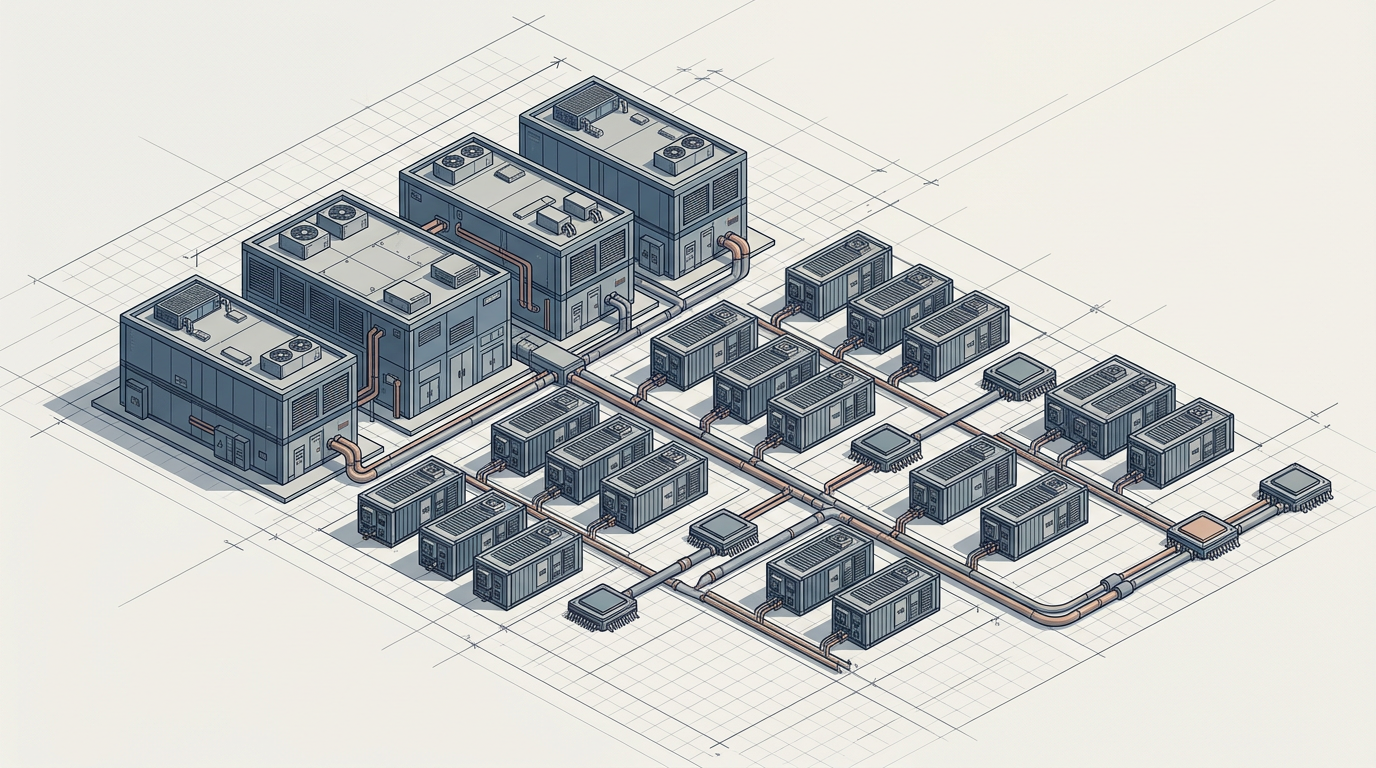
Desalination — the process of removing salt and impurities from seawater to produce freshwater — has been the backbone of Gulf state water policy for decades. Saudi Arabia, the United Arab Emirates, Kuwait, and Bahrain built sprawling reverse-osmosis and thermal distillation complexes precisely because nature offered them no alternative: rainfall is negligible, and fossil aquifers are depleting at rates far exceeding natural recharge. The technology solved an existential problem, but it also concentrated a critical resource in a small number of large, fixed, energy-intensive facilities — the kind of infrastructure that is difficult to harden and impossible to hide.
Historically, attacks on water infrastructure during armed conflict are not unprecedented. During the Gulf War of 1991, coalition strikes degraded Iraq's water treatment capacity, contributing to a humanitarian crisis that persisted for years. International humanitarian law, particularly the 1977 Additional Protocols to the Geneva Conventions, prohibits attacks on objects indispensable to the survival of the civilian population, including drinking water installations. Enforcement, however, has remained inconsistent, and the legal framework has done little to deter belligerents when strategic calculations override normative constraints.
What distinguishes the current moment is the degree of dependence. When Iraq's water systems were damaged in the 1990s, the country still had the Tigris and Euphrates rivers as degraded but functioning alternatives. Several Gulf states have no such fallback. A sustained disruption of desalination capacity in Kuwait or Bahrain would not merely inconvenience populations; it would create a humanitarian emergency within days, not weeks.
The Climate Dimension
This weaponization of infrastructure arrives at a moment of extreme environmental fragility. According to Liz Saccoccia of the World Resources Institute, 83% of the Middle East currently faces "extremely high" water stress. As rising temperatures and climate-driven droughts render traditional aquifers insufficient, the region's precarious reliance on capital-intensive technology has become a profound strategic liability.
The convergence of climate pressure and geopolitical instability creates a feedback loop that is difficult to break. Higher temperatures increase both water demand and the energy required to produce desalinated water. Conflict disrupts energy supply chains — particularly when the Strait of Hormuz, through which a significant share of global oil and gas transits, is itself a contested chokepoint. Each variable compounds the others.
Some Gulf states have begun investing in strategic water reserves and distributed desalination capacity, attempting to reduce the concentration risk inherent in a small number of mega-plants. But building redundancy into water infrastructure is expensive and slow, and the threat environment is evolving faster than the engineering response.
In the current conflict, the objective is no longer just territorial or economic; it is the control of the tap itself. The question facing the region — and the international institutions nominally responsible for protecting civilian infrastructure — is whether the norms governing warfare can adapt quickly enough to account for a world in which the most consequential targets are not military bases or oil fields, but the machines that keep populations alive.
With reporting from MIT Tech Review Brasil.
Source · MIT Tech Review Brasil