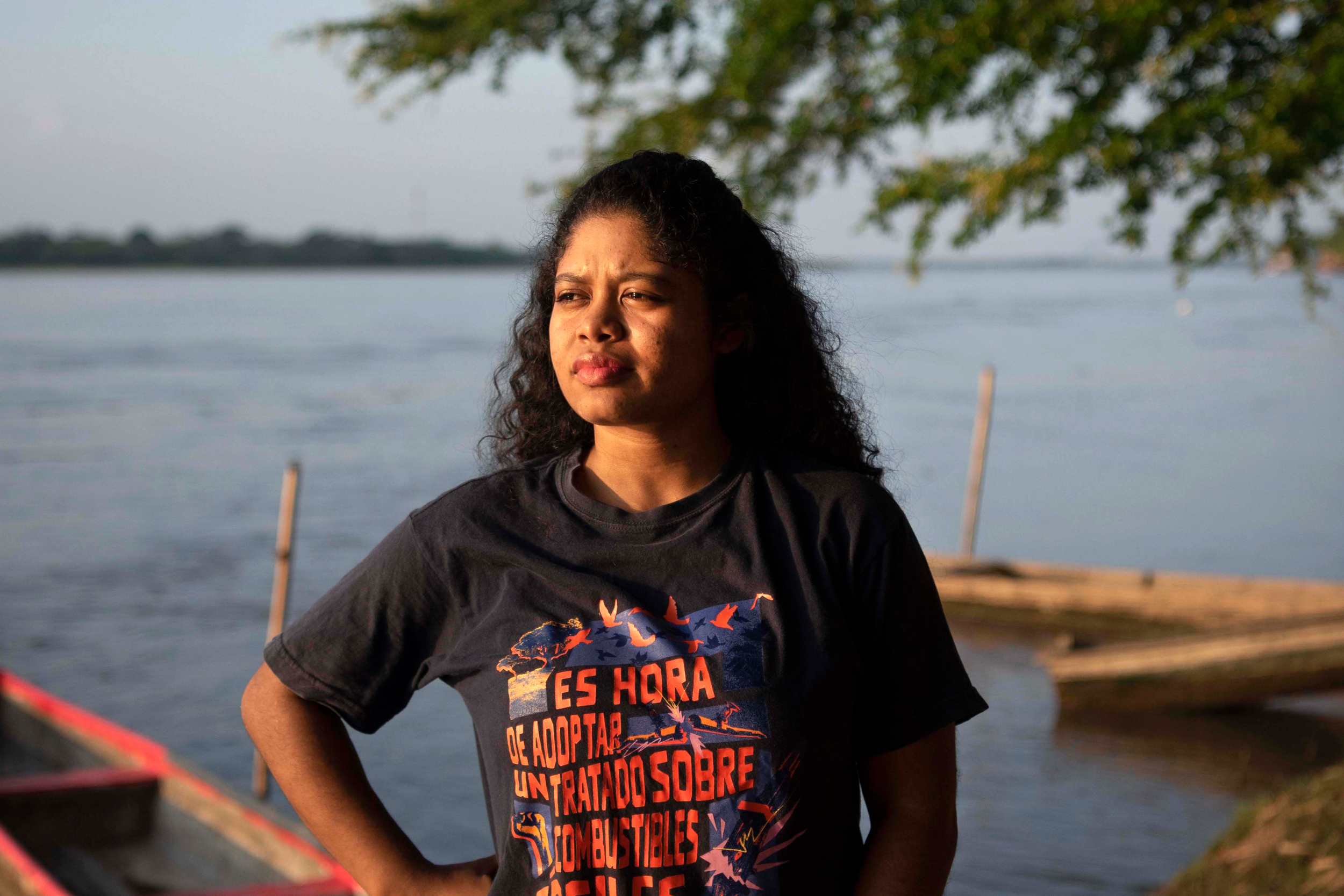
The Magdalena River stretches roughly 1,500 kilometers through Colombia, draining nearly a quarter of the country's landmass and sustaining communities, fisheries, and ecosystems that have shaped Colombian life for centuries. It is along this corridor that Yuvelis Morales Blanco, a 24-year-old activist raised on the river's banks, built a campaign against hydraulic fracturing that has now earned her the Goldman Environmental Prize — widely regarded as the most prestigious recognition for grassroots environmental work worldwide.
Morales Blanco's advocacy centered on halting the expansion of fracking operations into ecologically sensitive zones along the Magdalena basin. Her work drew force from a legal concept still unfamiliar in much of the world: the "Rights of Nature" framework, which treats ecosystems not as property or resource pools but as entities with legally enforceable rights to exist, regenerate, and flourish. By anchoring her campaign in this doctrine, Morales Blanco helped secure a moratorium on fracking in Colombia — a decision with significant implications for a country whose economy has long depended on fossil fuel revenues.
Rights of Nature and the Colombian Precedent
The Rights of Nature framework has gained traction in Latin America faster than in any other region. Ecuador became the first country to enshrine nature's rights in its constitution in 2008. Bolivia followed with its own legislation. Colombia's judiciary has moved in a parallel direction: in 2016, the Constitutional Court recognized the Atrato River as a subject of rights, and subsequent rulings extended similar protections to the Amazon region. Morales Blanco's campaign fits within this broader legal evolution, but it also tested the framework's practical limits. Securing a moratorium on fracking required more than courtroom arguments; it demanded sustained community mobilization against well-funded industrial interests and a political establishment historically reluctant to restrict extraction.
The tension is structural. Colombia remains a significant oil and gas producer, and fossil fuel exports constitute a substantial share of government revenue. Any restriction on extraction carries fiscal consequences that ripple through public spending, infrastructure investment, and social programs. The fracking moratorium, therefore, was not merely an environmental decision — it was an economic and political one, forcing policymakers to weigh long-term ecological stability against short-term fiscal pressures.
The Cost of Environmental Defense
Morales Blanco's recognition arrives against a grim backdrop. Latin America is consistently the most dangerous region in the world for environmental defenders. Colombia, in particular, has seen persistent violence against activists, community organizers, and Indigenous leaders who oppose extractive projects. Morales Blanco herself has faced death threats and periods of forced exile — a pattern so common among Colombian defenders that it has drawn repeated attention from international human rights organizations.
The Goldman Prize, by directing global attention to individual activists, serves a dual function: it validates the work and, to some degree, provides a measure of international visibility that can act as a protective shield. Whether that visibility translates into durable safety is another question. The structural conditions that generate threats against defenders — concentrated economic interests, weak rule of law in rural areas, and the entanglement of legal and illegal economies around extraction — remain largely unchanged.
What Morales Blanco's case illustrates is a collision between two forces that shows no sign of resolving neatly. On one side, a growing body of law and public sentiment treats rivers, forests, and watersheds as subjects deserving protection. On the other, the fiscal architecture of resource-dependent states continues to incentivize extraction. Colombia's fracking moratorium is a concrete outcome, but its durability depends on political conditions that shift with administrations, commodity prices, and the strength of the movements that secured it in the first place. The Magdalena still flows. The question is which framework — ecological rights or extractive economics — will ultimately govern what happens along its banks.
With reporting from Inside Climate News.
Source · Inside Climate News