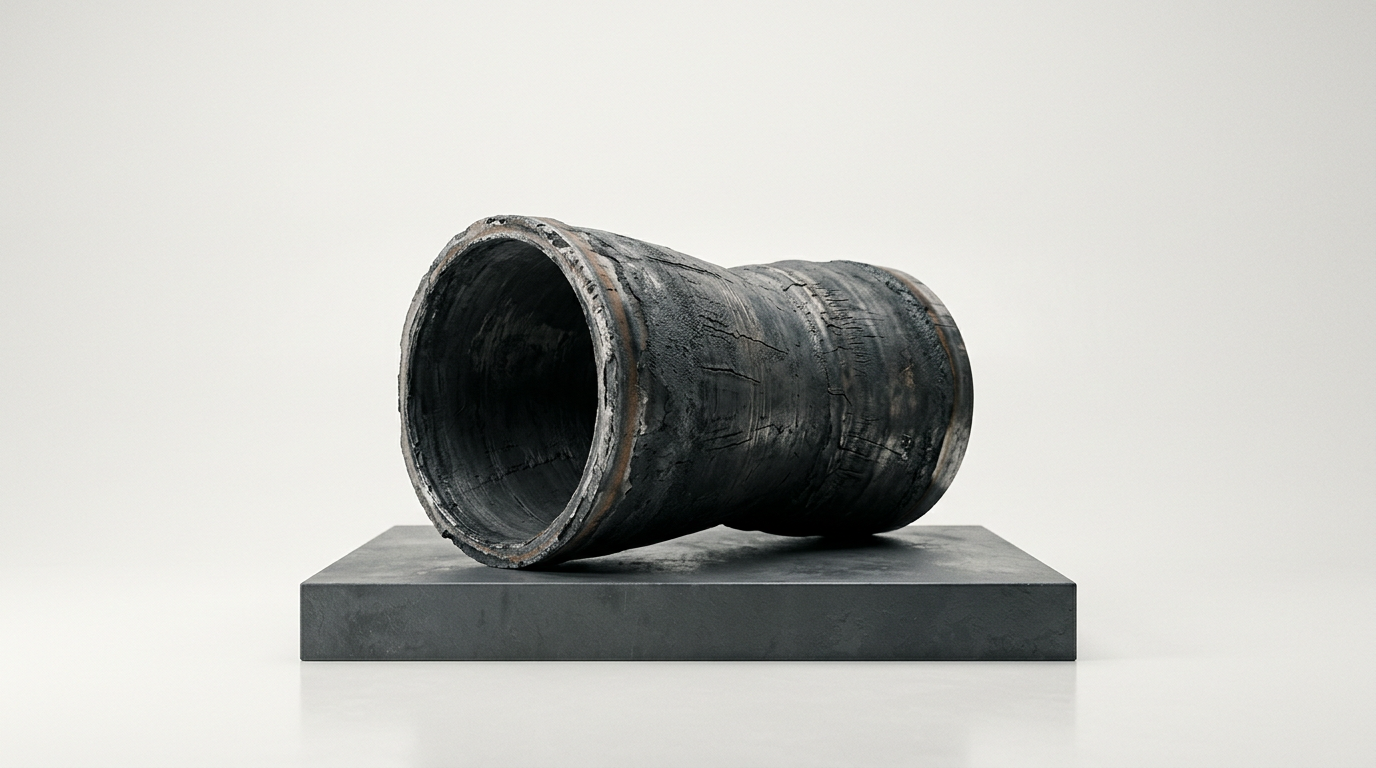
Northrop Grumman disclosed a $71 million charge in its first-quarter earnings, a financial setback tied directly to the engineering hurdles of modern spaceflight. The charge stems from an anomaly involving the GEM 63XL solid rocket booster, a critical component designed to provide the initial thrust for United Launch Alliance's (ULA) new Vulcan Centaur rocket. The disclosure, made as part of the company's routine quarterly reporting, offers a concrete measure of the cost when hardware development collides with the unforgiving demands of orbital-class propulsion.
The technical failure has effectively grounded the Vulcan, a vehicle intended to serve as the workhorse for both commercial and national security missions. For Northrop, the cost is more than a line item; it represents the inherent volatility of a supply chain where a single component's failure can stall an entire launch manifest.
A booster lineage under pressure
The GEM 63XL is an elongated, higher-performance derivative of the GEM 63 solid rocket boosters that have flown on ULA's Atlas V for years. Solid rocket motors occupy a peculiar niche in launch vehicle design: they are mechanically simpler than liquid engines, with no turbopumps or complex plumbing, yet their propellant grain geometry, casing integrity, and nozzle performance must be validated to exacting tolerances. Once ignited, a solid motor cannot be throttled or shut down, which means any anomaly during burn is essentially unrecoverable.
Scaling a proven solid motor to a larger variant — longer casing, greater propellant mass, higher chamber pressures — introduces risks that do not scale linearly. The history of solid propulsion is punctuated by episodes where seemingly incremental design changes produced unexpected failure modes. The Space Shuttle program's Challenger disaster in 1986 traced to an O-ring joint in a solid rocket booster, a component whose behavior under cold-temperature conditions had been flagged but insufficiently addressed. The parallel is not one of severity but of principle: solid motors punish assumptions about scalability.
For Northrop Grumman, the GEM 63XL program sits within a broader portfolio of solid propulsion work that includes missile defense interceptors and the OmegA rocket program, the latter of which was cancelled after failing to win contracts under the National Security Space Launch program. The company's solid motor expertise is deep, but depth of experience does not eliminate development risk — it merely narrows the probability band.
Strategic consequences beyond the balance sheet
The grounding of Vulcan carries implications that extend well past Northrop Grumman's quarterly financials. ULA designed Vulcan Centaur as the successor to both the Atlas V and Delta IV Heavy, vehicles that have anchored the U.S. national security launch manifest for two decades. The Department of Defense and the National Reconnaissance Office have missions queued for Vulcan, and delays compress a schedule that already faces pressure from a constrained number of certified launch providers.
The competitive landscape adds a further dimension. SpaceX's Falcon 9 and Falcon Heavy have captured a dominant share of both commercial and government launch contracts, and the company's Starship program — though on its own protracted development arc — promises to reshape cost structures further. Every month Vulcan remains grounded is a month in which ULA cannot demonstrate the vehicle's operational cadence to prospective customers, military or otherwise.
For Northrop Grumman, the $71 million charge also raises questions about contract structure and risk allocation in the launch supply chain. Whether the company absorbs the full remediation cost or shares liability with ULA under existing agreements will shape how future supplier relationships in the sector are negotiated. Aerospace primes have historically pushed risk down to subcontractors; episodes like this test whether that model remains sustainable when the subcontractor is itself a prime-tier defense firm.
The tension at the center of this episode is structural, not incidental. The U.S. launch industry is attempting to retire legacy vehicles and transition to next-generation systems while simultaneously maintaining assured access to space for national security. That transition demands new hardware, and new hardware demands a learning curve — one that, as Northrop Grumman's balance sheet now reflects, is denominated in both time and capital. Whether the booster anomaly proves to be a contained engineering problem or a symptom of deeper design challenges will determine how long that curve extends.
With reporting from SpaceNews.
Source · SpaceNews