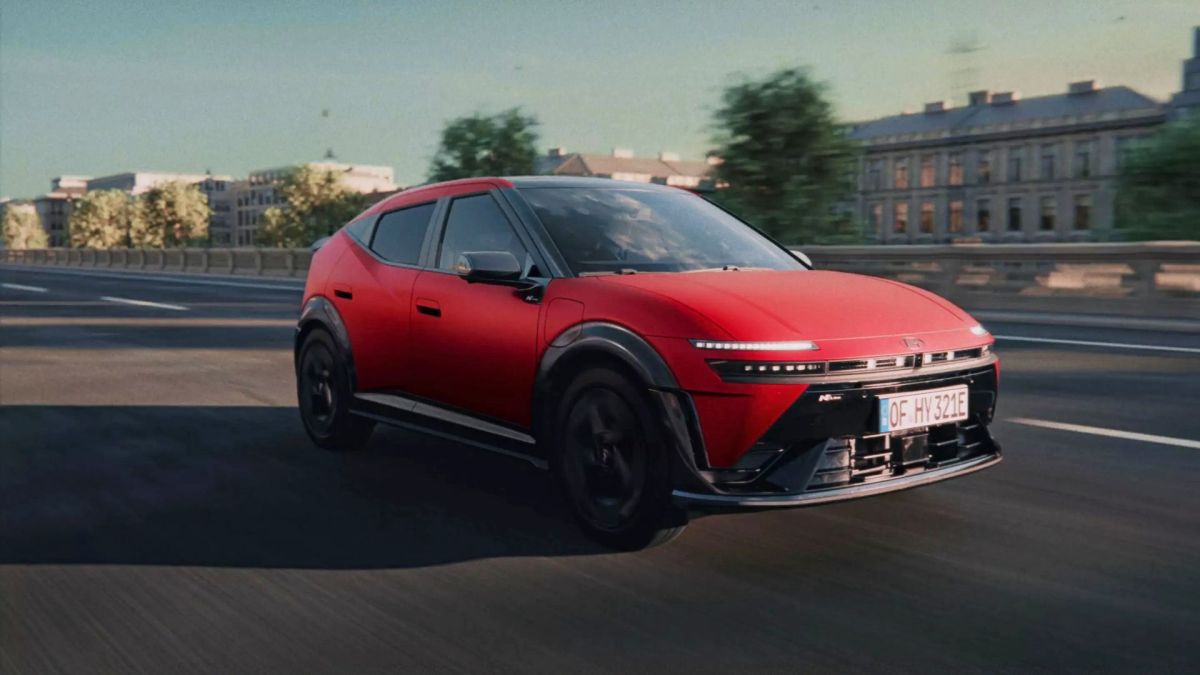
Hyundai has spent the last few years establishing its Ioniq sub-brand as a legitimate contender in the premium electric vehicle space. With the Ioniq 5 and 6, the South Korean automaker leaned into bold, retro-futurist aesthetics and high-voltage architecture that earned critical praise and strong sales in Europe and North America. Now, the company is attempting to capture the more price-sensitive urban market with the introduction of the Ioniq 3, an electric crossover designed to sit at the entry point of its lineup.
On paper, the Ioniq 3 offers a compelling headline figure: an estimated range of nearly 500 kilometers (approximately 310 miles). For a vehicle positioned for city environments and daily commutes, this puts it near the top of its class, potentially alleviating the range anxiety that still plagues more affordable EVs. It maintains the brand's distinct design language, blending sharp lines with a compact, utilitarian silhouette. But the gap between a headline number and a complete product is where the Ioniq 3 story gets more complicated.
The cost of scaling down
The Ioniq 5 and Ioniq 6 were built on Hyundai's 800-volt E-GMP platform, a piece of electrical architecture that enabled charging speeds competitive with — and in some cases ahead of — those offered by Tesla and Porsche. That platform became a genuine differentiator: the ability to add substantial range in under twenty minutes of fast charging turned the Ioniq lineup into a practical long-distance proposition, not just a city car with a plug.
The Ioniq 3 appears to step away from that advantage. Early assessments of its technical specifications suggest a lower-voltage architecture, which would translate directly into slower DC fast-charging rates. The trade-off is not unusual in the industry. Volkswagen's ID.3 and ID.4 similarly sit on a 400-volt MEB platform that prioritizes cost efficiency over peak charging performance. Stellantis has made comparable choices across its growing roster of electric models. The pattern is consistent: when automakers move down-market, charging speed is among the first capabilities to be trimmed.
The reasoning is straightforward. An 800-volt system requires more expensive components — from the inverter to the cabling — and those costs are difficult to absorb in a vehicle aimed at budget-conscious buyers. For Hyundai, the decision reflects a broader tension facing every legacy automaker attempting to make EVs accessible: the technology that makes electric vehicles feel like a genuine upgrade over combustion cars is often the same technology that keeps them expensive.
Range as a marketing anchor
By foregrounding the 500-kilometer range figure, Hyundai is making a deliberate bet about what matters most to its target buyer. Range anxiety remains one of the most frequently cited barriers to EV adoption, particularly among first-time electric vehicle buyers who lack experience with charging infrastructure. A large number on the spec sheet addresses that concern directly, even if the real-world figure — affected by temperature, driving style, and highway speeds — will inevitably be lower.
This approach has precedent. When Chinese manufacturers such as BYD began their push into European markets, range was the primary metric they emphasized, often at the expense of nuance around charging curves or software refinement. The strategy proved effective at generating initial interest, though it also invited scrutiny once reviewers tested vehicles under less favorable conditions.
Hyundai's challenge is slightly different. The Ioniq brand has already established credibility at the higher end. The risk with the Ioniq 3 is not obscurity but dilution — the possibility that a technically modest entry undermines the perception of the lineup as a whole. Brands from Audi to Mercedes-Benz have navigated similar tensions when extending nameplates into lower segments, with mixed results.
The Ioniq 3, then, sits at a familiar crossroads in the EV transition. It offers enough range to satisfy the daily needs of most urban drivers, wrapped in a design that signals modernity. What it may lack — fast charging, the sense of technological surplus that defined its siblings — is precisely what separated the Ioniq brand from the growing crowd of competent but unremarkable electric crossovers. Whether the mass market notices that distinction, or whether range alone is sufficient to close the sale, will say as much about the state of consumer expectations as it does about Hyundai's engineering choices.
With reporting from Numerama.
Source · Numerama