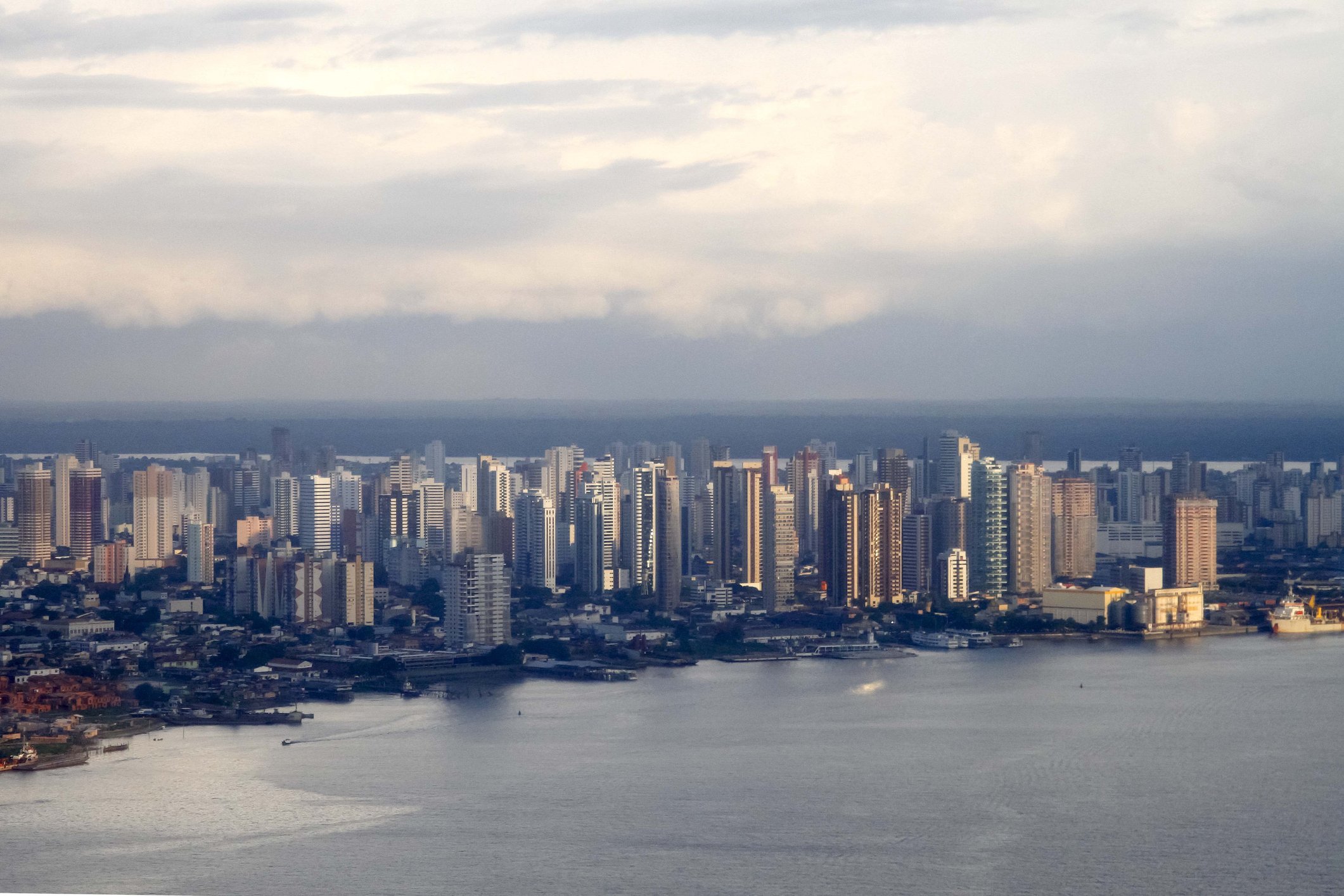
Belém, the historic gateway to the Amazon and Brazil's largest city in the equatorial north, declared a state of emergency after what local authorities described as the heaviest rainfall the city had experienced in a decade. The deluge overwhelmed drainage systems, flooded neighborhoods, and disrupted daily life across a metropolitan area that sits barely above sea level at the confluence of major river systems. The timing could hardly be more pointed: Belém is in the final stretch of preparations to host COP30, the United Nations climate conference scheduled for later in 2025, an event that was supposed to showcase the Amazon region's centrality to the global climate agenda.
The irony is structural, not merely symbolic. Significant public investment has been directed toward what are commonly referred to as "COP30 works" — drainage upgrades, road paving, logistical corridors, and venue construction designed to accommodate tens of thousands of delegates, journalists, and civil society representatives. Yet the record rainfall tested these nascent systems well before the summit's opening ceremony, and the systems failed to hold.
The gap between ambition and infrastructure
Hosting a major international event in a developing-world city is a familiar gamble. The pattern repeats across decades and continents: a government commits to a deadline, mobilizes resources at unusual speed, and attempts to compress years of infrastructure development into months. Sometimes the bet pays off — Seoul before the 1988 Olympics, or Medellín's transformation through successive urban interventions. More often, the results are uneven. Rio de Janeiro's 2016 Olympic legacy remains contested, with promised transit and sanitation projects left incomplete or deteriorating.
Belém's situation carries an additional layer of complexity. The city is not merely hosting a sporting event or trade fair; it is hosting the world's premier forum on climate adaptation and mitigation, in a region that is itself one of the most climate-vulnerable on the planet. The Amazon basin's hydrological cycle is intensifying as deforestation and rising global temperatures alter rainfall patterns. Belém's geography — low-lying, riverine, subject to tidal influence — makes it inherently exposed to flooding in ways that conventional urban drainage was never designed to manage.
The COP30 infrastructure investments, while substantial in local terms, were always working against this reality. Drainage systems engineered for historical rainfall averages offer limited protection when those averages are shifting upward. The emergency declaration is less an indictment of any single engineering failure than a demonstration of the mismatch between incremental upgrades and accelerating climate risk.
Hosting the conversation about survival
The selection of Belém as COP30 host was itself a political and symbolic act. Brazil's government positioned the choice as a statement: the Amazon would no longer be discussed from the distance of European or Middle Eastern conference halls. The communities most affected by deforestation, biodiversity loss, and climate disruption would be at the center of the negotiation. That framing remains powerful. But the flooding complicates the narrative by exposing what climate negotiators often acknowledge in abstract terms but rarely confront in physical form — that adaptation in the Global South is not a future challenge but a present emergency.
For Belém's residents, the distinction between summit preparation and daily survival is not rhetorical. Peripheral neighborhoods, many of them informal settlements built on flood-prone land, bear the brunt of extreme weather events regardless of whether international delegates are expected. The COP30 works have concentrated on corridors and venues likely to be seen by visitors, a prioritization that follows the logic of event hosting but does not necessarily align with the geography of risk.
The question now facing Brazilian authorities extends beyond whether Belém will be ready for COP30 in a logistical sense. The deeper tension is whether the summit itself can reckon honestly with what its host city has just demonstrated: that climate resilience in equatorial urban centers demands not incremental improvement on existing systems but a fundamentally different approach to how cities coexist with water, forest, and rising temperatures. Whether that reckoning shapes the negotiations or merely serves as backdrop remains an open question — one that Belém's flooded streets have made considerably harder to ignore.
With reporting from Exame Inovação.
Source · Exame Inovação