On April 1, 2026, the Artemis II mission launched from Kennedy Space Center, carrying a crew of four aboard the Orion spacecraft into a region of space that had remained unvisited by humans for more than half a century. The ten-day voyage — crewed by NASA astronauts Reid Wiseman, Victor Glover, and Christina Koch, alongside Canadian Space Agency astronaut Jeremy Hansen — was designed to test the limits of modern life-support systems against the harsh environment beyond low-Earth orbit. It concluded with a splashdown in the Pacific on April 10, closing a chapter defined by both technical precision and the quiet reawakening of deep-space exploration.
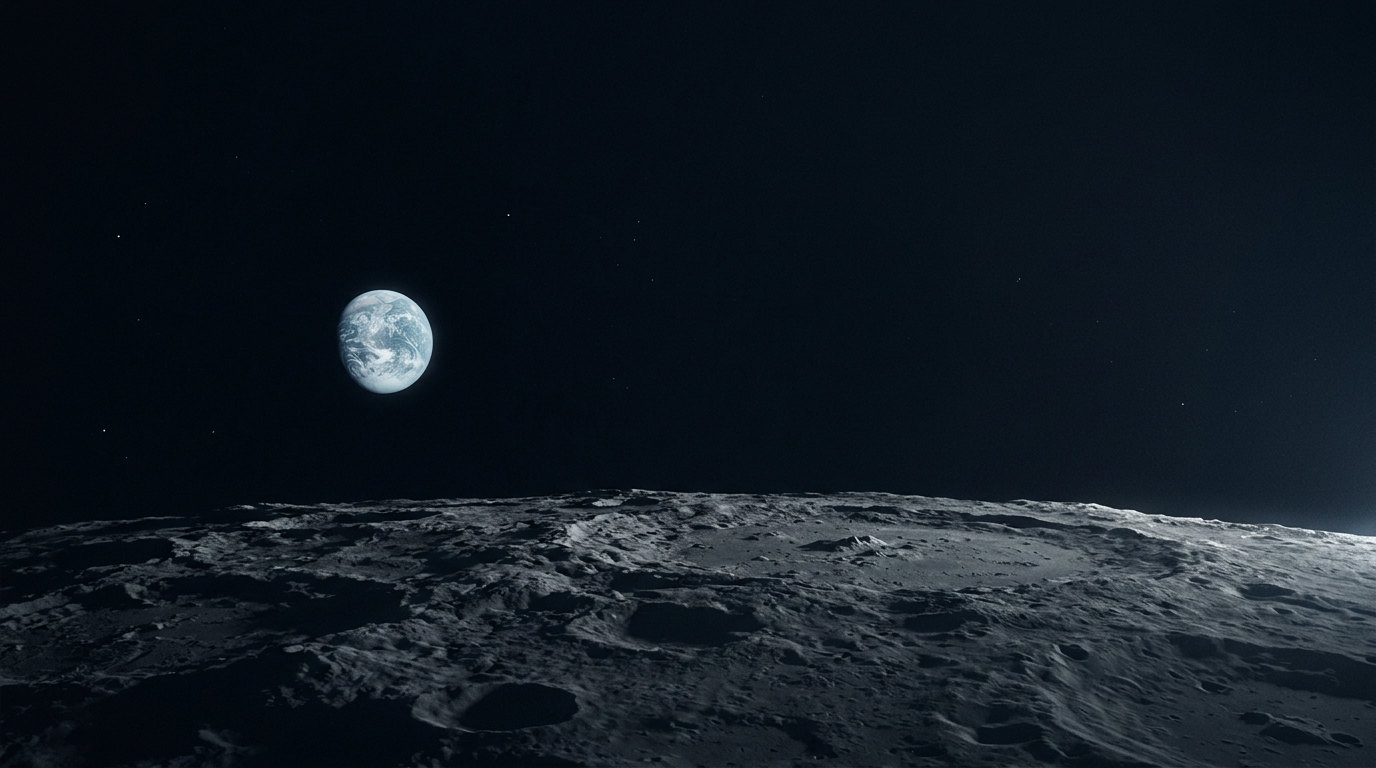
At its apogee, the crew reached a distance of 252,756 miles from Earth, setting a new record for the furthest humans have ever traveled from their home planet. From that vantage point, the Orion windows offered a perspective rarely seen: the Earth eclipsing the Sun, framed by the glow of auroras and zodiacal light, with Venus visible in the distance. The images transmitted back are more than visual milestones. They are the first artifacts of a program that treats the Moon not as a relic of Cold War ambition but as infrastructure for what comes next.
From Apollo's shadow to Artemis's architecture
The last time humans traveled beyond low-Earth orbit was December 1972, when Apollo 17 commander Eugene Cernan became the final person to walk on the lunar surface. In the intervening decades, crewed spaceflight consolidated around the Space Shuttle program and the International Space Station — both confined to orbits a few hundred miles above Earth. The gap between Apollo and Artemis is not merely temporal. It reflects a fundamental shift in institutional logic. Apollo was a sprint, structured around geopolitical competition with the Soviet Union and sustained by budgets that, at their peak, consumed more than four percent of the federal budget. Artemis, by contrast, is conceived as a sustained campaign: a sequence of missions designed to build cumulative capability rather than plant a flag and retreat.
Artemis I, an uncrewed test flight launched in late 2022, validated the Space Launch System rocket and the Orion capsule on a trajectory around the Moon. Artemis II extended that validation to crewed operations — testing life-support, navigation, and communication systems with humans aboard for the first time. The inclusion of Jeremy Hansen made the mission the first to carry a non-American astronaut on a lunar-class trajectory, a reflection of the international partnership framework that distinguishes Artemis from its predecessor.
The mission's success was the product of years of terrestrial preparation, including rigorous geology training conducted in the volcanic landscapes of Iceland. By studying these lunar analogues — basaltic terrain shaped by processes similar to those that formed the Moon's surface — the crew prepared for the scientific complexities that future landing missions will demand.
The distance between the Moon and Mars
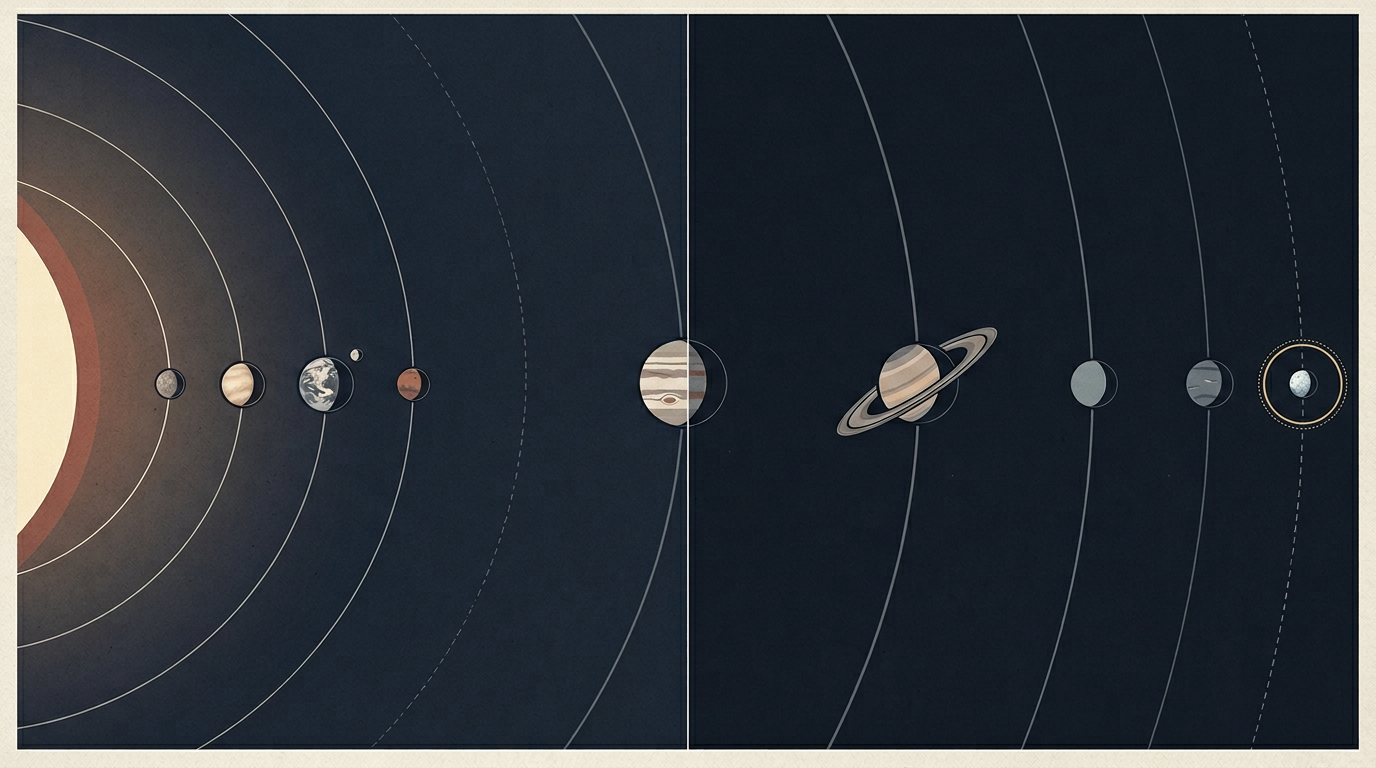
Artemis II sits at an inflection point in a broader architecture. Subsequent missions are intended to return humans to the lunar surface, establish a small orbital station known as the Gateway, and develop the operational knowledge required for longer-duration missions deeper into the solar system. The stated long-term objective is a crewed journey to Mars, though the gap between lunar orbit and interplanetary transit remains vast — not only in distance but in the engineering, biological, and logistical challenges involved.
The life-support data gathered during Artemis II will feed directly into that effort. Ten days in deep space is a meaningful stress test, but a Mars transit would last months in each direction, with no possibility of emergency return. Radiation exposure, psychological endurance, and closed-loop resource management all scale in ways that lunar missions can only begin to approximate. The Moon, in this framing, functions less as a destination and more as a proving ground — a place to fail cheaply before attempting something far less forgiving.
There is also the question of political durability. Programs of this scale depend on sustained funding across multiple administrations, and the history of post-Apollo spaceflight is littered with architectures that were announced, partially built, and then quietly abandoned. Whether Artemis follows that pattern or breaks it may depend less on engineering milestones than on whether the program can demonstrate returns — scientific, industrial, or strategic — that justify its continuation to successive Congresses.
The crew of Artemis II traveled farther from Earth than any humans in history and returned safely. What remains unresolved is whether the institutional and political systems behind them can sustain the momentum that a single successful mission generates.
With reporting from NASA Breaking News.
Source · NASA Breaking News