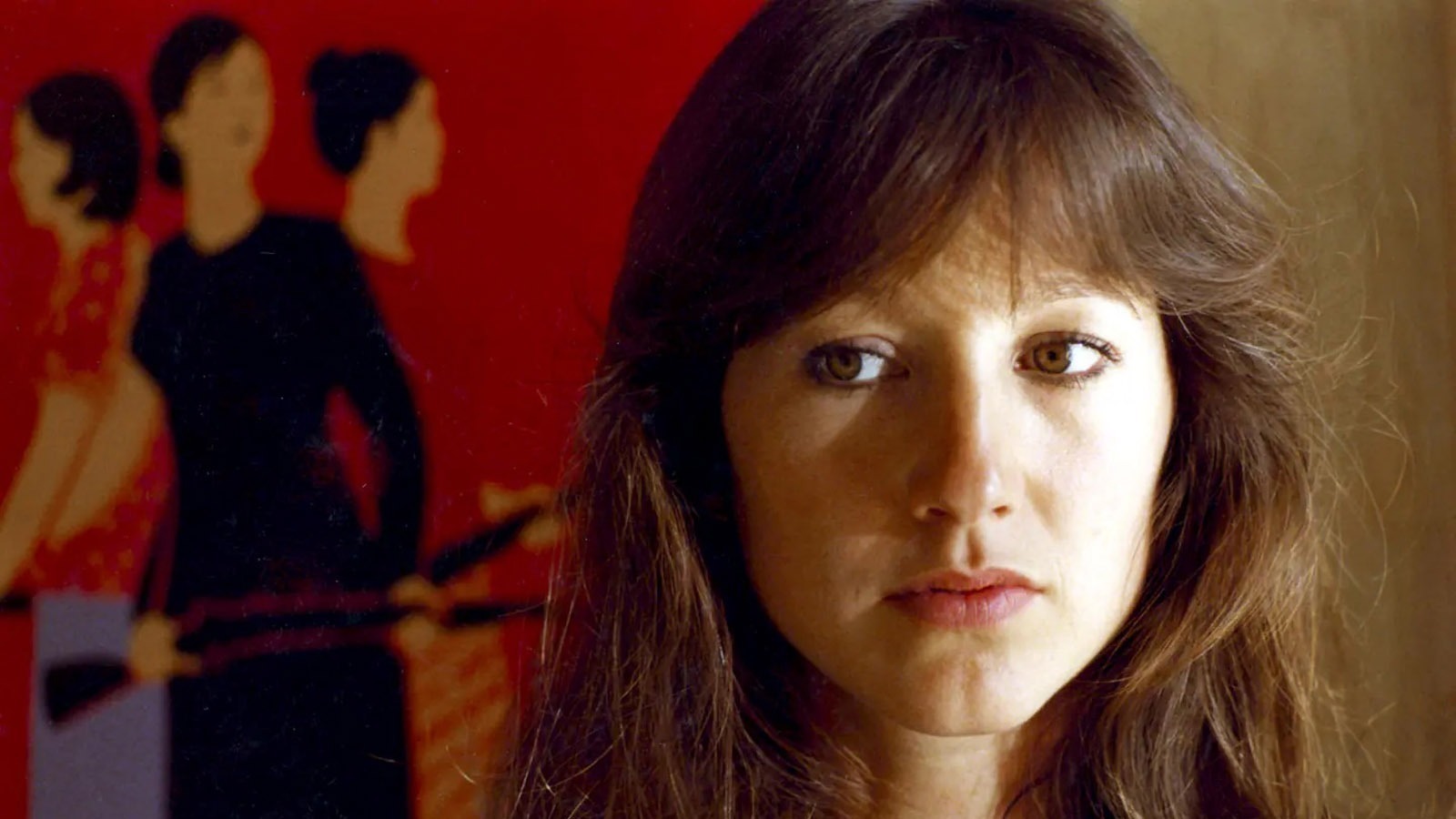
Nathalie Baye, the French actress who became a cornerstone of European cinema through her collaborations with New Wave luminaries like François Truffaut and Jean-Luc Godard, has died at 77. Over a career spanning more than 80 films, ten César nominations, and four wins, Baye built a body of work defined less by star power than by a quiet, almost clinical commitment to craft. She first captured international attention in Truffaut's Day for Night (1973), playing a script girl who served as the calm, organizational center of a chaotic film set. It was a role that defined her early public image — a steady, anchoring presence amidst the volatility of more eccentric stars — but it was an archetype she would spend the next five decades meticulously dismantling.
Born in Normandy to bohemian, often struggling artists, Baye's path to the screen was born of a search for structure. She struggled with dyslexia and dyscalculia as a child, finding her first creative outlet in dance before moving toward the theater. While she initially viewed the stage as her ultimate destination, it was Truffaut who redirected her trajectory, instilling in her a rigorous passion for the medium of film.
The Architecture of a Career
What distinguished Baye from many of her contemporaries in French cinema was the deliberateness of her choices. The French film industry of the 1970s and 1980s had a well-documented tendency to slot actresses into narrow categories — the ingenue, the femme fatale, the suffering wife — and to keep them there. Baye's early work with Truffaut could easily have locked her into the first of those roles: the sensible, luminous young woman whose function was to stabilize the narrative around her. Instead, she treated each subsequent project as an opportunity to complicate the audience's assumptions.
By the time she appeared in Godard's Every Man for Himself (1980), she had established herself as an actress who didn't just inhabit a scene but observed it with a watchful, intelligent eye. Working with Godard required a different discipline than working with Truffaut. Where Truffaut valued emotional transparency and classical storytelling, Godard's methods were more fragmented, more confrontational. That Baye moved fluidly between both directors — and earned their trust — speaks to a versatility that went beyond range in the conventional sense. It was an adaptability rooted in rigorous preparation and an apparent willingness to subordinate ego to the demands of the material.
Her evolution into what she described as portrayals of "dangerous and unsympathetic women" did not happen overnight. It was a gradual migration, visible across decades of work, from the center of the frame to its more uncomfortable edges. The César nominations and wins tracked this arc: recognition not for a single signature performance but for a sustained refusal to repeat herself.
Craft as Quiet Resistance
Baye's career offers a case study in how an actor's longevity in European art cinema differs from the Hollywood model. In the American studio system, durability often depends on brand consistency — audiences and producers want a recognizable persona they can market. In French cinema, the relationship between actor and auteur has historically allowed for more fluid reinvention, but even within that tradition, the pressure to become a type persists. Baye resisted that pressure with unusual persistence.
Her approach has a parallel in the careers of other European actresses who leveraged the auteur system to maintain creative control — figures who understood that the most durable screen presence is not the most charismatic one but the most precise. Baye's technical command, her ability to calibrate a performance to the exact temperature a director required, made her indispensable to filmmakers with vastly different sensibilities.
The loss registers not as the departure of a star in the conventional sense but as the closing of a particular chapter in French cinema — one in which an actress could build a five-decade career on the principle that compelling characters are often those who refuse to be easily liked. Whether the current landscape of French filmmaking, increasingly shaped by international co-production economics and platform distribution, still sustains that kind of career is a question her absence now makes harder to ignore.
With reporting from Criterion Daily.
Source · Criterion Daily